
Livraison le jour même ou le lendemain

Qualité garantie

Débloquez vos offres de bienvenue: Livraison GRATUITE | Jusqu'à -80 % | 30 jours d'essai gratuits à JoyPlus
Téléchargez l'application
A clothes rail can quickly declutter a hallway, bedroom or dressing room. However, choosing the right model is essential: if it is unsuitable, it can soon become cumbersome, unstable or too limited to hold all your clothes. Before placing your order, it is therefore worth looking beyond the design and marketing claims.
A narrow clothes rail takes up less space, but its base may be too lightweight to support several coats, bags or jackets. A tall model loaded at the top may also tip over if it is placed on an uneven floor.
Check the shape of the base, the stated maximum load and whether the clothes need to be distributed evenly. In a family hallway or shop, a slightly wider structure will often be preferable to an ultra-compact model.
Height is not the only measurement to consider. Depth has a direct impact on movement through a hallway, while width determines how many hangers you can really use. In a small bedroom, a clothes rail with shelves can even partly replace a storage unit, provided you leave enough room to open a door or move around in front of it.
Measure the available area, including skirting boards, then allow extra space for coats and other bulky clothing.
A maximum load does not guarantee that the clothes rail will be suitable for every purpose. A rail designed for a few shirts will not be subject to the same demands as a dressing-room rail loaded with thick coats and shoe boxes.
Look for hooks, shelves, lockable castors and an adjustable rail. These features are not equally useful depending on whether you are looking for a coat stand for the hallway, temporary clothing storage or a display solution for a shop.
A height-adjustable clothes rail makes it easier to store garments of different lengths and can adapt to several rooms. The SUZIE model from Compactor measures 78 × 42 cm on the floor, with a height adjustable from 85 to 165 cm. This range makes it suitable for a bedroom, dressing room or temporary professional space.
For a fixed clothes rail, compare its total height with the height of the room. A model that is much taller than the surrounding furniture can make the space look visually heavier. In a hallway, also make sure that you leave a clear passageway.
Painted or powder-coated metal is generally suitable for frequent use, provided you follow the manufacturer’s instructions and keep the clothes rail in a dry place. Wood adds a warmer touch, but does not cope well with persistent moisture, particularly in a bathroom.
The Jano wood and metal clothes rail combines a steel frame, a pine rail and two MDF shelves. The FSC certification mentioned for the wood relates to the sourcing of the material, according to the product information provided. For everyday care, a slightly damp cloth is sufficient. Do not use abrasive products.
Check the maximum load and place the heaviest items at the bottom or in the centre. The Jano has a stated capacity of 40 kg, while the kapanou model indicates a maximum load of 44 lb, or approximately 20 kg. These limits must not be exceeded.
Assembly also deserves your attention. A tool-free installation can be useful for occasional use, while a more substantial structure may sometimes take longer to assemble. Once assembly is complete, check the joints, stability on a level floor and the tightness of every component before hanging your clothes on it.
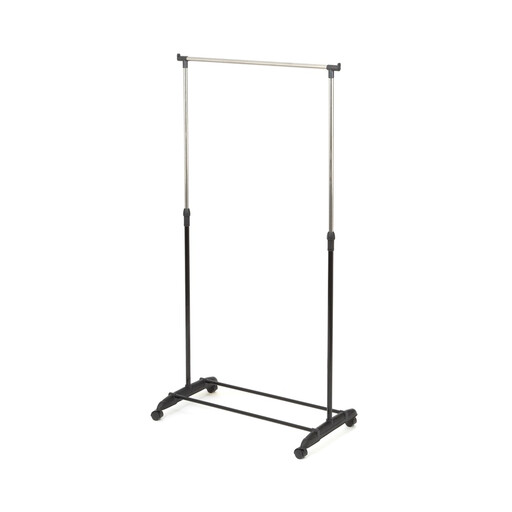
Why this choice suits this profile : This clothes rail on castors is ideal for a first installation, temporary accommodation or a room where clothes need to be moved regularly.
Its adjustable height of 85 to 165 cm and 78 × 42 cm footprint make it easy to check that it fits your space before loading it up.
A metal and plastic structure, adjustable height, easy manoeuvrability and detachable assembly, according to the product description.
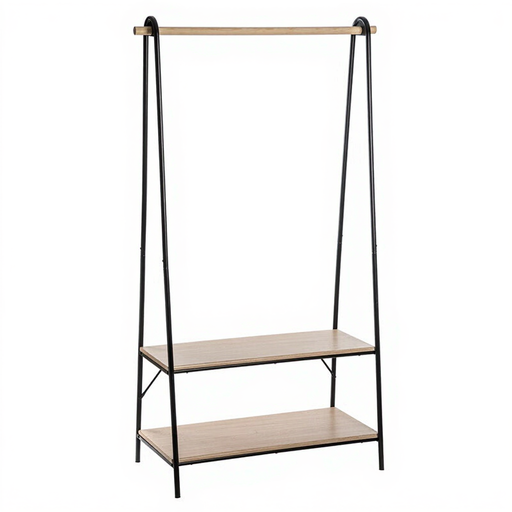
Why this choice suits this profile : Its combination of wood and metal blends easily into a bedroom, open dressing room or display area where a strong decorative presence is part of the design.
Its stated dimensions of 95.5 × 46.5 × 165 cm and maximum load of 40 kg make it easier to anticipate the space it will take up and how it can be used.
Two MDF shelves, a 120.5 cm pine rail and a steel frame for hanging or folding clothes.
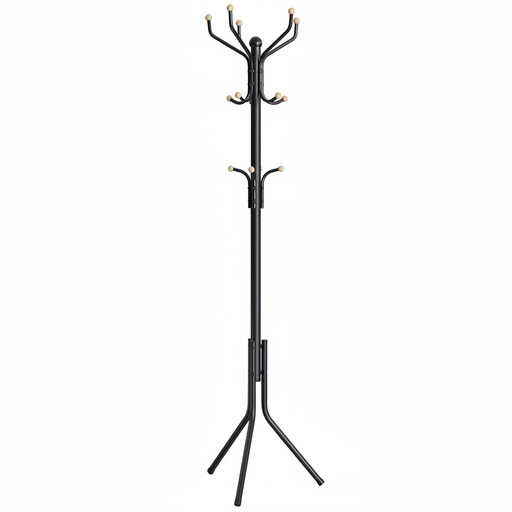
Why this choice suits this profile : With its 12 hooks, this freestanding coat stand meets the needs of a family, office or busy reception area.
Its dimensions of 49 × 49 × 182 cm and stated maximum static load of 36 kg provide clear reference points before installation.
A steel frame, rounded hooks, an easy-to-clean surface and assembly supplied with instructions and the necessary tools.
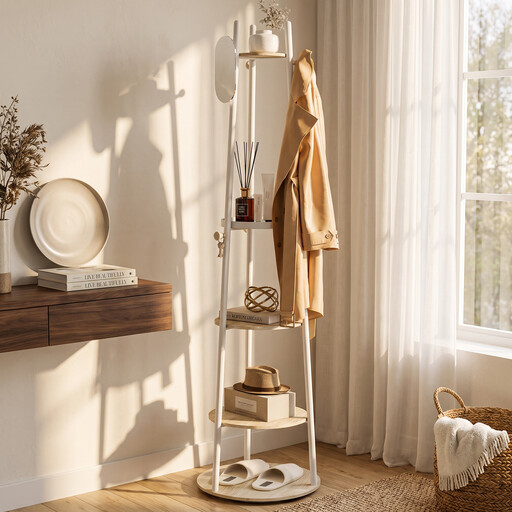
Why this choice suits this profile : This hallway coat stand combines a rail, shelves, hooks and a removable mirror to organise several categories of belongings in one piece of furniture.
The five shelves and six hooks reduce the need for multiple storage units, while the rotating base makes items easier to access.
FSC-certified rubberwood, powder-coated steel, 360° rotation, a removable mirror and tool-free assembly, as stated.
We have put together a complete, real-time updated selection of products that meet these demanding criteria, while complying with European safety regulations.
Allow for the product’s width and depth, as well as enough clearance for hangers and movement. In a hallway, a depth of 40 to 50 cm can already noticeably reduce the available passageway: measure the area with the coats hanging up.
Yes, if you need to move clothes regularly between a bedroom, utility room or professional space. For a fixed installation, a model without castors and with a stable base will help prevent unwanted movement.
Respect the maximum load, avoid concentrating heavy items on one side and regularly tighten the joints. Keeping the clothes rail in a dry place will also help protect the metal surfaces and wooden components.