Households that combine their washing
If you wash nappies with compatible family laundry, consider the size of the loads you can put together. A large drum isn’t necessarily useful if it’s often only partly full.


Choose a capacity that suits the loads you can realistically combine. An 8 kg front-loading machine is suitable if you regularly wash cloth nappies with compatible laundry, while a 7 kg machine may be a better fit for smaller loads or a narrow space. Then compare consumption figures on a like-for-like basis and check the washing machine and nappy care instructions for the right programme. Figures for the Eco 40-60 programme don’t necessarily reflect the wash you’ll use.
If you wash nappies with compatible family laundry, consider the size of the loads you can put together. A large drum isn’t necessarily useful if it’s often only partly full.
The available width and access to the drum may make a top-loading machine a better choice. Also check that its capacity suits the laundry you want to wash together.
If drying laundry is difficult in your home, consider your drying options when choosing a washing machine. For a washer-dryer, check its drying capacity separately.
Start with the load you can combine and the care instructions for your nappies. Then compare machines that suit your space and washing routine.
| Feature | What to check | What you need |
|---|---|---|
| Capacity | Estimate the load of nappies and compatible laundry, and check the maximum load for the programme you’ll use, which may differ from the machine’s stated capacity. UFC-Que Choisir points out that choosing the wrong capacity can mean extra cycles or excessive consumption. | I want to combine enough laundry without choosing a drum that I’ll rarely fill. |
| Programme | Compare the nappy care instructions with the washing machine’s temperatures and programmes. Check whether prewash or extra-rinse options are available if you need them. Hamac Paris recommends a normal 40 °C cycle for its own nappies, but this advice may not apply to all brands. | I need a cycle that follows the care instructions for my nappies, rather than choosing a programme based on its name alone. |
| Water and electricity | On the EU energy label, compare kWh per 100 cycles and litres per cycle, based on Eco 40-60. Check the duration of this programme too; its figures won’t predict those for the cycle you choose for nappies. | As I wash regularly, I want to compare consumption on a consistent basis and know how long each cycle will take. |
| Installation | Measure the width and depth, and allow enough room to open the machine. A top-loading model may suit a space where front access is restricted, provided its capacity is sufficient. | In a narrow space, I need to be able to install and load the machine without having to make my washing loads too small. |
| Drying | Allow room for a clothes airer. If you’re considering a washer-dryer, check its drying capacity, cycle time and consumption for a combined wash-and-dry cycle. UFC-Que Choisir notes that its drying capacity is lower than its washing capacity. | I want to be able to dry the load I’ve washed without finding out afterwards that I need to split it. |
| Product lifespan | Ask for the model’s durability index and find out about spare parts and repair services. According to the French government departments responsible for ecology, this index has been gradually replacing the repairability index for washing machines since 2025. | For a machine I’ll use regularly, the option to have it repaired is also important to me. |
UFC-Que Choisir says that a poorly matched capacity can either mean running more cycles or using too much water and electricity for the loads you wash.
Work out how much compatible laundry you can add to your nappies, then compare the load limits for the programmes you’ll use.
The European Commission defines Eco 40-60 as a reference programme for normally soiled cotton declared washable at 40 °C or 60 °C. The duration and consumption figures shown for this programme don’t describe every other cycle.
Use the label to compare machines, then check both sets of care instructions to choose the right cycle for your nappies.
UFC-Que Choisir says that a washer-dryer takes a smaller load for drying than for washing. You may therefore need to split a full load before drying it.
If you’re relying on this appliance because you don’t have space to air-dry laundry, compare its washing and drying capacities separately, along with the features of its combined wash-and-dry cycle.
The energy class alone doesn’t tell you how easy it is to repair a model you’ll use regularly.
Check its durability index and ask what spare parts and repair options are available for the exact model number.
These models illustrate different formats and specifications to consider; their features aren’t necessarily representative of the brand’s entire range.
The WGE03207FR is an 8 kg front-loading model to consider if you have room for a machine that’s 598 mm wide.
The TDLR7251FR is a 7 kg top-loading model to consider if front access is an issue.
The WCA120 WCS 8kg Active is a front-loading model with published figures for the Eco 40-60 programme to compare.
These 7 or 8 kg front-loading models are worth considering if you combine cloth nappies with compatible laundry. Before choosing, check that their capacity and programmes meet your nappies’ care instructions and that they’ll fit in your available space.
 Image unavailable
Compare its 8 kg capacity with the volume of nappies and compatible laundry you can combine.
The product name specifies a 1 400 rpm spin speed and an Inverter motor. Check the manual for programmes that meet your nappies’ care instructions.
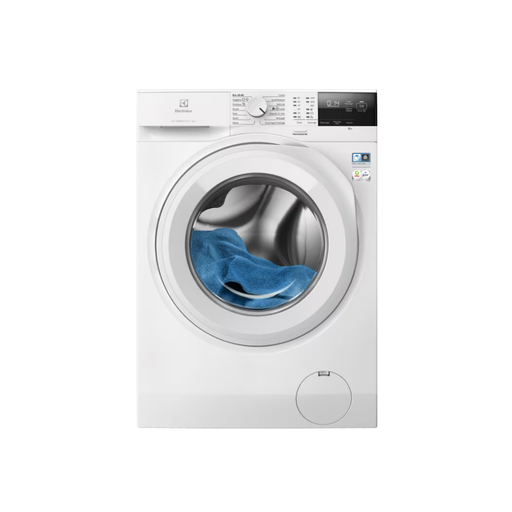 Image unavailable
This 8 kg front-loading model is worth considering if you can add compatible laundry to your nappy loads.
The product name specifies a 1 400 rpm spin speed. To plan your washes, check how long the programmes you’re considering take and whether they’re suitable according to your nappies’ care instructions.
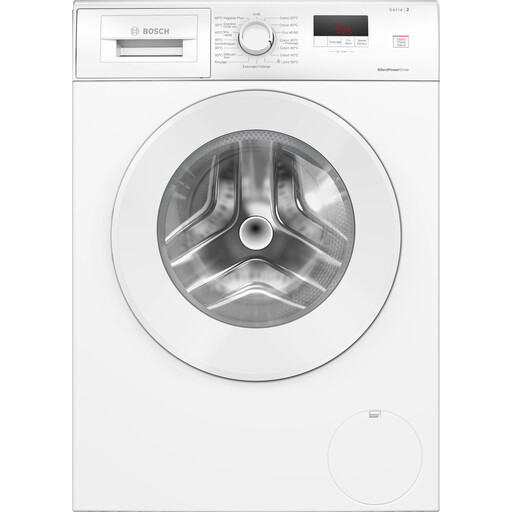 Image unavailable
A 7 kg capacity may suit you if it matches the loads you put together for each wash.
The product name specifies a 1 400 rpm spin speed and energy class A. Check the programmes and dimensions for this model before choosing it.
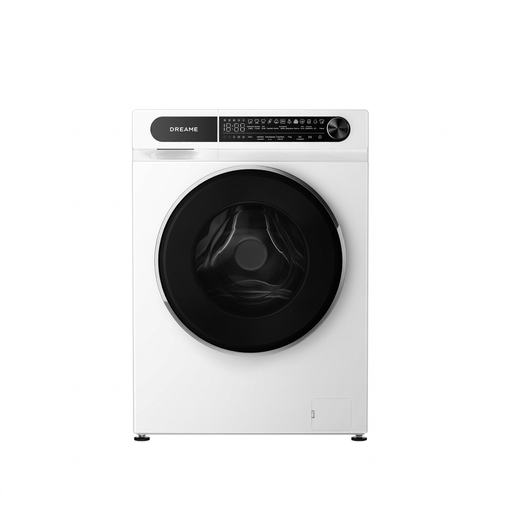 Image unavailable
Compare its 8 kg capacity with the load you can make up from nappies and other compatible fabrics.
Before buying, check the model’s manual for temperature settings and programme options, and make sure its dimensions suit your space.
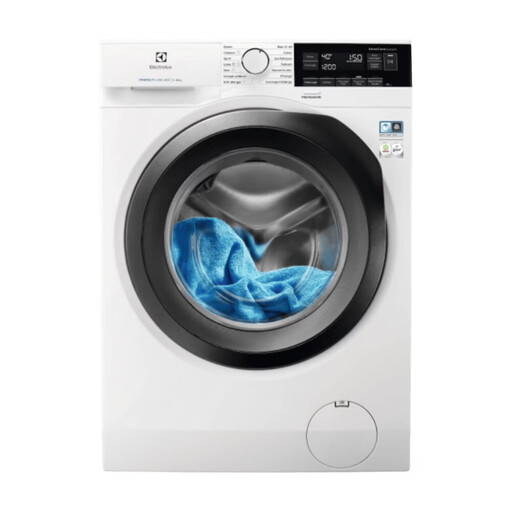 Image unavailable
This 8 kg front-loading model is worth comparing if you regularly wash nappies with compatible laundry.
The product name specifies a 1 400 rpm spin speed and energy class C. Check the model’s Eco 40-60 figures to compare consumption, then consult the manual to choose a cycle that’s suitable for your nappies.
No. The European Commission defines Eco 40-60 as a reference programme for normally soiled cotton declared washable at 40 °C or 60 °C. Follow your nappies’ care instructions and check which programme on your washing machine is suitable. For its own nappies, Hamac Paris recommends a normal 40 °C cycle with household linen.
For each model, compare the kWh per 100 cycles, litres per cycle and Eco 40-60 duration shown on its EU energy label. Also look at the spin and noise information, but don’t assume that Eco 40-60 figures will be the same for the programme you use with your nappies.
It can provide a drying option, but, as UFC-Que Choisir points out, its drying capacity is lower than its washing capacity. Check whether your load will dry in one go, as well as the duration and consumption of the combined wash-and-dry cycle on the model you’re considering.
Ask for the durability index and its breakdown for the exact model. According to the French government departments responsible for ecology, it has been gradually replacing the repairability index for washing machines since 2025. Also check what spare parts and repair options are available.