
当日/次日达

品质保障

开启新人专享福利: 全场免邮 | 低至 2 折 | 免费试用 30 天 JoyPlus 会员
下载 Joybuy
A climbing plant trellis net can free up ground space, add structure to a raised vegetable bed and make harvesting easier. But some designs quickly show their limitations: mesh that loses its shape, unsuitable dimensions or fixings that cannot support the weight of the plants.
Before choosing a net for tomatoes or beans, or a support for cucumbers and peas, take the time to check a few key features. The material, height, size and fixing system all affect how easy the trellis is to install and whether you can reuse it season after season.
A net advertised as “10 m” is not necessarily 10 m wide. A 1.5 × 10 m model theoretically covers 15 m², but the usable area depends on how the net is stretched and secured.
A compact size may be more than enough for a balcony or a small vegetable bed. For several rows of beans or cucumbers, however, a 2 × 20 m growing net offers much more coverage — provided you have poles or a structure that’s stable enough to support it.
UV resistance is a real advantage for outdoor use, but this claim doesn’t tell you everything about the strength of the mesh. The material and overall design of the net are also worth considering.
Polyethylene and polypropylene are commonly used for garden trellis nets. Unlike metal, they don’t rust and are generally easier to handle. Open mesh makes it easier for stems to grow through, but it still needs to remain firm as the plants get bigger.
Even a robust climbing net can start to sag if the poles are too far apart or there aren’t enough ties. As the fruit grows, the plants put more and more strain on the structure.
Use rigid supports, suitable ties and a sensible amount of tension. The net isn’t designed to act as a load-bearing structure or climbing equipment. Trellis fixing accessories may be essential when installing it against a wall, fence or frame.
For regular use in the vegetable garden, choose polyethylene or polypropylene mesh with a design described as resistant to mould, bacteria and products commonly used in agricultural maintenance. These details tell you about the material, but they’re no substitute for proper installation or storing the net somewhere dry out of season.
A UV-resistant net is better suited to a sunny spot. Green generally blends in more discreetly with foliage and flower beds.
Measure the width of the area to cover, the height of the poles and the space you’ll need to reach the plants before ordering. Allow extra material for anchoring, and avoid stretching the mesh to its limit.
Install the trellis on stakes, a fence or a sufficiently rigid frame. For wall installation, check what the wall is made of and choose compatible wall plugs. After harvesting, remove plant debris to help prevent the mesh from getting clogged. Store it somewhere dry to make it easier to reuse next season.
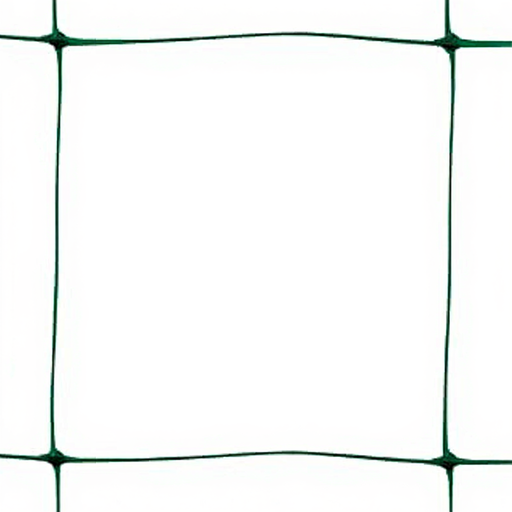
Why it suits this type of gardener : Its 1.5 × 10 m size and stated weight of 0.1 kg make it easy to handle in a small garden, on a patio or around a raised bed.
Its dimensions are clearly stated, and the mesh can be fixed to poles, a fence or a frame without a complicated installation.
Rectangular 1.5 × 10 m size, made from polyethylene and polypropylene according to the product description.
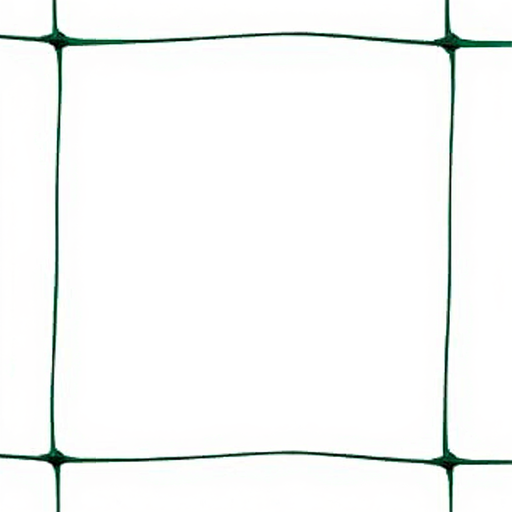
Why it suits this type of gardener : The 2 × 20 m size is well suited to larger vegetable gardens, a variety of crops and installations that need extensive coverage.
Its generous coverage reduces the risk of choosing a net that’s too small, while the open mesh lets air circulate and light through.
2 × 20 m size and plastic construction described as UV-stabilised.
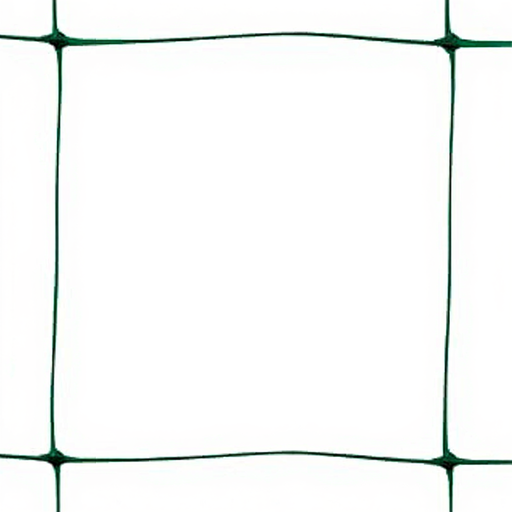
Why it suits this type of gardener : Its 1.7 m height is suitable for tomatoes, beans, cucumbers, courgettes and climbing flowers grown on a vertical structure.
The product listing states that it resists mould, bacteria and common agricultural chemicals, and won’t rust.
1.7 × 10 m dimensions, designed for use with a range of vegetables and climbing plants.
For installation on a wall or fence, the Tenax Green Wall Clips for Trellis (6pcs) kit includes six clips, six screws and six wall plugs. The stainless steel screws are designed for outdoor use. Check that the wall plugs are suitable for the material you’re fixing them to.
We’ve put together a comprehensive, regularly updated list of products that meet these strict selection criteria and European safety regulations.
Fix it vertically between poles, to a fence or onto a stable frame. Stretch the mesh enough to keep it in place without distorting it. Secure the top, bottom and sides, then gradually guide the stems through the mesh.
Its lifespan depends on exposure to sunlight, the weight of the crops, friction and storage conditions. A net designed for outdoor use and described as UV-resistant may last for several seasons, but check the mesh and fixings before each new installation.
Not necessarily. Some supports can be installed using simple garden ties, while wall mounting often requires suitable clips, screws and wall plugs. For a long-lasting installation, choose fixings to suit the material of your wall or fence, rather than basing your choice on the price of the net alone.