
Livraison le jour même ou le lendemain

Qualité garantie

Débloquez vos offres de bienvenue: Livraison GRATUITE | Jusqu'à -80 % | 30 jours d'essai gratuits à JoyPlus
Téléchargez l'application
Whether you're planning a living wall, a vertical garden, or just adding a touch of green to your balcony, choosing the right climbing plant support is a critical step. Faced with an overwhelming number of options, it's easy to get lost and fall for common pitfalls that turn your dream project into a disappointment. To avoid any setbacks, let's review the most frequent mistakes before you pull out your credit card.
It's a classic scenario: a support that looks sturdy in the store reveals its weaknesses after just one season. Rust attacks poorly treated metal, unprotected plastic breaks down under UV rays and frost, and the whole structure eventually collapses under the plant's weight. Another trap, especially for renters, involves fixings. A supposedly "easy-to-remove" adhesive leaves permanent marks or peels off paint, leading to unexpected repair costs. Finally, there's the classic beginner's mistake: underestimating the plant's growth. You end up with a trellis too flimsy for a rose bush or a stake unable to handle the vigour of a fruit-laden tomato plant.
Instead of relying on marketing claims, focus on a few objective technical features. Here are the three essential points to check before buying.
The longevity of your setup depends primarily on the material and its treatment.
The support must be suitable for your plant's current size, but more importantly, for its future growth. A young wisteria weighs little, but in a few years, it will transform into a powerful and heavy vine.
Your plant's environment dictates the fastening method.
To help you make an informed decision, here are a few products that perfectly illustrate these criteria, tailored to different needs.
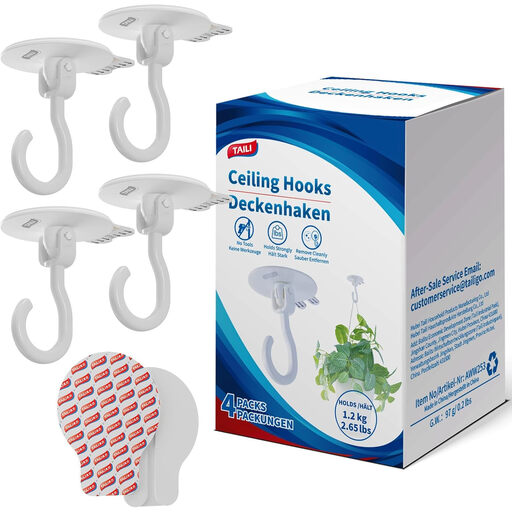
Why we chose it: Ideal for hanging lightweight plants, string lights, or decorations without pulling out the drill. Its 360° rotating and 180° tilting head offers maximum versatility on both ceilings and walls. A perfect solution for the constraints of rented apartments and balconies.
This hanging plant hook uses a patented adhesive strip system designed for damage-free removal. Simply pull the tab gently, and the hook detaches cleanly, leaving no residue or damaging smooth surfaces (paint, tile, glass, etc.).
Instant, drill-free installation and 100% clean removal. Each hook supports up to 1.18 kg (2.6 lbs), perfect for most indoor plants and lightweight decorations.
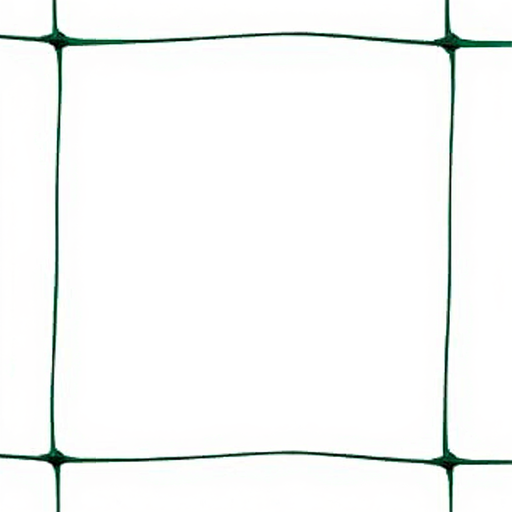
Why we chose it: The large-format solution for vertical gardening. This **trellis netting** is perfect for guiding the growth of tomatoes, beans, peas, and cucumbers. It optimises ground space and simplifies harvesting. Bonus: its green colour makes it nearly invisible among the foliage.
Made from UV-treated plastic, this net is not afraid of the sun and can be reused for several seasons. Unlike low-end metal trellises, it won't rust and maintains its strength year after year.
Its wide mesh ensures optimal air circulation and sun exposure, a crucial factor for keeping plants healthy and preventing disease. Lightweight, it can be installed in a flash on stakes or a frame.
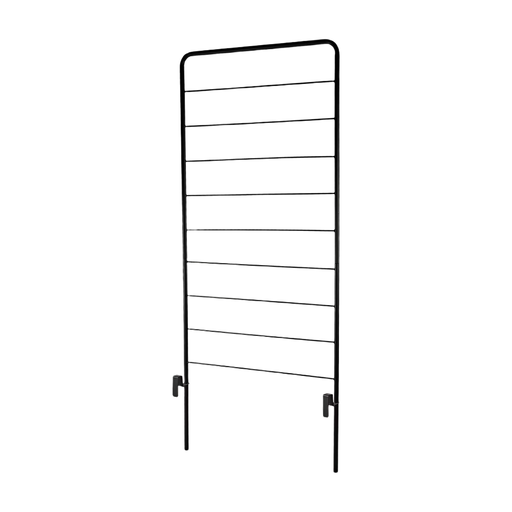
Why we chose it: This **garden trellis** perfectly blends function and aesthetics with its contemporary, minimalist design. It serves as a sturdy support for plants like jasmine or climbing roses, but also as a standalone decorative element or an elegant privacy screen.
Its powder-coated steel structure (anthracite grey finish) ensures excellent resistance to weather and UV rays. It's an investment built to last, which won't rust and will support the weight of vigorous plants without buckling, unlike decorative trellises that are often too fragile.
It combines reliable support with a striking modern design. Modular, it can be simply staked into the ground or fixed to a wall, offering great installation flexibility for an immediate visual impact.
We've curated a complete, up-to-date selection of products that meet our strict selection criteria and safety standards.
For renters or anyone who wants to avoid using a drill, several solutions exist. New-generation adhesive hooks, like those from TAILI, can support light loads (up to 1-2 kg / 2-4 lbs) and can be removed without leaving marks on smooth surfaces. For heavier plants on a balcony, you can opt for freestanding trellises placed in large, well-weighted planters or containers.
The lifespan of a plastic net depends on its quality and sun exposure. A good polypropylene or polyethylene net with an effective UV protection treatment, like those in the Tenax Flora range, can be reused for several seasons. To maximise its longevity, remember to clean it and store it away from light and moisture during the winter.
The maximum supported load varies enormously from one product to another. A simple adhesive hook will hold about 1 kg (2.2 lbs), while a well-tensioned trellis net can support several dozen kilograms. For heavyweights like a mature wisteria or an old rose bush, only a solid steel trellis secured to a wall will do, capable of supporting over 100 kg (220 lbs). Always read the manufacturer's technical sheet and, most importantly, anticipate the weight of the adult plant, including the weight of its foliage when soaked with rain.