
Livraison le jour même ou le lendemain

Qualité garantie

Débloquez vos offres de bienvenue: Livraison GRATUITE | Jusqu'à -80 % | 30 jours d'essai gratuits à JoyPlus
Téléchargez l'application
Cleansing wipes don’t all serve the same purpose: changing a baby, freshening up your face, washing a dependent adult or quickly cleaning a surface. Yet packaging often highlights promises like “water-based”, “natural” or “99.9% effective”, without always specifying the conditions in which they apply.
Before you head to the checkout, three pitfalls deserve your attention:
Start by determining the main use:
For biocidal products, always check the manufacturer’s instructions, the contact time and the authorised surfaces. A claim like “eliminates 99.9% of bacteria” should be interpreted within the specific framework defined on the packaging, not as a guarantee valid against all germs and for all uses.
For regular body use, choose a formula suited to your needs:
The term “hypoallergenic” indicates an intention to reduce the risk of a reaction, but does not guarantee a complete absence of irritation. Check the INCI list, test the product on a small area and stop using it at the first sign of redness or discomfort. For babies, avoid any contact with the eyes and mouth.
Compare the number of wipes per pack, their dimensions and their thickness. Adult models, often extra-large, cover a larger area. Conversely, a small pocket-sized format slips easily into a bag or car.
An adhesive flap or a rigid lid helps preserve moisture. Reseal the pack after each use and observe the date indicated. Even biodegradable or compostable wipes should not be systematically flushed down the toilet: unless explicitly stated and compatible with your plumbing, they go in the bin.
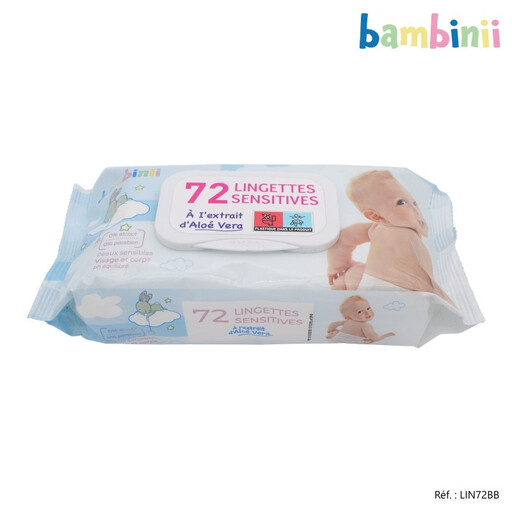
Why this choice suits this profile: With its 72 sheets, this pack is suitable for nappy changes as well as occasional face or body cleaning. The product page states an alcohol-free and paraben-free formula.
The “for baby” label is clearly visible: in principle, it cannot be mistaken for a disinfectant wipe intended for surfaces.
Aloe vera extract, 72 wipes, suitable for face and body, alcohol-free and paraben-free according to the product page.
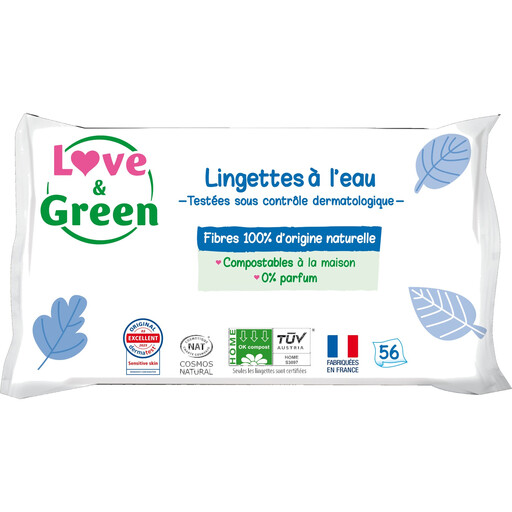
Why this choice suits this profile: This product is aimed at households who care about the natural origin of the fibres, the absence of fragrance and the certifications highlighted.
The claims “100% fibres of natural origin”, “plastic-free” and “fragrance-free” are accompanied by the stated COSMOS NATURAL and FSC references.
56 wipes, formula stated as 98% natural origin, recyclable packaging and suitable from birth according to the product page.
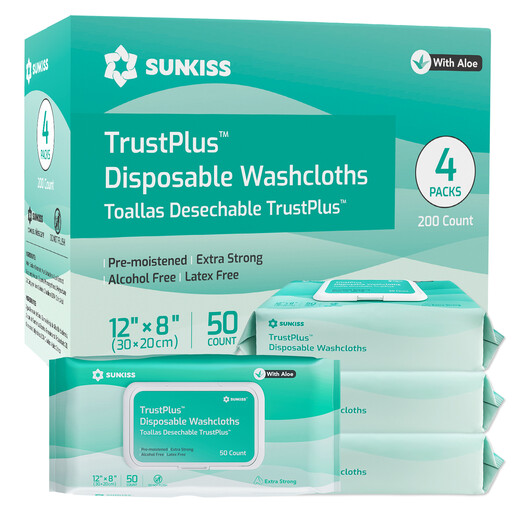
Why this choice suits this profile: Carers and adults looking for a no-rinse washing solution benefit from 20 × 30 cm sheets, designed to cover a larger body area.
The extra-large format reduces the number of sheets needed for a full wash, while the resealable lid helps keep them moist.
200 wipes split across four packs, fragrance-free and alcohol-free formula, enriched with aloe vera and vitamin E according to the product page.
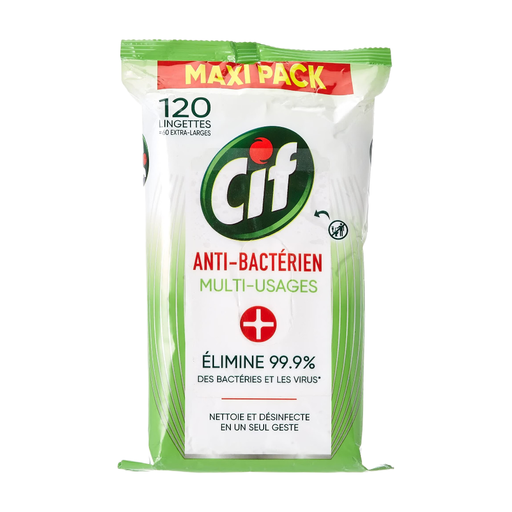
Why this choice suits this profile: For quickly cleaning the kitchen or bathroom, this large pack is designed for washable surfaces.
The label clearly states it is a product for surfaces, not for skin or food. This helps avoid misuse.
120 sheets, multi-surface use and claimed disinfectant action according to the product page. Read the label before use and keep the product out of reach of children.
We’ve compiled a complete selection, updated in real time, of products that meet these demanding criteria and European safety standards.
No, unless the packaging clearly states it is suitable for skin use. Surface wipes contain biocidal agents and may also contain fragrance or irritating substances. For your skin, choose body wipes designed for that purpose.
It depends on the product. Close the flap carefully after each use, store the pack away from heat and check the expiry date or the period after opening indicated on the packaging. A dry wipe, or one whose smell, colour or texture has changed, should be thrown away.
Not necessarily. “Biodegradable”, “compostable” and “sewer-safe” cover three different realities. Follow the manufacturer’s instructions and, if in doubt, put the wipe in the bin. This precaution reduces the risk of blockages and the burden on drainage systems.