
Livraison le jour même ou le lendemain

Qualité garantie

Débloquez vos offres de bienvenue: Livraison GRATUITE | Jusqu'à -80 % | 30 jours d'essai gratuits à JoyPlus
Téléchargez l'application
A sponge that falls apart within days, a scratched surface or a lingering smell: not all cleaning sponges are created equal. In the kitchen, bathroom or for personal washing, the material and texture directly affect ease of use and durability.
Before buying a washing-up sponge or a multi-purpose model, start by identifying your needs. Some pitfalls come up time and time again.
A scouring sponge can easily tackle ingrained residue. However, its abrasive side is not necessarily suitable for non-stick pans, glossy hobs or glass. The term ‘non-scratch’ should therefore be treated with caution: always test it on an inconspicuous area first.
Particles trapped between the sponge and the surface can also leave marks. Rinse the accessory before every use and avoid pressing too hard.
An absorbent sponge holds more water, which can be useful for wiping down a worktop or cleaning the bathroom. The downside is that it dries more slowly if left at the bottom of the sink. Persistent dampness encourages unpleasant smells and speeds up wear.
An easy-to-wring shape, an open structure or well-ventilated storage are therefore just as important as the stated absorption capacity.
Even a machine-washable sponge should be rinsed after every use and replaced as soon as it starts to fray, loses its shape or retains an odour. Recommendations vary depending on the materials: some products are designed for around two months of use, while others are suitable for several dozen washes. It is better to follow the instructions than to keep a sponge well beyond its intended lifespan.
For everyday washing-up, a combination of plant-based cellulose and scouring fibres serves two purposes: absorbing water and lifting residue. A microfibre sponge is better suited to wiping windows, mirrors and surfaces that require an immaculate, virtually streak-free finish.
For delicate surfaces, look for a side explicitly described as non-scratch. This does not guarantee that the sponge is suitable for every coating: check the manufacturer’s recommendations and test it on a small area.
In the bathroom, a texture designed to tackle limescale can make it easier to clean taps, the basin, shower and bath. Some products combine a scouring side with a soft side, allowing you to move from deep cleaning to wiping without changing accessories.
A machine-washable sponge can extend the time between replacements, but check the permitted temperature and care instructions. Some products, for example, can be washed at 40 °C, while others are rated for up to 52 cycles. Fabric softener and tumble-drying may be discouraged in order to protect the fibres.
Always allow the sponge to dry completely after washing. With a reusable model, the savings you make depend largely on following these instructions and on how frequently it is used.
An ergonomic shape makes repetitive movements easier and helps prevent you from applying too much pressure to the surface. Smaller sizes fit more easily into corners, while a flexible sponge moulds itself to the contours of a sink or bath.
For personal hygiene, never reuse a sponge intended for the kitchen or bathroom. An African exfoliating sponge or an African bath net should be reserved for external use on intact skin, then rinsed and dried after every shower.
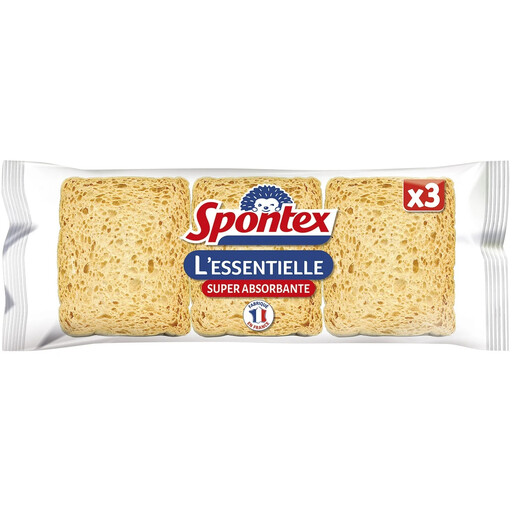
Why this choice suits this profile : Three sponges for everyday tasks in the kitchen, bathroom and other rooms around the home.
The product details promise good absorption and versatile use, without the need for multiple specialist accessories. However, the scouring side should not be used on non-stick surfaces.
Three sponges, good absorption and a design suitable for both the kitchen and bathroom.
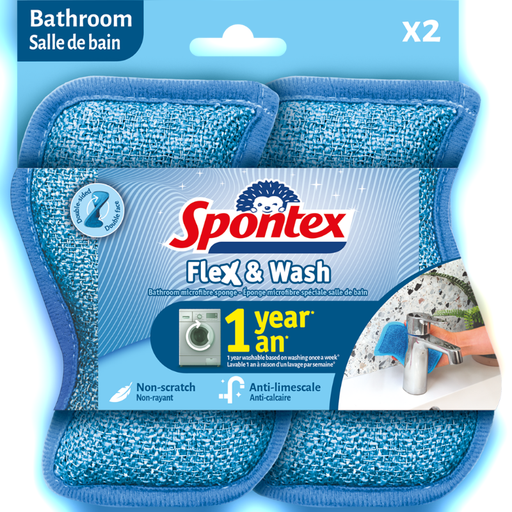
Why this choice suits this profile : A reusable solution for regularly cleaning windows, mirrors and bathroom fittings with one specialist accessory.
The product details state that it can withstand up to 52 washes, with a microfibre side and a scouring side. The manufacturer recommends testing it first on delicate surfaces.
Machine-washable at up to 40 °C, with a microfibre side for finishing touches and a medium-strength scouring side.
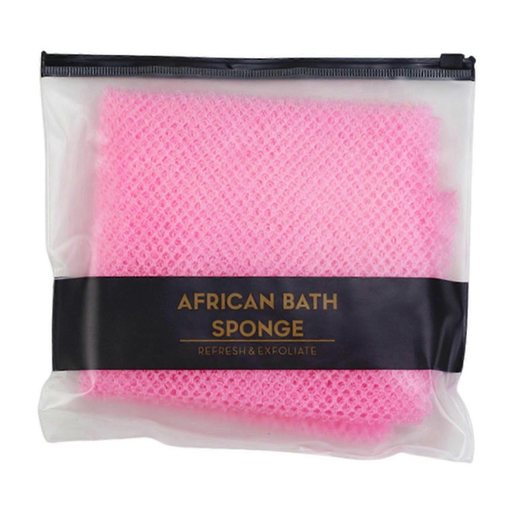
Why this choice suits this profile : This long African bath net is ideal for anyone looking for body exfoliation while still being able to reach their back easily.
According to the product details, its open-weave design dries quickly and the net is machine-washable. However, it should not be mistaken for a washing-up sponge or used on irritated skin.
100 % nylon, integrated cords and machine-washable design, with a laundry bag recommended.
We have brought together a complete, real-time-updated selection of products that meet these strict criteria and European safety regulations.
A double-sided washing-up sponge is a practical choice: the soft side absorbs and wipes, while the scouring side tackles the most stubborn residue. For non-stick pans, choose a side explicitly described as non-scratch and test it first on a small area.
Yes, if the product details allow it. The temperature varies from one model to another: some sponges can withstand 40 °C, while others can handle higher temperatures. Use a laundry bag when recommended, avoid fabric softener and allow the sponge to dry completely at the end of the cycle.
It depends on the material, how often it is used and how it is cared for. Several models designed for household use recommend replacing them approximately every two months, while some reusable sponges claim to withstand up to 52 washes. In every case, the condition of the sponge should take priority over its theoretical lifespan.