
Livraison le jour même ou le lendemain

Qualité garantie

Débloquez vos offres de bienvenue: Livraison GRATUITE | Jusqu'à -80 % | 30 jours d'essai gratuits à JoyPlus
Téléchargez l'application
Cleaning wipes can be used for nappy changes, no-rinse washing, makeup removal, intimate hygiene, floor cleaning, or surface disinfection. However, this versatility makes choosing the right one less straightforward than it seems. A wipe designed for your face isn't meant to clean a floor, while a product intended for surfaces should never be applied to your skin.
The claim 99% water indicates the main component of the formula, but it doesn't mean the product contains nothing else. Preservatives, moisturising agents, fragrances, or plant extracts may also be present in the lotion.
If you're looking for baby wipes or wipes for sensitive skin, take the time to check the ingredients list. A formula without fragrance or alcohol can be a good way to limit potential sources of irritation, though it doesn't guarantee the same tolerance for everyone.
A wipe may be described as biodegradable, compostable, or suitable for drains — these terms don't mean the same thing. Biodegradable wipes should generally go in the bin, unless the packaging explicitly states otherwise.
Even when a product is marketed as flushable, stick to the recommended maximum quantity and consider your plumbing. Toilets with macerators, for example, may not be suitable. When in doubt, the bin is always the safest option.
A pleasant fragrance for cleaning can be unsuitable for use on your skin. Similarly, a small pack of makeup removal wipes is handy for your handbag, but the cost per wipe is often less economical for daily use.
Before comparing prices, check:
For face wipes, the formula must be designed for your skin and, where stated on the packaging, tested under dermatological or ophthalmological supervision. Makeup removal wipes may contain emollients, fragrances, or preservatives — if certain ingredients concern you, check the composition carefully.
Intimate wipes are for external use only. A pH level suited to this area is a useful feature, but it doesn't replace gentle application or occasional use. Don't apply them to irritated or broken skin, and stop using them at the first sign of discomfort.
For adult washing, especially when travelling or when rinsing isn't possible, it's best to choose a wipe that's large and durable enough. Extra-large formats help reduce the number of wipes needed for a full clean.
The product description may mention plant fibres, cellulose, viscose, or cotton. A certification like FSC, OEKO-TEX, or COSMOS NATURAL shouldn't be confused with a simple marketing claim — always check exactly what the certification covers.
A plastic-free wipe can reduce the use of synthetic fibres, but its packaging and disposal method still need consideration. Plant-based or biodegradable wipes shouldn't be reused unless stated otherwise, and must never be left in the environment.
Dry floor wipes, such as those for a flat mop, trap dust and hair thanks to their structure. They don't replace a damp mop for tackling stubborn stains. Also make sure they're compatible with your flooring: varnished parquet, laminate, vinyl, or tiles.
Disinfectant wipes serve a different purpose. They're designed for washable surfaces, not for your skin. For a biocidal product, read the label, follow the contact time, and observe the usage precautions. Never mix different cleaning products, and ventilate the room if needed.
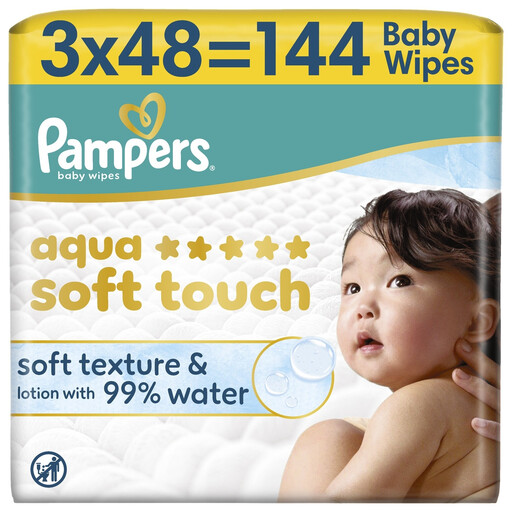
Why this suits this profile: With 144 wipes, this pack is ideal for nappy changes and outings. Its formula is claimed to be 99% water-based, with no alcohol or fragrance.
The detailed composition helps you distinguish the "water-based" claim from the other ingredients in the lotion.
144 wipes, a soft texture, suitable from birth, and a closure that needs to be kept sealed to prevent drying out.
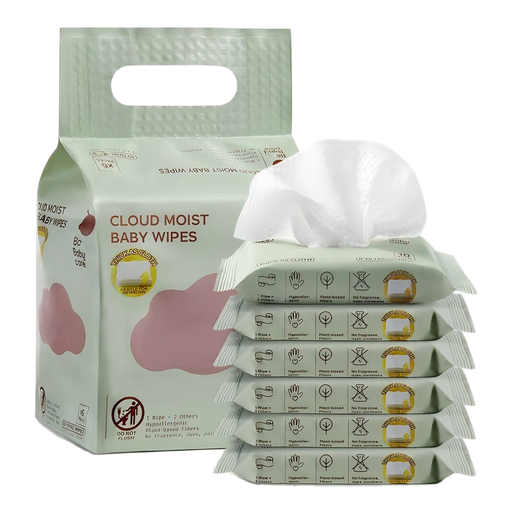
Why this suits this profile: This split packaging is aimed at those who care about the material, thickness, and absence of fragrance.
The product description mentions plastic-free cellulose fibres and a fragrance-free formula, rather than relying on a vague eco-friendly claim.
60 units, claimed biodegradable material, OEKO-TEX certification, and a texture said to be three times thicker than standard wipes.
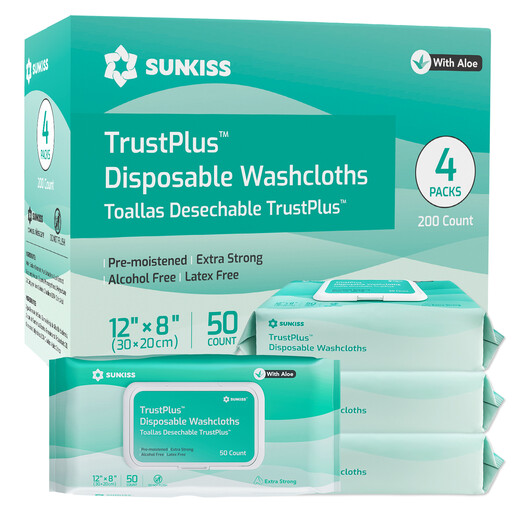
Why this suits this profile: Those looking for a no-rinse washing solution will benefit from an extra-large format designed for adult body care.
The dimensions of 20 × 30 cm and the weight of 65 g/m² provide concrete details, unlike a simple "extra-large" claim.
Pack of 200 units, fragrance-free and alcohol-free formula, flip-top lid, and claimed aloe vera and vitamin E content.
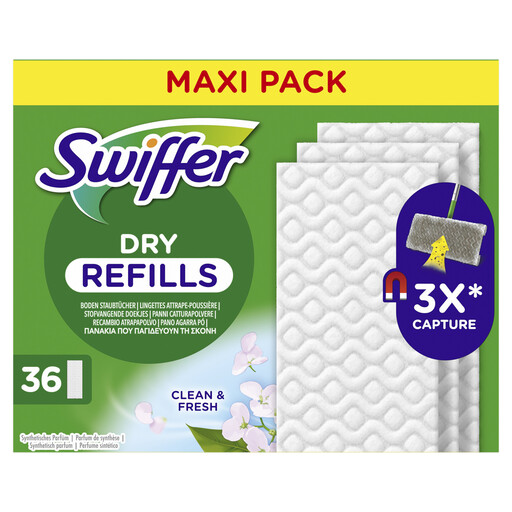
Why this suits this profile: This pack is ideal for quick dusting of hard floors with a compatible Swiffer mop.
The description clearly states these are dry wipes for hard floors, not a product to be dampened or used with a liquid.
36 units, electrostatic action, textured structure, and easy access to areas under furniture.
We've compiled a comprehensive, real-time selection of products that meet these demanding criteria and European safety standards.
Some baby wipes can be used on the face, body, and hands. However, always check the label and ingredients. A baby wipe isn't automatically suitable for removing waterproof makeup or cleaning a household surface.
The shelf life depends on the product and the symbol shown on the packaging. Close the flap or lid after each use and store the pack in a cool, dry place away from sunlight. Don't use a wipe that has dried out, or if its smell or appearance has changed.
No, unless the label clearly allows it. Disinfectant wipes for surfaces contain substances intended for materials, which may be unsuitable for your skin. Use them only on the intended surfaces, follow the contact time, and dispose of them in the bin after use.