
Livraison le jour même ou le lendemain

Qualité garantie

Débloquez vos offres de bienvenue: Livraison GRATUITE | Jusqu'à -80 % | 30 jours d'essai gratuits à JoyPlus
Téléchargez l'application
Cleaning wipes have become a staple in our daily lives. Convenient, fast, versatile... They seem like the miracle solution for cleaning everything, from baby changing to kitchen surfaces. Yet, behind this apparent simplicity lies a jungle of options where it's easy to get lost. Between marketing promises and reality, how can you find your way?
As the Head of Product Selection at Joybuy, my mission is to help you see things more clearly and avoid the common pitfalls that cost you money and lead to disappointment.
baby wipes.To avoid falling into these traps, let's focus on a few objective criteria. These indicators will help you decipher labels and make a truly informed choice.
For use on skin, especially for sensitive skin wipes or baby wipes, the ingredients list (INCI) is your best friend. In this case, a short ingredients list is often a good sign.
The wipe's material is a key criterion in its own right. Eco-friendly wipes are popular, but you need to know how to read between the lines.
It is essential to distinguish between multi-surface wipes and disinfecting wipes.
antibacterial wipes only act on bacteria. For effective disinfection, scrupulously follow the contact time indicated by the manufacturer.Rather than searching for THE perfect wipe, it's better to choose one that precisely meets your needs. Here are our recommendations for different uses.
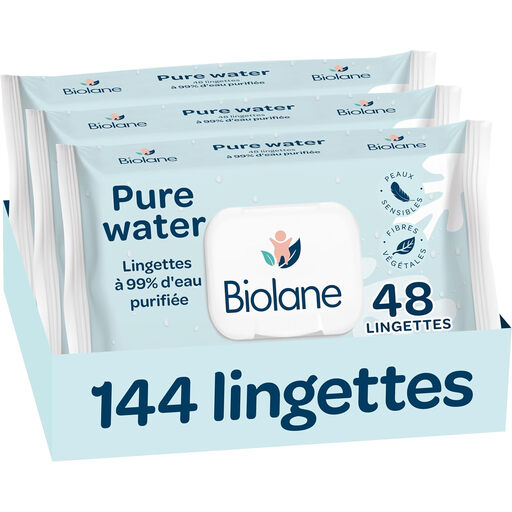
Why we chose it: Perfect for parents seeking maximum simplicity and safety for their newborn's delicate skin. Suitable from birth for the nappy area, body, and face.
This wipe avoids the trap of overly long ingredient lists. Its ultra-minimalist formula contains only two ingredients (including 99.9% purified water), which reduces the risk of irritation to an absolute minimum.
100% plant-based fibres certified OK COMPOST HOME, a rarity that guarantees they can be composted at home. Hypoallergenic formula tested under medical supervision.
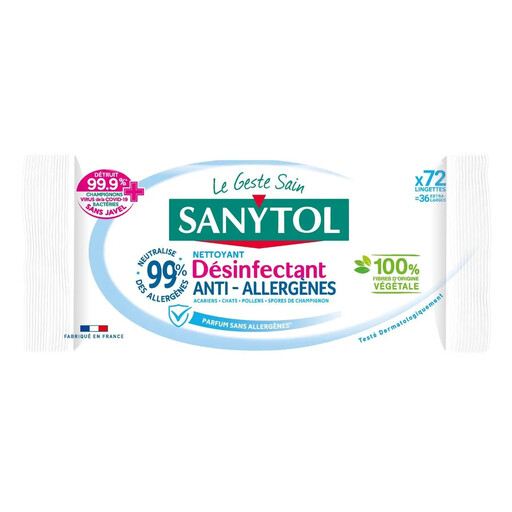
Why we chose it: For those looking for an all-in-one solution that can clean, disinfect, and neutralise everyday allergens (dust mites, cat hair, pollen) on all surfaces.
This wipe doesn't just "clean." It provides a true disinfecting action, validated by standards, that eliminates 99.9% of bacteria, fungi, and even the COVID-19 virus (EN 14476 standard).
Its 3-in-1 action: it cleans, disinfects, and neutralises allergens. The fact that the wipes are biodegradable is a welcome bonus for limiting their impact.
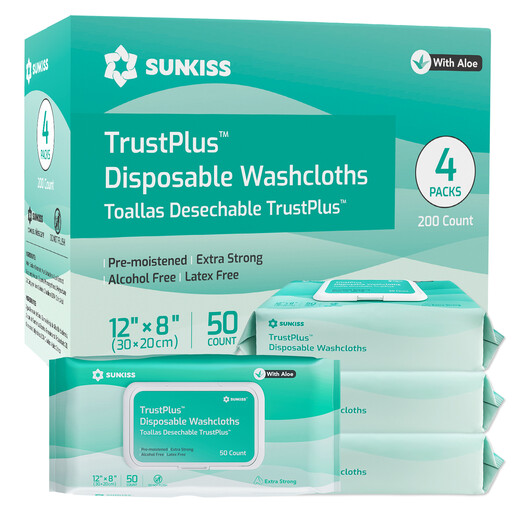
Why we chose it: Specially designed for carers (family or professional) who need reliable and effective `adult wipes` for personal hygiene, including for incontinence care.
This wipe avoids the pitfall of products that are too small and thin, which are often unsuitable. Their XXL size (20 cm x 30 cm) and thick, durable fabric allow for effective and comfortable cleansing.
Formula enriched with Aloe Vera and Vitamin E, pH-neutral, fragrance-free, and alcohol-free. Its resealable rigid "flip-top" lid preserves moisture much more effectively than a simple adhesive tab.
Discover our full selection of products that meet our strict selection criteria and current standards.
1. Can you flush wipes down the toilet? Absolutely not! This is a golden rule. Even those labelled "flushable" can cause massive clogs in your pipes and at sewage treatment plants. Their fibres, even plant-based ones, do not break down quickly enough. The only place for them is the bin.
2. What is the difference between antibacterial and disinfecting wipes? An antibacterial wipe, as its name suggests, only targets bacteria. A disinfecting wipe has a much broader spectrum of action: it is effective against bacteria, but also often against viruses (virucidal action) and fungi (fungicidal action). For maximum protection, especially during an epidemic, a disinfecting wipe with virucidal action is essential.
3. How can I stop my wipes from drying out? The first rule is to always reseal the pack properly immediately after use. For soft packs, make sure the area around the adhesive tab is clean and dry so it sticks as well as possible. Pro tip: store the pack upside down. Gravity will help keep the top wipes moist. But the most reliable solution is to choose packs equipped with a rigid plastic flip-top lid.