
Livraison le jour même ou le lendemain

Qualité garantie

Débloquez vos offres de bienvenue: Livraison GRATUITE | Jusqu'à -80 % | 30 jours d'essai gratuits à JoyPlus
Téléchargez l'application
A cleaning sponge may seem like an unremarkable purchase. Yet between scouring sponges, non-scratch models, machine-washable versions and abrasive sponges designed for DIY projects, the differences in use are far from negligible. Choosing the wrong sponge can leave marks on a ceramic hob, while one that is too soft may wear out quickly when faced with cooking residue.
Here are the main criteria to consider when choosing sponges suitable for washing-up, the bathroom, the kitchen or preparing surfaces before decorating or renovation work.
The non-scratch label does not remove the need for a preliminary test. The sponge’s composition, the pressure applied, dust trapped in its fibres and the condition of the surface can all affect the result. Non-stick coatings, glass, painted surfaces and polished materials require particular care.
Ideally, test the sponge on a discreet area first, especially if it is an abrasive model or has a scouring side.
A scouring side that works effectively on a heavily soiled saucepan is not necessarily suitable for a non-stick frying pan or a delicate sink. For everyday cleaning, double-sided sponges offer a practical compromise, provided that each side is used appropriately: the absorbent side for wiping and the abrasive side for tackling stubborn dirt.
A sponge that remains permanently damp is more likely to retain residue and quickly lose its freshness. After each use, rinse it, wring it out without distorting it, then leave it to air-dry. Washing and replacement instructions vary from one product to another: a machine-washable sponge is not necessarily wear-proof.
For everyday washing-up, a non-scratch side or one offering moderate scouring power is generally the best compromise. For baked-on dirt, a more abrasive surface can be useful, but only on compatible materials.
For DIY work, the grit provides a clear reference point. A 120-grit sanding sponge offers medium abrasion, making it suitable in particular for smoothing and preparing wood, metal, plaster or filler surfaces. Grits 60, 120 and 180 cover coarse, intermediate and finishing work respectively.
Absorbent sponges made from plant-based cellulose are suitable for wiping up water, liquids and washing-up products. A multi-layer design can also help distribute cleaning product and create a lather.
A microfibre side is better suited to wiping and finishing, particularly on glass and mirrors. However, check the care instructions: some models can be washed at 40 °C, while others require a different temperature, and fabric softener may not be recommended.
Reusable or machine-washable sponges can reduce how often you need to buy replacements, but their value depends on following the care instructions. In particular, check:
Terms such as “durable” or “long-lasting” should be interpreted carefully: some product descriptions compare the product’s lifespan with that of a standard sponge, without guaranteeing the same lifespan in every household.
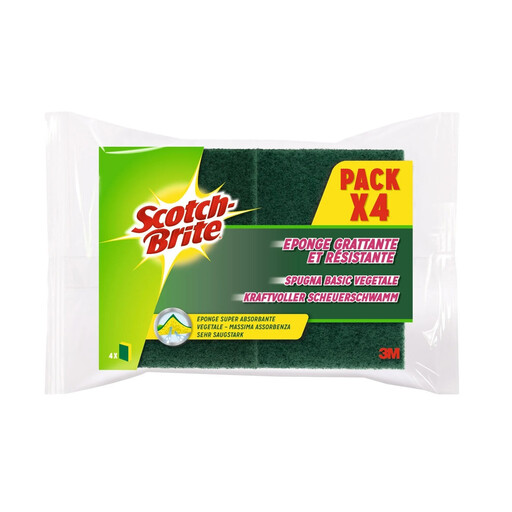
Why this choice suits this profile : This pack of four double-sided sponges covers everyday kitchen tasks, with a scouring side and an absorbent plant-based cellulose side.
Separating absorption from scouring reduces the need to use the abrasive side on sensitive surfaces. A preliminary test is still recommended.
Pack of four sponges, absorbent cellulose and a scouring side for everyday cleaning.
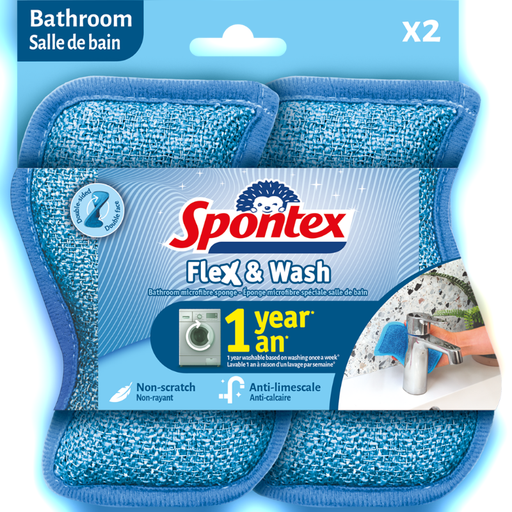
Why this choice suits this profile : Its design combines a microfibre side for mirrors and glass with a scouring side for the bathroom.
The product description states that it can withstand up to 52 washes at 40 °C, without fabric softener or tumble-drying. Reusability is therefore based on a specific figure rather than a simple promise of durability.
Recycled fibres mentioned in the product description, an absorbent foam core and a format suited to bathroom cleaning.
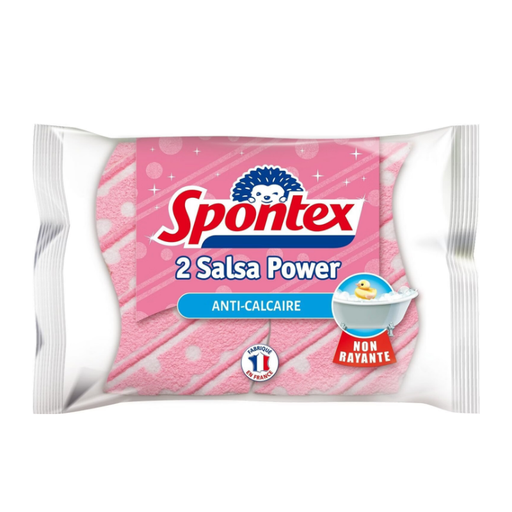
Why this choice suits this profile : This model is designed for bathroom surfaces, including taps, shower screens, baths, washbasins and mirrors.
Its targeted use means you do not have to use a highly abrasive kitchen sponge to remove limescale from bathroom surfaces.
A side described as non-scratch, a format designed to reach awkward corners and machine-washable at 40 °C according to the product description.
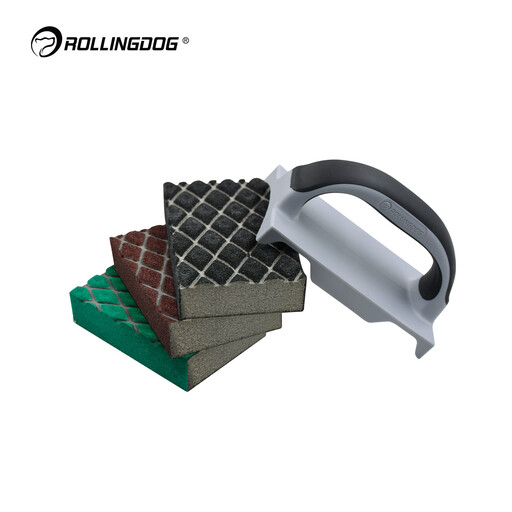
Why this choice suits this profile : This set is designed for sanding wood, metal, plaster or filler, with three grit levels for preparing a surface before painting.
It clearly separates household cleaning from sanding, with 60, 120 and 180 grits. Suitable protective equipment is still essential to protect yourself from dust.
Three grits, an ergonomic holder and the option to sand dry or with water, according to the product description.
We have put together a comprehensive, real-time selection of products that meet these strict criteria and European safety regulations.
Choose a non-scratch sponge and check the compatibility information provided by the manufacturer. Even a sponge described as gentle should be tested on a small area first. Avoid standard abrasive models designed for heavily baked-on dirt.
There is no universal lifespan. Some models specify a precise number of cycles, while others recommend replacing the sponge approximately every two months. The frequency also depends on how intensively it is used, as well as rinsing and drying. Always follow the product instructions as your priority, and replace the sponge as soon as its fibres or structure show signs of wear.
They can reduce the number of replacements if they genuinely withstand multiple washes and are properly cared for. Compare the number of pieces, washing temperature, accessories required and stated lifespan. A washable sponge that is poorly dried or used on unsuitable surfaces will quickly lose its benefits.