
Livraison le jour même ou le lendemain

Qualité garantie

Débloquez vos offres de bienvenue: Livraison GRATUITE | Jusqu'à -80 % | 30 jours d'essai gratuits à JoyPlus
Téléchargez l'application
A cleaning sponge may seem like a very simple purchase. However, choosing the wrong model can mean it wears out quickly, retains odours or leaves marks on a ceramic hob. From washing-up sponges and reusable sponges to microfibre and scouring sponges, the differences in materials and intended use are worth considering.
An abrasive surface can quickly remove burnt-on residue, but it is not suitable for every surface. A scouring sponge designed for oven racks or heavily soiled dishes may damage non-stick coatings, paint or fragile glass.
The term ‘non-scratch’ should therefore be treated with caution: it all depends on the material being cleaned, the pressure applied and any particles that may become trapped in the sponge. Testing it on a less visible area is still the best precaution.
A damp sponge that has not been properly wrung out can retain food residue and develop unpleasant odours. A special treatment does not replace rinsing, air-drying or regular replacement. For microbiological claims, check the manufacturer’s product information and the precise test conditions.
For example, the product information for the Spontex Flex & Wash Bathroom Sponge mentions results obtained by an independent laboratory on certain surfaces and using water alone. This indication applies only under the conditions described by the manufacturer; it is not a general guarantee for all household uses.
A cheap sponge that needs replacing very often may ultimately cost more than a machine-washable model. Conversely, a reusable sponge is only worthwhile if it can genuinely withstand washing and its material remains suitable for your usual cleaning routine.
Before buying, check the washing temperature, whether it is dishwasher-safe, whether fabric softener must be avoided and the recommended replacement frequency.
For a versatile kitchen sponge, a two-sided model is still the most practical option: one soft side for absorbing and wiping, and one scouring side for stubborn dirt. Plant-based cellulose offers good absorbency, while microfibre is particularly well suited to finishing glass and mirrors.
For a bathroom sponge, choose one with a side capable of tackling limescale and a soft surface for glass screens. A flexible structure also makes it easier to clean corners, grout and the edges around the sink.
‘Multi-purpose’ does not mean that the sponge is suitable for every material. If in doubt, the manufacturer’s instructions should take precedence over the marketing claims.
Rinse the sponge before using it for the first time and after every task. Wring it out without deforming it, then leave it to dry in a well-ventilated place. A machine-washable sponge should be cleaned according to the manufacturer’s instructions: some models can withstand a 40 °C cycle, while others are dishwasher-safe.
Replace it as soon as it starts to fray, loses its shape, develops an odour or no longer removes dirt effectively. Recommendations vary between models: some product pages suggest approximately two months, while reusable models claim up to 52 washes under the specified conditions.
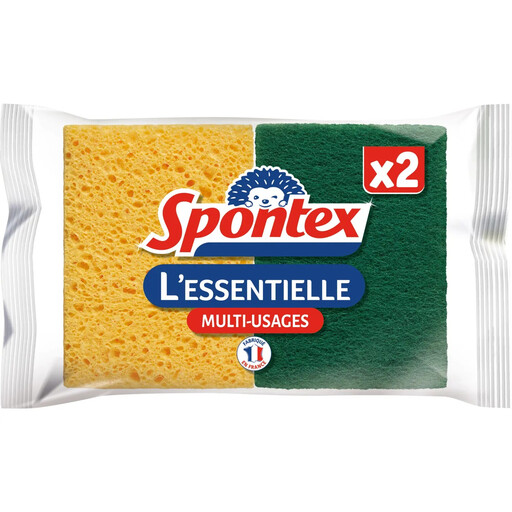
Why this choice suits this profile : This pack provides a simple and effective solution for washing up, cleaning the sink and handling small everyday tasks, without building up a collection of accessories.
The two sides let you separate wiping from scrubbing and avoid using an abrasive surface on every utensil.
Pack of 2, compact format, PEFC-certified plant-based sponge and replacement recommended after approximately two months.
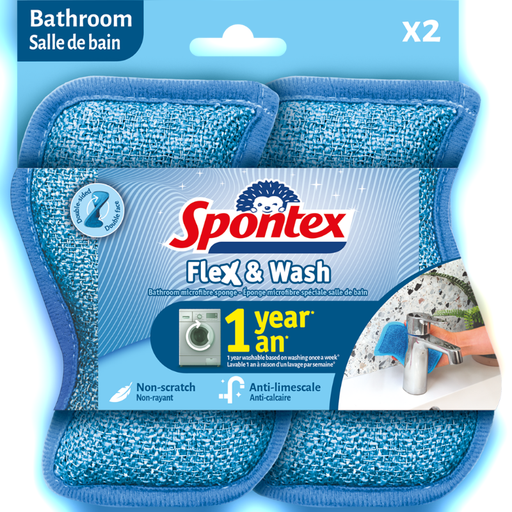
Why this choice suits this profile : This model is aimed at households that want to tackle limescale and achieve a streak-free finish on mirrors with a single accessory.
The product information specifies a microfibre side for glass and a medium-strength scrubbing side for limescale, with washing at up to 40 °C.
Up to 52 washes claimed, recycled fibres and an absorbent foam core, according to the product information.
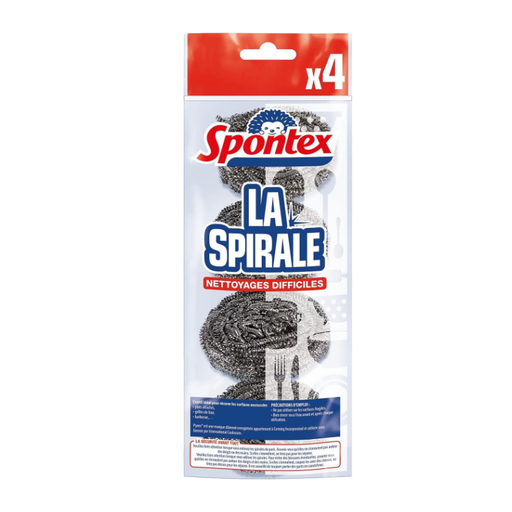
Why this choice suits this profile : This solution is intended for occasional, challenging cleaning tasks, particularly on gratin dishes, oven racks and barbecues.
Its use is clearly limited to hard-wearing surfaces: the product information excludes fragile materials and non-stick coatings.
Stainless steel mesh, good shape retention and a pack of 4 spirals. Wearing gloves is recommended.
We have put together a complete, real-time updated list of products that meet these demanding selection criteria and European safety regulations.
An African exfoliating sponge made from nylon mesh is designed for the body, not for cleaning the home. Its elongated shape and cords make it easier to reach your back, while its open mesh dries quickly. Use it without scrubbing too hard and only on intact skin. Avoid using it if your skin is irritated, and do not share it without suitable cleaning.
Choose a non-scratch sponge explicitly stated to be compatible with this type of coating. Do not use a metal spiral or an abrasive side whose compatibility has not been clearly established. Even with a sponge described as gentle, test it on a small area first and rinse it regularly to prevent a grain of dirt from scratching the surface.
It can reduce how often you need to shop if it is genuinely washable and properly maintained. Compare the stated number of washes, the permitted temperature and the recommended replacement period. A machine-washable sponge must also dry completely between uses.
Replace it as soon as it develops a persistent odour, starts to break down, retains residue or loses its absorbency. If no specific guidance is provided, regular replacement, combined with rinsing and drying after every use, will help you maintain a cleaner routine.