
Livraison le jour même ou le lendemain

Qualité garantie

Débloquez vos offres de bienvenue: Livraison GRATUITE | Jusqu'à -80 % | 30 jours d'essai gratuits à JoyPlus
Téléchargez l'application
A sponge that doesn’t absorb well, warps after a few uses, or scratches a surface can turn an ordinary chore into a recurring expense. The choice gets even trickier when you’re looking for one model to use in the kitchen, bathroom, and for body washing. Between promises of durability, “non-scratch” claims, and reusable versions, some practical details can easily slip under the radar.
For everyday washing-up, an absorbent sponge with a soft side and a scrubbing face can do the job. For pans and hobs, look clearly for the words non-scratch sponge and test it on an inconspicuous area first. Even a fibre described as soft can trap particles that might mark a surface.
A double-sided sponge lets you move from washing to removing stubborn dirt without changing tools. According to their product descriptions, the Flex & Wash models from Spontex combine a soft or microfibre side with a scrubbing face. However, the pressure you apply is still key: even the right sponge can leave marks if you use it too vigorously.
A good household sponge needs to hold enough water to wipe effectively, while rinsing out easily. A plant-based fibre or absorbent foam is handy for spills and worktops. After each use, rinse it thoroughly, squeeze it out without twisting it too hard, then leave it to air dry.
In the bathroom, a medium-texture anti-limescale sponge can help remove marks on the basin, shower, or bath. For glass, mirrors, and shiny surfaces, a microfibre side is generally better for the finishing touch than an abrasive one.
A reusable, machine-washable sponge can cut down on replacements, as long as you follow the manufacturer’s temperature and care instructions. Models that claim up to 52 washes, or a wash at 40°C or 70°C depending on the model, give you a much more useful benchmark than a simple promise of durability.
Don’t mix up sponges used for the toilet, floors, washing-up, and body. To keep track easily, assign a colour or shape to each use. Replace the sponge as soon as it’s worn, torn, or holds a smell even after washing.
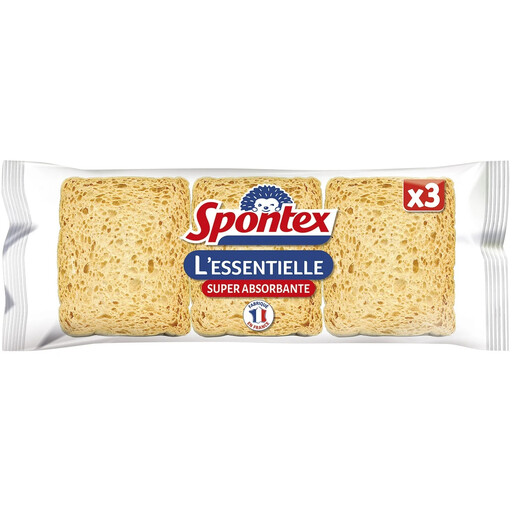
Why this choice suits this profile: This pack of three sponges covers everyday tasks in the kitchen, bathroom, and other rooms around the house.
The pack stops you using a single sponge for everything. You still need to rinse it and replace it when it’s worn out.
A sponge described as highly absorbent, sold in a pack of 3 and made in France according to the product details.
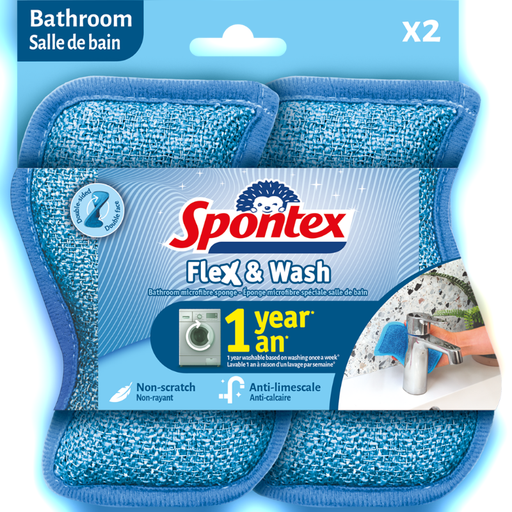
Why this choice suits this profile: Its double-sided design meets the needs of a bathroom with mirrors, glass panels, and surfaces exposed to limescale.
The product page states it can be machine washed or put in the dishwasher, up to 52 times, before air drying.
A microfibre side for windows and mirrors, a scrubbing side for limescale, and a structure that incorporates recycled fibres.
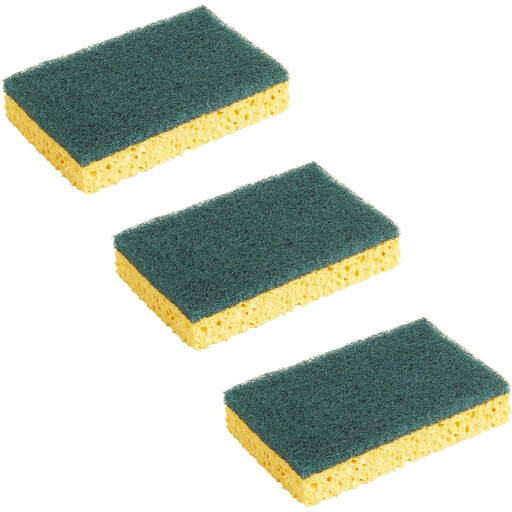
Why this choice suits this profile: This pack is ideal for a household that does a lot of washing-up and wants to always have spare sponges on hand.
The product page mentions machine washing at 70°C and recommends, for hygiene reasons, replacing it roughly every two months.
Natural cellulose described as absorbent, a pack of 3, and a protected scrubbing surface. This sponge is not suitable for delicate surfaces or non-stick pans.
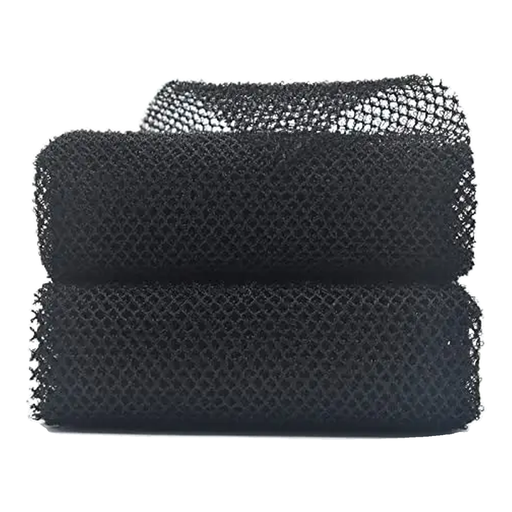
Why this choice suits this profile: Its long shape and string make it easy to clean your back and shoulders without any extra tools.
This is a body care accessory, not to be confused with a household sponge. Keep it for external use only, rinse it after each use, and hang it up to dry.
An open nylon mesh, claimed fast drying, and machine washable (using a laundry bag is recommended).
We’ve put together a comprehensive list, updated in real time, of products that meet these strict selection criteria and European safety requirements.
A bathroom sponge with a medium-level scrubbing face can work on marks on the basin, bath, or shower. For glass and mirrors, go for a microfibre face instead. Always test on an inconspicuous area and follow the manufacturer’s recommendations.
It depends on how often you use it, how well it dries, and the condition of the fibres. Some product pages recommend replacing it roughly every two months, while a reusable model may claim up to 52 washes. Change it sooner if it tears, warps, or holds a lingering smell.
No. An exfoliating body sponge, like an African exfoliating net, is designed for external washing. It should not be used for washing dishes, surfaces, or household equipment. Likewise, a household scrubbing sponge should never be used on the skin.