
Livraison le jour même ou le lendemain

Qualité garantie

Débloquez vos offres de bienvenue: Livraison GRATUITE | Jusqu'à -80 % | 30 jours d'essai gratuits à JoyPlus
Téléchargez l'application
A cleaning sponge may seem like an insignificant purchase. Yet the wrong choice can leave marks on a ceramic hob, retain unpleasant odours after just a few uses or wear out quickly when exposed to grease and limescale. In a French household, the right model mainly depends on the surface being cleaned, how often it is used and how easy it is to maintain.
This 2026 selection reviews several options for washing-up, the kitchen, the bathroom and everyday cleaning. It is also an opportunity to examine the criteria worth checking before adding sponges to your basket.
An abrasive side can easily remove burnt-on residue, but it is not necessarily compatible with a non-stick pan, ceramic hob or glossy surface. The “non-scratch” label should therefore be treated with caution: manufacturers generally recommend testing the sponge on an inconspicuous area first.
For delicate utensils, it is better to choose non-abrasive sponges or models with a scouring side specifically designed to minimise scratching.
An antibacterial sponge may feature a treatment designed to limit bacterial growth or the development of unpleasant odours on the product. This does not eliminate the need to rinse it, wring it out thoroughly and leave it to air-dry. This type of treatment does not guarantee disinfection of the cleaned surface.
Also take the time to check the composition and instructions on the packaging. For the Spontex model in question, the product information mentions an antibacterial agent containing zinc pyrithione; this relates to the treatment applied to the sponge and does not constitute a medical claim.
A pack of six or ten sponges is not necessarily good value if they quickly lose their shape, absorbency or become saturated with grease. The number of units should be considered alongside the material used, whether they can be washed and the recommended replacement schedule.
Machine-washable sponges can help reduce waste. However, you must follow the stated temperature and replace the sponge as soon as its texture or cleaning performance begins to deteriorate.
Plant-based cellulose generally absorbs water well and helps create a rich lather. It is suitable for dishwashing sponges, cleaning worktops and everyday wiping. Synthetic foams such as polyurethane, meanwhile, offer a soft, comfortable grip and sufficient absorbency for lighter cleaning tasks.
A multi-layer sponge can combine several functions: an absorbent layer for liquids, a synthetic layer for distributing cleaning products and a scouring side for more stubborn, ingrained dirt.
For everyday cleaning, a non-scratch surface is the safest choice for sensitive materials. Traditional scouring fibres are better suited to stubborn dirt on surfaces designed to withstand them. Never use an abrasive side on a non-stick pan or a coating whose care instructions advise against scrubbing.
The Scotch-Brite and Spontex products presented below specify their usage restrictions: always check the labelling before first use.
After each use, rinse the sponge thoroughly, wring it out and leave it to dry in a well-ventilated place. Some products can be washed at 40°C, while one long-lasting model states that it can be washed at 70°C. These instructions apply only to the products concerned and should not be generalised to all sponges.
Do not mix sponges used for toilets, bathrooms and washing-up. A colour-coding system or separate storage helps prevent mix-ups.
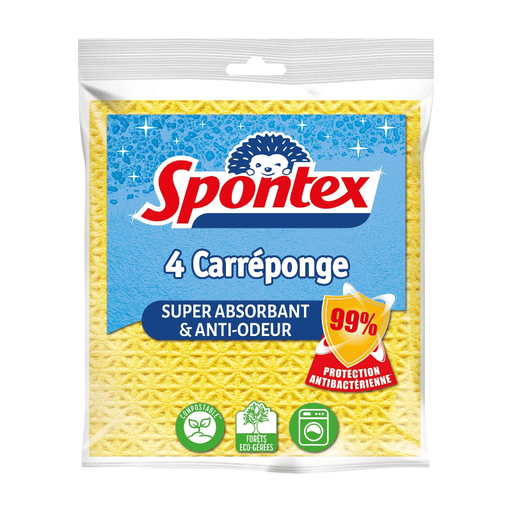
Why this model suits this profile: a pack of four sponges for light cleaning tasks in the kitchen, bathroom and around the home.
The pack makes it easy to separate cleaning tasks and replace a worn sponge without immediately having to buy a large quantity.
Easy-to-grip square format, stated absorbency and a treatment designed to help limit odours on the sponge.
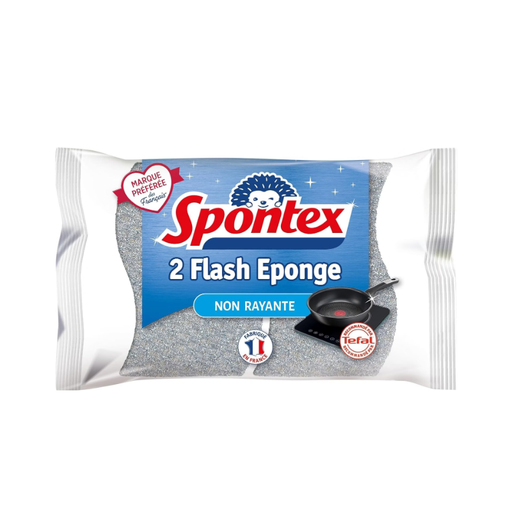
Why this model suits this profile: its non-scratch scouring side is designed for hobs, pans and other delicate surfaces, subject to a preliminary test.
The “non-scratch” claim comes with instructions to test the sponge on an inconspicuous area: you should still follow the surface manufacturer’s care recommendations.
Aluminium-coated plastic scouring fibres, a plant-based section and stated machine washing at 40°C.
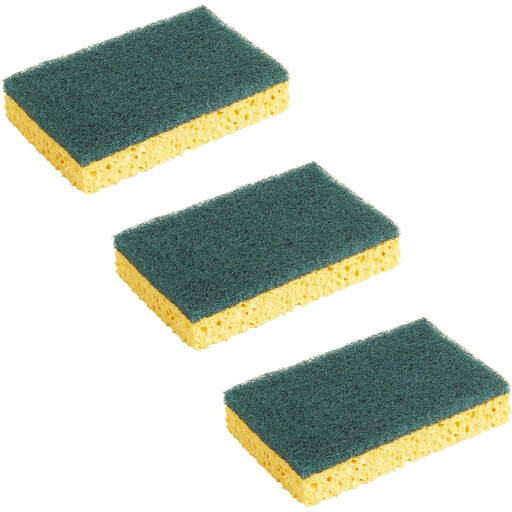
Why this model suits this profile: an option designed for frequent use and dishes that require more vigorous scrubbing.
The scouring side is separate from the absorbent section; do not use it on non-stick or particularly delicate coatings.
Absorbent natural cellulose, stated machine washing at 70°C and a surface designed to tackle ingrained dirt.
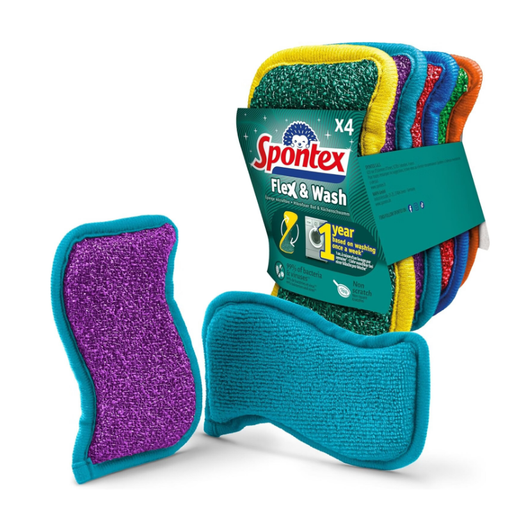
Why this model suits this profile: its washable design is ideal for anyone looking to extend the time between sponge replacements.
The manufacturer states that it can withstand up to 52 wash cycles, but the sponge should still be rinsed after every use and replaced as soon as its performance declines.
Flexible S-shape, microfibre side and scouring fibres containing 65% recycled fibres according to the product information.
Bathroom sponges need to reach taps, seals, basins and shower walls without marking the surfaces. Sold in a pack of two, the SPONTEX Salsa Power Bathroom is presented as a non-scratch sponge with enhanced limescale-fighting action. Its shape can be particularly practical in tight spaces, especially around mixer taps.
When dealing with white limescale marks, allow the cleaning product to work according to its instructions rather than applying more pressure. Then rinse thoroughly and dry the surface if recommended. This approach helps limit both sponge wear and the risk of leaving marks.
Browse our updated selection of sponges that meet these purchasing criteria and the usage instructions applicable in France.
It depends on how often it is used, the products applied and the condition of the material. Several products recommend replacement approximately every two months, while some reusable models claim to withstand up to 52 washes. Replace the sponge sooner if it retains a persistent odour, tears or remains dirty despite rinsing.
No. Only products whose packaging explicitly states that they are machine-washable should be cleaned this way. Follow the stated temperature — 40°C or 70°C depending on the model — then allow the sponge to dry completely before using it again.
Choose a non-abrasive sponge and consult the pan’s care instructions. Even a side advertised as non-scratch should be tested on a small, inconspicuous area. Avoid both traditional scouring sides and excessive pressure: soaking and using a suitable detergent will often reduce the need for scrubbing.