
Livraison le jour même ou le lendemain

Qualité garantie

Débloquez vos offres de bienvenue: Livraison GRATUITE | Jusqu'à -80 % | 30 jours d'essai gratuits à JoyPlus
Téléchargez l'application
A sponge may seem like an insignificant purchase… until it becomes misshapen, retains unpleasant smells or scratches a hob. The same applies to a bath net : a mesh that is too rough quickly becomes uncomfortable, while a model that is too short can struggle to reach your back.
To avoid unpleasant surprises when choosing cleaning sponges and exfoliating nets, it is best to consider three factors : the intended use, the material and the care requirements. Here are the criteria to check before choosing a sponge for washing up, the bathroom or body exfoliation.
A non-scratch sponge is not necessarily suitable for every surface. Residue trapped in its fibres can leave marks on delicate materials. Non-stick pans, glass, varnished wood and certain hobs should therefore be tested first on an inconspicuous area.
The term “non-abrasive” should always be considered in relation to the surface being cleaned and the side being used. With a double-sided sponge, you can reserve the scrubbing side for stubborn dirt and use the soft side for everyday wiping.
Even a sponge advertised as durable still depends on proper care. If it is left damp at the bottom of the sink, smells and deposits can build up quickly. Check whether it is machine washable or dishwasher safe, at what temperature, and how often the manufacturer recommends replacing it.
A machine-washable sponge can indeed reduce the need for replacements, provided you follow the care instructions : the maximum temperature, avoiding fabric softener and air-drying are all important considerations.
For a sponge intended for your back, the length and the presence of cords make all the difference. A sufficiently long African bath net can be held at both ends and used with a back-and-forth motion. A compact model is more suitable for the arms, legs or face, provided its texture remains gentle.
However, texture alone does not determine how it should be used. Nylon mesh dries quickly, helping water to drain away, but overly vigorous exfoliation can irritate the skin.
In the kitchen, an absorbent sponge with a cellulose or polyurethane core makes it easier to wipe up liquids. A scrubbing side can help remove residue, but only from compatible surfaces.
A microfibre sponge is particularly useful for mirrors, windows and streak-free finishes. To remove limescale in the bathroom, look for a scrubbing side designed for this purpose. However, check that it is compatible with tiles, taps and glass screens.
The terms “washable” and “reusable” do not tell you everything. Check the stated number of wash cycles, the recommended temperature and the advised drying method. A reusable sponge should be rinsed after every use, wrung out and left to dry in a well-ventilated area.
Non-washable models should be replaced as soon as they start to fray, become misshapen or develop a persistent smell. For several Spontex products, the product description recommends replacing them approximately every two months.
A well-designed shape improves grip and reduces slipping. Small formats are easier to manoeuvre into the corners of a sink or around a tap. For a shower, bath or hard-to-reach areas, a flexible or elongated shape may be more practical.
For the body, choose a mesh that rinses easily and an accessory that can be hung up. Never use a household sponge on your skin : some product descriptions explicitly state that these models are intended for surfaces only.
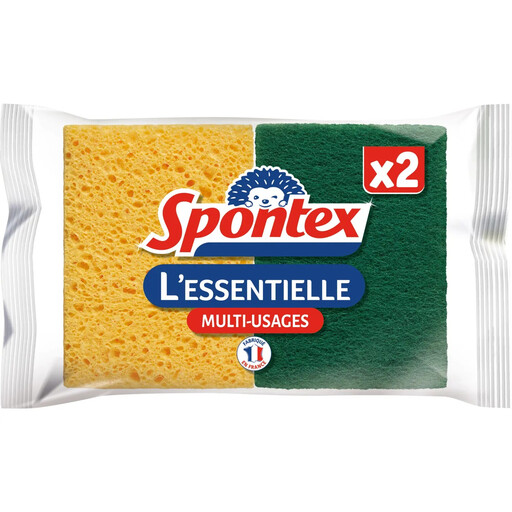
Why this choice suits this profile : Its double-sided design covers everyday tasks in the kitchen, bathroom and other rooms around the home, without the need for multiple accessories.
The soft side is for wiping, while the scrubbing side tackles persistent dirt. The product description recommends testing the sponge on an inconspicuous area before using it on a delicate surface.
An absorbent PEFC-certified vegetable sponge, two complementary sides and manufacturing stated as taking place in France.
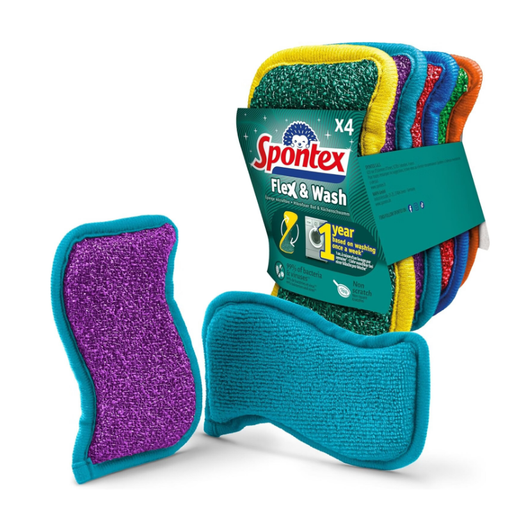
Why this choice suits this profile : This pack is designed for households looking for a washable accessory and a more sustainable approach to everyday cleaning.
The product description states that it can withstand up to 52 washes and recommends machine washing without fabric softener or tumble drying. Even so, the sponge should be replaced as soon as its performance declines.
A flexible S-shaped design, a microfibre side made from recycled fibres and a scrubbing side advertised as non-scratch.
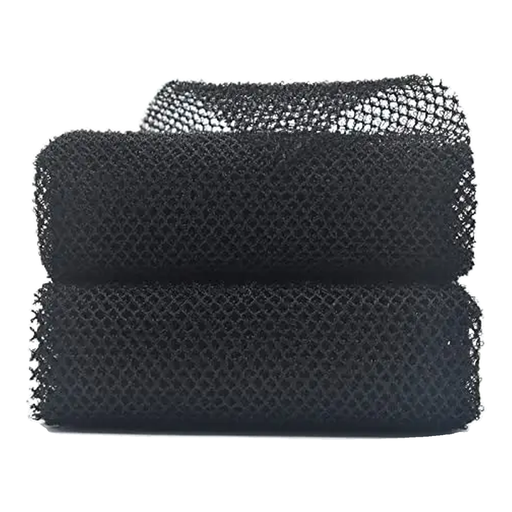
Why this choice suits this profile : Its elongated shape and integrated cords make it easier to wash your back and shoulders as part of a regular body-care routine.
The net can be hung up after rinsing, and its open structure helps it dry quickly. However, avoid using it on irritated or very sensitive skin.
Nylon mesh, cords for reaching your back and machine washing possible with a protective laundry bag.
We have put together a complete, real-time updated list of products that fully meet these strict selection criteria and European safety regulations.
Choose a double-sided sponge with a soft section designed for wiping. Even if it is described as non-scratch, test it first on an inconspicuous area. For non-stick pans, follow the manufacturer’s recommendations and avoid any abrasive side whose compatibility is not clearly stated.
It depends on how often it is used and how well it is cared for. Some washable products claim to last for up to 52 cycles, while other recommendations suggest replacing them approximately every two months. In all cases, a persistent smell, fraying, misshaping or poor absorbency are clear signs that it is time for a replacement.
Wet it with warm water, add a small amount of shower gel and use gentle circular movements over your body. For your back, hold both ends and glide the net across your skin without applying pressure. Avoid irritated areas, wounds and very sensitive skin ; stop immediately if you experience any discomfort.