
Livraison le jour même ou le lendemain

Qualité garantie

Débloquez vos offres de bienvenue: Livraison GRATUITE | Jusqu'à -80 % | 30 jours d'essai gratuits à JoyPlus
Téléchargez l'application
A sponge that crumbles after three days, a brand-new non-stick pan that's already scratched, that lingering odour near the sink… Does this sound familiar? Choosing a simple cleaning sponge can quickly become a headache when faced with promising packaging and vague marketing jargon.
As the Home & Kitchen Editor at Joybuy, my mission is to help you cut through the noise. Our team has identified the 3 most common pitfalls that lead to a disappointing purchase:
To avoid these issues, it's better to rely on objective technical criteria than on advertising slogans.
Before you check out, take a moment to verify these three points. They are the secret to a sponge that will truly meet your needs and stand the test of time.
The sponge's material defines its absorbency, durability, and primary use.
The scouring side is designed for specific tasks. Choosing the right one is crucial to avoid damaging your equipment.
A high-performance sponge must stay clean. Its ease of maintenance is a non-negotiable criterion.
To illustrate these criteria in action, here is our selection of products and accessories, each designed to meet a specific need.
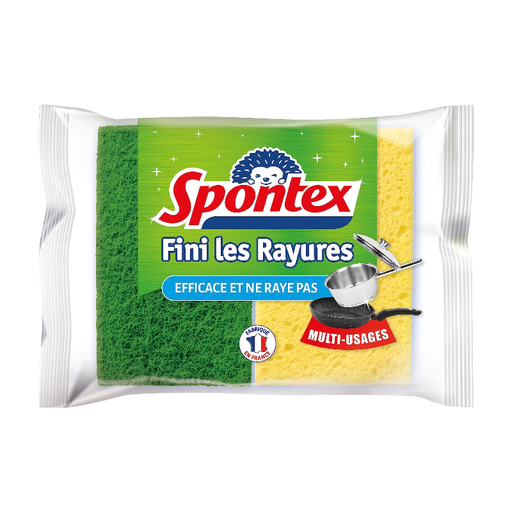
Why we love it: Ideal for anyone with modern kitchenware (non-stick pans, ceramic hobs) who wants to take zero risks. Its scouring surface is specifically designed to clean effectively without ever damaging coatings.
It sidesteps the "false non-scratch promise" pitfall thanks to its exclusive scouring face, engineered to be completely harmless on the most sensitive surfaces.
Its vegetable sponge base (cotton, wood pulp) ensures excellent absorption. It can be washed in the washing machine or dishwasher at 40°C for perfect hygiene.
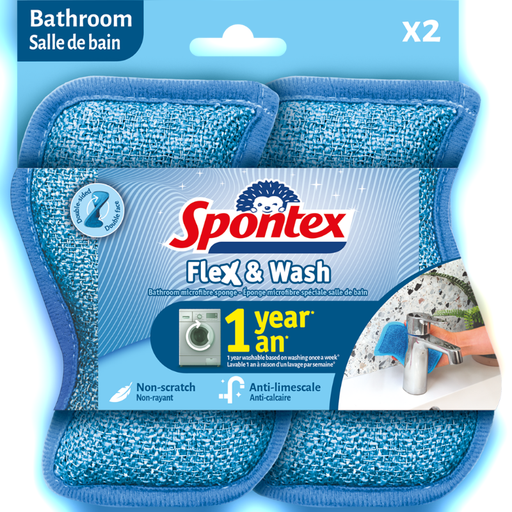
Why we love it: Built for the challenges of the bathroom, this sponge tackles limescale without scratching tiles or taps. Its microfibre side is perfect for making mirrors and shower screens shine without leaving a single streak.
It solves the problems of durability and hygiene. The manufacturer guarantees up to 52 washes, equivalent to a year of use with one wash per week. This ensures impeccable cleanliness over the long term.
Its versatile dual-face design: a scouring side for limescale, and a microfibre side for a flawless finish. All made with recycled fibres.
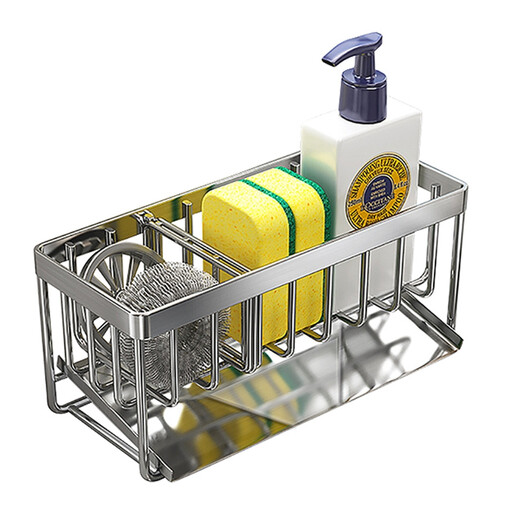
Why we love it: The perfect solution for anyone tired of a sponge constantly sitting in a puddle in the sink. This simple and durable accessory keeps your worktop clean, dry, and organised.
It directly tackles the "hygiene pitfall." By allowing the sponge and brush to air-dry, it prevents water from stagnating and stops bacterial growth in its tracks.
Its construction from 304 stainless steel, a material renowned for its resistance to rust and corrosion, guarantees excellent longevity, even in a constantly damp environment.
For hygiene reasons, experts agree that a kitchen sponge should be replaced every two to four weeks, depending on use. If it develops an odour, becomes discoloured, or starts to fall apart, throw it out without hesitation. Machine-washable models last longer, provided they are cleaned very regularly.
There are several effective methods. The simplest, for compatible sponges, is to run them through the dishwasher (top rack) or washing machine at 40 or 60°C with your laundry. Another technique: submerge the damp sponge in a bowl of water and microwave it for one to two minutes. Warning: never do this with a dry sponge or one containing metal, and let it cool down completely before handling.
Yes, it's a risk. The magic eraser owes its effectiveness to its melamine foam structure, which acts as an ultra-fine abrasive. It is incredibly effective but can dull or micro-scratch very glossy, lacquered, dark, or fragile surfaces. The golden rule: always test it on a small, hidden area before you start.