
当日/次日达

品质保障

开启新人专享福利: 全场免邮 | 低至 2 折 | 免费试用 30 天 JoyPlus 会员
下载 Joybuy
Navigating the cleaning products aisle can quickly become a headache. Between promises of dazzling results, captivating scents, and ultra-specialised formulas, it's easy to feel lost... and end up with a cupboard full of barely used bottles. As a Product Expert at Joybuy, my mission is to help you see things more clearly and make smart choices that are genuinely suited to your daily life.
Before we dive into our selection, let's review the most common pitfalls that waste your time and money?:
To sidestep these traps, simply focus on a few key criteria that make a real difference.
Understanding a product's star ingredient ensures you choose the right tool for the right task.
The classic mistake? Using a product that is too harsh on a delicate surface. An oven cleaner can damage a wooden worktop, and a limescale remover can tarnish chrome fittings if not rinsed off quickly. Always check the manufacturer's instructions on the label. When in doubt, the best approach is to test it on a small, inconspicuous area. Products based on Marseille soap or household baking soda are often gentler and more versatile.
Here are a few products chosen to meet very distinct needs.
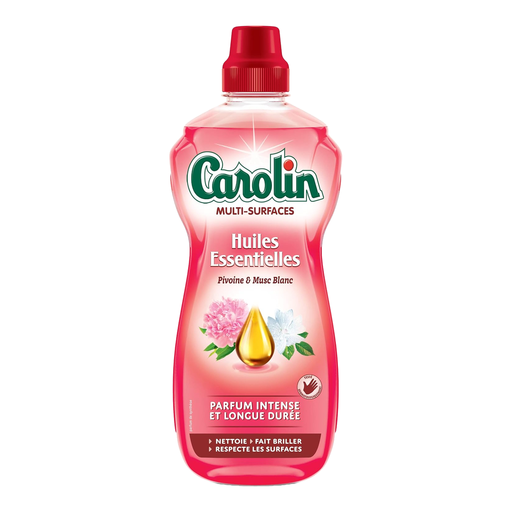
Why we love it: Perfect for those who want a simple and effective solution for the quick cleaning of everyday floors and surfaces. Its pleasant scent and no-rinse formula make it a practical daily ally.
This product doesn't sell itself as a miracle solution for desperate cases. It perfectly delivers on its promise as a multi-purpose cleaner for regular maintenance, without claiming to replace a heavy-duty limescale remover.
Its no-rinse formula leaves no streaks, and its essential oil fragrance is long-lasting.
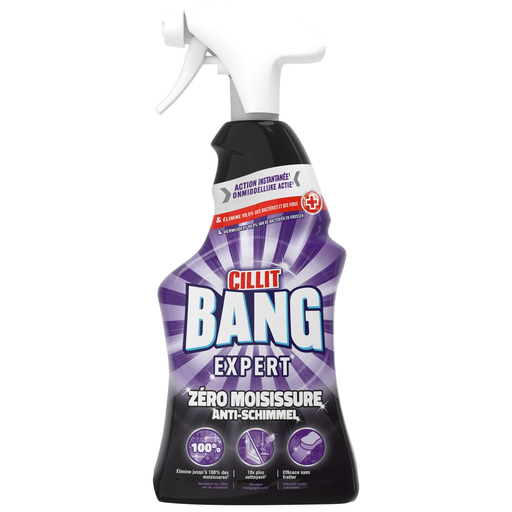
Why we love it: A must-have for anyone battling damp and stubborn mould in the bathroom. Its targeted formula tackles the typical problems of this room, without even needing to scrub.
It doesn't promise the moon. It's an ultra-specialised bathroom cleaner that focuses on eliminating mould and disinfecting, where a multi-purpose product would have no effect.
The manufacturer claims a formula that eliminates 99.9% of bacteria and 100% of mould. Its action is formidable on grout, shower screens, and ceramics.
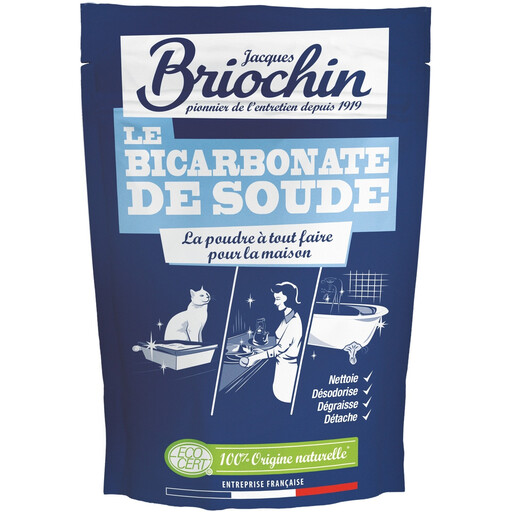
Why we love it: For all those who favour raw, well-known, and ultra-versatile ingredients. Baking soda is a staple for cleaning, deodorising, and degreasing a multitude of surfaces, all at a low cost.
This product is the very antithesis of vague marketing. It's a single ingredient, household baking soda. No over-the-top promises, just a raw product whose effectiveness is well-proven.
Ultra-versatile: it cleans, gently scours, deodorises, and even softens laundry. A minimalist composition for maximum savings.
We have selected a complete range of products for you that meet our quality criteria and UK standards.
1. Can you mix different cleaning products? Absolutely not! This is an extremely dangerous practice and should be avoided at all costs. Mixing certain chemicals can cause toxic reactions. For example, mixing bleach with an acidic product (like a descaler or vinegar) releases chlorine gas, which is very irritating to the respiratory tract. Always read the warnings on the label and use only one product at a time.
2. What's the difference between cleaning and disinfecting? A cleaner is used to remove visible dirt (dust, grease, stains). Its purpose is to make a surface look clean. A disinfectant, on the other hand, contains chemical agents (biocides) that kill invisible microorganisms like bacteria and viruses. For perfect hygiene, the golden rule is to always clean a surface before disinfecting it.
3. Can an eco-friendly product be truly effective? Yes, provided you don't just rely on the "green" packaging. Trust official labels (like the EU Ecolabel), which guarantee compliance with a demanding set of criteria. You can also go back to basics: raw ingredients like Marseille soap, white vinegar, or household baking soda, whose effectiveness and low environmental impact have been proven for generations.