
当日/次日达

品质保障

开启新人专享福利: 全场免邮 | 低至 2 折 | 免费试用 30 天 JoyPlus 会员
下载 Joybuy
Venturing down the cleaning products aisle can often feel like a puzzle. Between the miracle formulas and the ever-flashier packaging, it's hard to know which product will actually be effective for your needs. The result?: cupboards overflowing with half-empty bottles that are as disappointing as they are useless.
To help you see things more clearly, we've broken down the common pitfalls to avoid and the essential criteria to check before you buy. Our goal?: to arm you with the knowledge to choose truly suitable products and stop throwing your money down the drain.
The 2 pitfalls to avoid when shopping?:
To stop buying blind, focus on a few key indicators. These are what determine a product's true effectiveness for a specific task.
The effectiveness of a cleaning product primarily depends on its pH level, which determines its field of action against a specific type of dirt.
Beyond pH, the active ingredients make all the difference.
To put theory into practice, here are three products that meet very specific needs, each illustrating our advice.
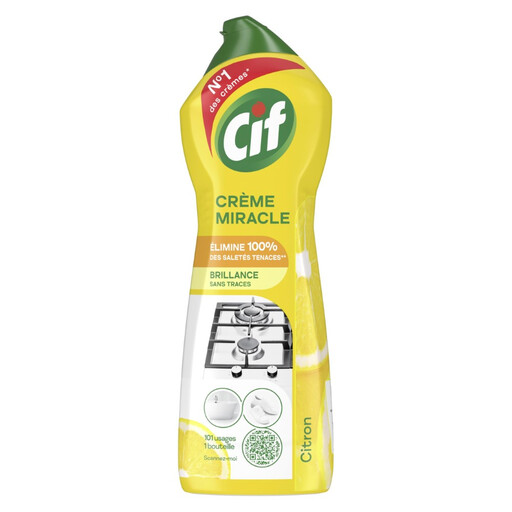
Who is it for? For those who want a do-it-all product that is genuinely effective. Its cream texture is far more powerful than a simple spray when tackling tough dirt in the kitchen and bathroom.
Unlike a standard liquid multi-purpose cleaner, its cream formula and micro-particles provide targeted abrasive action to lift grime, without scratching.
Incredible versatility on numerous surfaces (enamel, stainless steel, ceramic) and a strong manufacturer's promise: to remove 100% of dirt, even the toughest kinds.
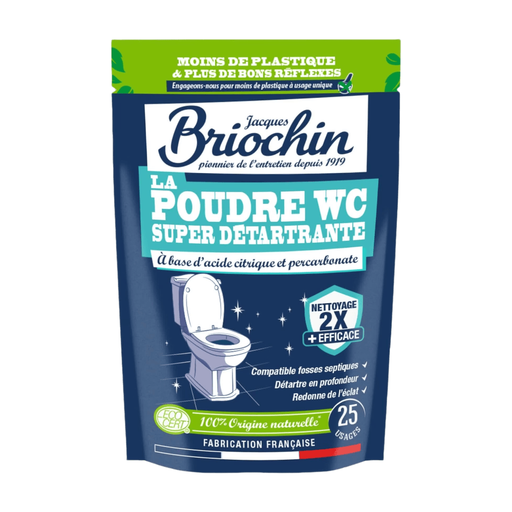
Who is it for? For those who prefer simple, effective, and planet-friendly formulas. This powder cleaner relies on citric acid, a powerful natural descaler, for toilet maintenance.
No vague "natural" promises here. The product is Ecocert certified, an independent label that validates its 100% naturally derived composition and recyclable packaging.
A minimalist and ultra-effective composition (citric acid, sodium carbonate). Its dual-use capability is also a plus: for routine maintenance or a deep clean.
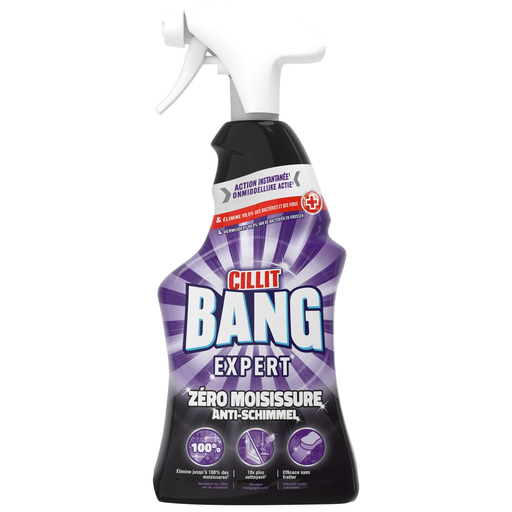
Who is it for? For those battling recurring mould in damp rooms. This is a niche product with a formula specifically designed to tackle this menace.
It doesn't promise the moon. It's a specialist that proves a targeted solution is essential for a problem like mould, where a multi-purpose cleaner would be completely powerless.
Its sodium hypochlorite (bleach) based formula is designed to eradicate mould and sanitise surfaces. The manufacturer claims 99.9% effectiveness against bacteria.
Ultimately, choosing the right cleaning product isn't about the brand, but about relevance. It's about finding the right formula for the right problem. By learning to decipher labels, you can build a truly effective cleaning arsenal without breaking the bank.
For a deep clean of your sanitary facilities, discover our complete selection of products that meet strict standards for efficiency and safety.
No, that's a very bad idea. You should never mix bleach with other products, especially acidic ones (descalers, vinegar, etc.) or those containing ammonia. The mixture can release extremely toxic chlorine gas, which is very dangerous for the respiratory system. The golden rule: always read the labels and safety instructions.
A conventional cleaner often relies on synthetic, petrochemical-based ingredients for heavy-duty action. Conversely, a certified eco-friendly household product (by Ecocert, for example) favours ingredients of plant or mineral origin (vinegar, baking soda, etc.). Its effectiveness is based on natural active agents, and its environmental impact is controlled, from its manufacturing to its biodegradation.
It all depends on the hardness of your water (its limescale content). If you live in a region with very hard water, a weekly descaling with a suitable toilet cleaner or bathroom product is recommended to prevent limescale from building up permanently. With softer water, cleaning every 15 days is often sufficient.