
Livraison le jour même ou le lendemain

Qualité garantie

Débloquez vos offres de bienvenue: Livraison GRATUITE | Jusqu'à -80 % | 30 jours d'essai gratuits à JoyPlus
Téléchargez l'application
A well-chosen cleaning brush can save you time, protect a surface and stop you from accumulating accessories that ultimately aren't very useful. On the other hand, the wrong model can lose its bristles, trap moisture or scratch a delicate finish.
Before comparing cleaning brushes, it's best to start with the actual task at hand rather than relying on marketing claims. A brush for grout won't have the same features as a bottle brush, a wheel brush or a precision brush designed for car air vents.
Very rigid bristles might seem ideal for tackling stubborn dirt. However, they aren't suitable for glossy plastics, leather, glass or car paint. For a car cleaning brush, the stiffness of the bristles must always be chosen according to the surface.
A scrubbing brush can work perfectly on tile grout or shoe soles, but it can leave marks on a fragile finish. So always check that the manufacturer specifies the bristle material and the compatible surfaces.
A handle that's too short makes it difficult to clean a tall bottle, a deep wheel rim or the space behind a piece of furniture. Conversely, an accessory that's too long can lack precision.
For hard-to-reach nooks, go for a slim head, a slightly flexible handle or an angled design. A car air vent brush in particular needs to be able to slide between the slats without applying too much pressure.
Even a good brush quickly loses its appeal if it doesn't dry properly. Damp bristles can trap residue and cause unpleasant odours. After each use, rinse the accessory, remove any visible dirt and leave it to dry in a well-ventilated area.
Removable or washable models are especially practical for frequent use. This is particularly true for car detailing accessories used on several areas of the cabin.
The term "scratch-resistant" doesn't mean you shouldn't test it on an inconspicuous area first. The pressure you apply, any particles trapped in the head and the cleaning product you use can all affect the result.
A bottle brush measuring 36 cm with a head diameter of 21 mm, like the White Label model shown below, is designed for tall, narrow containers. For a wheel rim, a length of around 30 to 35 cm makes it easier to reach the inner sections. In a centre console or around a button, a compact precision brush will generally be more manoeuvrable.
A non-slip handle improves your grip, especially when using soapy water. The absence of metal parts can be a real plus on sensitive surfaces, while an ergonomic handle helps prevent jerky movements.
Always follow the instructions on the product page: some accessories should not be used with solvents, very hot water, bleach or highly corrosive detergents. For items intended for indirect contact with food containers, check the manufacturer's recommendations and rinse thoroughly after cleaning.
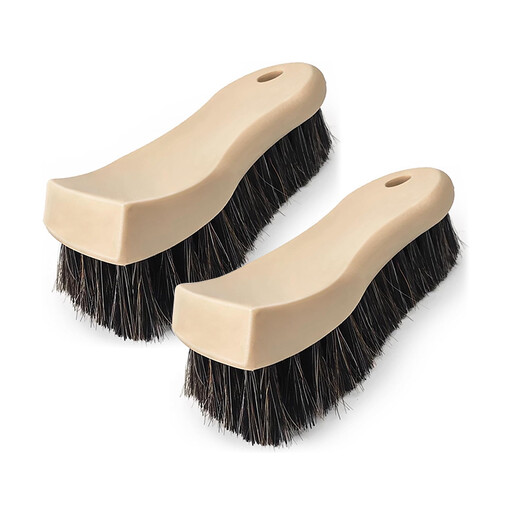
Why this choice suits this profile: A set of two brushes, one with stiff bristles and the other with soft bristles, for cleaning shoes, soles and small surfaces around the home.
The difference in stiffness stops you from using one brush on every surface.
Two plastic brushes with different stiffness levels and a size suited to small jobs.
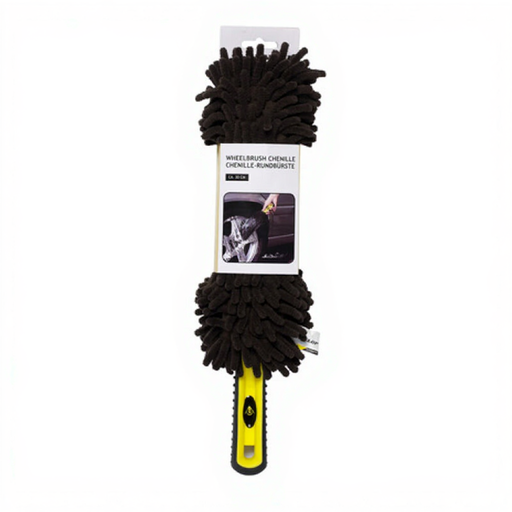
Why this choice suits this profile: Car detailing enthusiasts can reach the inside of wheel rims and wheel arches with this long chenille brush.
The soft chenille and the absence of metal bristles reduce the risk of abrasion, provided you remove any grit before use.
A stated length of 33 cm, a handle with a non-slip zone and a head designed to reach tricky areas on wheel rims.
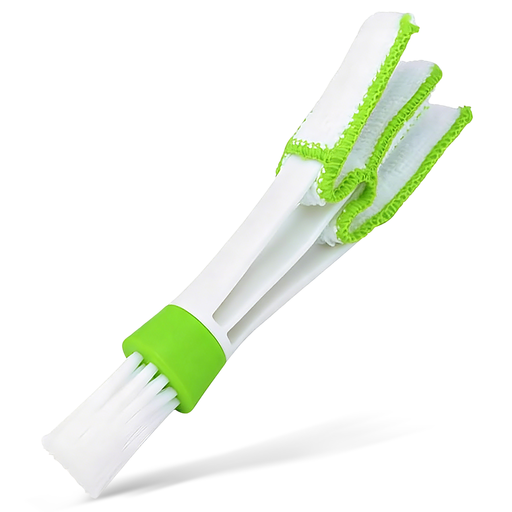
Why this choice suits this profile: This accessory tackles air vents, keyboards, blinds and small spaces in the car cabin or around the home.
The removable, washable head stops dust from building up between uses.
A combination of microfibre and PP bristles, a size of 16 × 6 × 2.5 cm and a removable head.
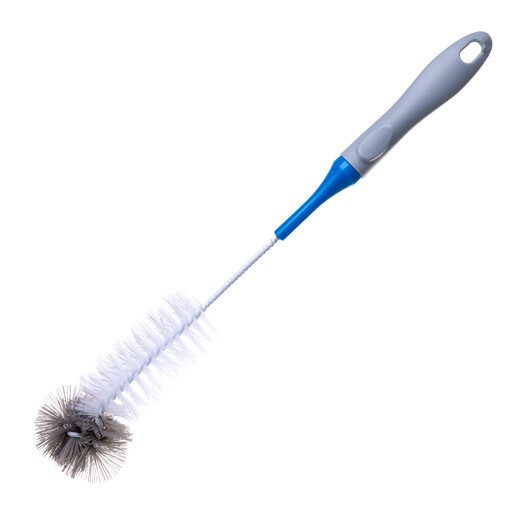
Why this choice suits this profile: Its length is ideal for washing bottles, flasks and tall containers used every day.
The stated head diameter lets you check compatibility with the bottle neck before buying, rather than relying on length alone.
A total length of 36 cm, a 21 mm head and a PP handle with no metal parts.
We've put together a comprehensive, real-time selection of products that meet these strict criteria and European safety requirements.
A brush with soft, dense bristles, possibly with an angled or removable head, will generally be the most practical. Use it dry for dusting, then with a small amount of mild detergent if the product page allows it. Above all, avoid pushing dirt further into the vents.
It all depends on how often you use it, the pressure you apply, the products you use and the drying conditions. Replace it when the bristles become misshapen, the head comes loose or it no longer removes dirt properly. Rinsing it thoroughly every time and storing it in a ventilated area will help reduce wear.
It's best to do so, to avoid transferring abrasive particles from one area to another. Keep one brush for the wheels, another for the cabin, another for grout and another for containers. This separation also makes it easier to match the bristle stiffness and cleaning product to the task.