
Same-day & Next-day Delivery

Quality Guaranteed

Unlock Your Welcome Offers: FREE Delivery | Up to 80% OFF | Free 30-day JoyPlus trial
Download the APP
A sponge may seem like an unremarkable purchase. However, choosing the wrong one can lead to lingering odours, deteriorating texture, scratches on surfaces or exfoliation that is too harsh for your skin. Cleaning and bath sponges are not interchangeable: a sponge intended for the bathroom has no place on the body, while an exfoliating accessory should never be used in the kitchen.
Here are the key points to consider before buying, along with a selection of models suited to different uses.
A multi-purpose sponge can be used for several household tasks without being suitable for every surface. An abrasive side may leave marks on a ceramic hob, non-stick pan, glass or painted surface.
To avoid unpleasant surprises, check for the wording “scratch-free”, then always test the sponge on an inconspicuous area. Dirt trapped between the accessory and the surface can also cause scratches, even when the texture is described as gentle.
A reusable sponge should be washable, but it also requires suitable care. Claims such as “washable dozens of times” or “extended lifespan” do not replace essential information: maximum temperature, whether fabric softener is prohibited, drying conditions and replacement frequency.
A classic washing-up sponge should be replaced regularly for hygiene reasons. By contrast, a washable microfibre sponge or reusable cleaning model is designed for repeated use, provided it is rinsed and dried after every use.
The exfoliating African net sponge is appealing thanks to its elongated shape and firm texture. However, it is not suitable for irritated, damaged or particularly sensitive skin. Exfoliating too vigorously or too frequently can quickly become uncomfortable.
Models fitted with a back exfoliating sponge or a cord make it easier to reach the shoulders and back. Nevertheless, use them with gentle movements. These accessories are intended for external body use only and must never be used to clean surfaces.
For the home, look for the right balance between absorbency, cleaning performance and respect for surfaces. Microfibre is particularly suitable for windows, mirrors, furniture and worktops. Some models combine a microfibre side with a non-scratch scouring side to tackle both light marks and more stubborn dirt.
For washing up, a scratch-free washing-up sponge is still worth testing on a small area, especially if it is to be used on a delicate coating. Plant-based materials, polyurethane, nylon and recycled fibres do not offer the same feel or durability.
A reliable product description should state the number of washes supported, the recommended temperature and the care instructions. Some Flex & Wash sponges are advertised as washable for up to 52 cycles, while Spontex microfibre cloths can be washed up to 500 times. These figures reflect information supplied by the manufacturers and assume that the products are cared for as instructed.
Avoid fabric softener with microfibre: it can clog the fibres and reduce their drying performance. Also avoid mixing body-care accessories with household sponges.
A bath sponge with a cord or an open mesh dries more quickly than a compact sponge left in a damp soap dish. In the bathroom, therefore, choose a model that can be hung up in a well-ventilated place.
For household cleaning, an ergonomic or flexible shape makes it easier to clean corners, grout, the sink and hard-to-reach areas. The sponge should remain easy enough to handle so that you do not need to apply excessive pressure.
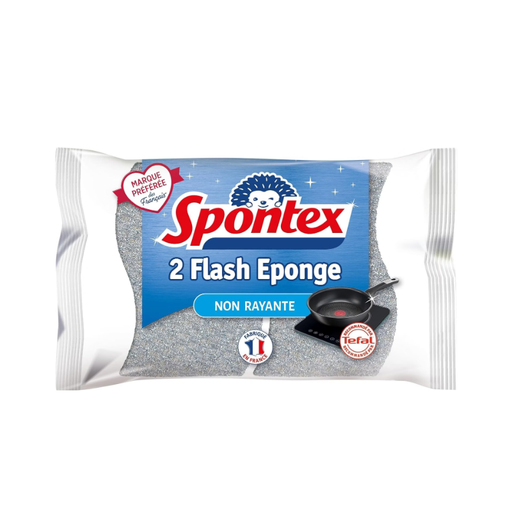
Why this product suits this profile : This two-pack is suitable for everyday tasks in the kitchen and bathroom. It combines a scouring side advertised as non-scratch with an absorbent plant-based sponge section.
Its texture is clearly intended for household cleaning, and the manufacturer recommends testing it first on delicate materials. It must not be used on the body.
Pack of 2, machine washing at 40 °C indicated, scouring fibres with aluminium and a sponge section made from cotton, wood pulp and linen.
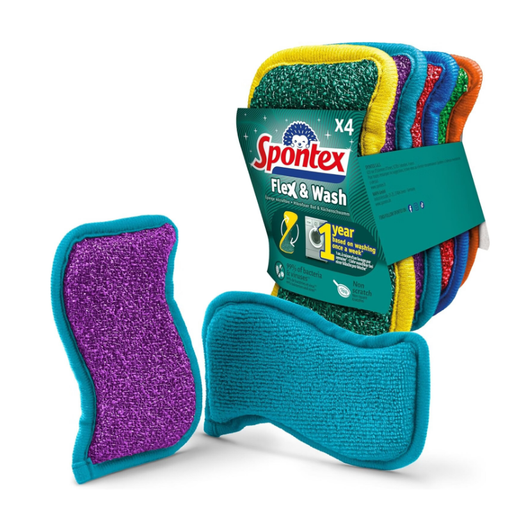
Why this product suits this profile : This four-pack is aimed at households looking to replace sponges less often and have different accessories for the kitchen, bathroom, home or car.
Its double-sided design separates wiping from scouring. The product information states that it can be washed for up to 52 cycles and recommends testing the sponge on delicate surfaces.
Flexible S-shape, microfibre side and non-scratch scouring side. The product description also mentions recycled fibres.
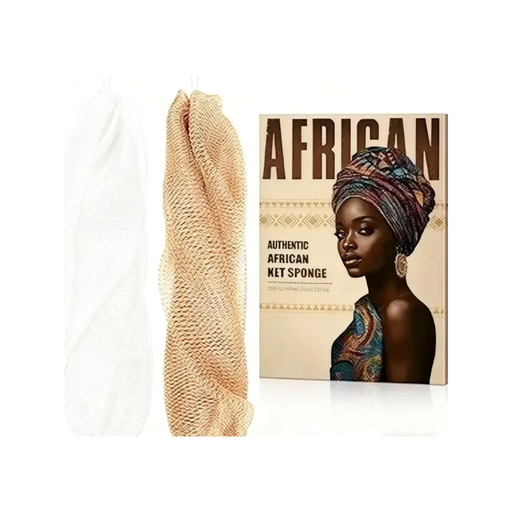
Why this product suits this profile : Its elongated shape and reinforced cords make it easier to clean the back and shoulders, particularly for those looking for targeted body exfoliation.
Its open mesh dries quickly when hung up. However, the instructions advise against using it on irritated or hypersensitive skin and recommend washing it inside a mesh bag.
High-density nylon, cord for reaching the back and air drying. The product information advertises a potential lifespan of more than two years with suitable care.
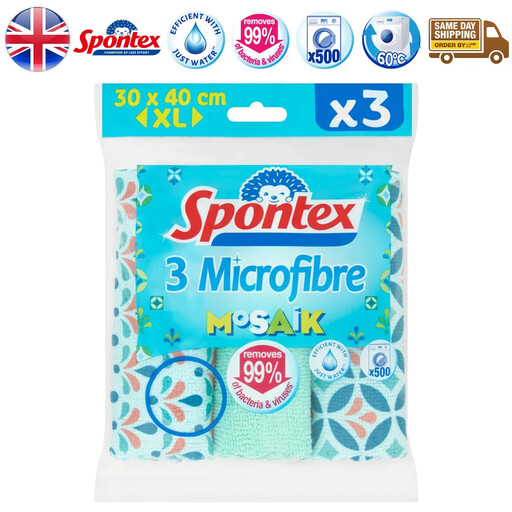
Why this product suits this profile : These cloths are suitable for people who prefer a washable accessory for dusting, wiping surfaces and washing up.
The 500-wash claim comes with precise instructions: no fabric softener, no tumble dryer and wash with similar colours.
30 × 40 cm format, suitable for dry or damp use, with a composition advertised as 85 % polyester and 15 % polyamide.
We have put together a complete, real-time updated list of products that fully meet these strict selection criteria and European safety regulations.
A long exfoliating African net sponge with cords makes back-and-forth movements across the back easier. Use it with moderate pressure and avoid irritated or sensitive areas.
Yes, provided the product information allows it. Follow the stated temperature, use a washing bag if necessary and avoid fabric softener with microfibre fibres. Even after machine washing, the sponge must dry completely after every use.
Replace it when it becomes misshapen, starts to fray, retains an odour despite washing or loses its absorbency. For non-reusable models, follow the frequency recommended by the manufacturer and adjust it according to how intensively you use them.