
Livraison le jour même ou le lendemain

Qualité garantie

Débloquez vos offres de bienvenue: Livraison GRATUITE | Jusqu'à -80 % | 30 jours d'essai gratuits à JoyPlus
Téléchargez l'application
A sponge might seem like an insignificant purchase. Yet a poorly chosen one can quickly fall apart, scratch your utensils or leave a stubborn odour in the kitchen or bathroom. Cleaning and bath sponges don’t all serve the same purpose: an abrasive dish sponge has no place on your skin, while an African exfoliating sponge shouldn’t be used to wipe down a worktop.
Here are the key criteria to consider before buying, along with a selection of models suited to different needs.
A very rigid scouring side can easily tackle baked-on residue. It can also mark a ceramic hob, a non-stick pan, glass or your taps. The scratch-free label doesn’t guarantee the sponge is suitable for all surfaces: test it first on an inconspicuous area and follow the manufacturer’s recommendations.
A reusable or machine-washable sponge can extend the time between replacements. However, its lifespan depends on how intensively you use it, the wash temperature and how well you look after it. A sponge that stays damp or soaked in grease will wear out quickly, even if it’s marketed as durable.
A highly absorbent sponge holds more water after each use. If it’s not rinsed properly or dries slowly, unpleasant smells will soon appear. In the bathroom, an open-weave structure or a quick-drying material can therefore be more practical than a thick foam.
For washing up and household cleaning, dual-sided models typically combine an absorbent sponge with a scouring layer. Vegetable cellulose, particularly from cotton, wood or flax, absorbs liquids and makes wiping easier. Synthetic or recycled fibres, on the other hand, can offer greater flexibility and durability.
A microfibre sponge is especially well suited to windows, mirrors and smooth surfaces. When rinsed and wrung out properly, it generally leaves fewer streaks. To remove limescale deposits, a medium-intensity scouring side can be useful, provided you check it’s compatible with the surface in question.
Even when a product is advertised as non-scratching, always remove any dust or grit before scrubbing: these particles can themselves leave marks.
Check the permitted wash temperature. Some models can go in the machine at 40°C, others can withstand up to 70°C, while a few can also be cleaned in the dishwasher. A mesh laundry bag can help preserve the shape of a textile or open-weave sponge.
After each use, rinse it thoroughly, wring it out without distorting it, then hang it up or place it in a well-ventilated spot. For a classic kitchen sponge, regular replacement is still advisable as soon as the material frays, loses its shape or holds onto odours.
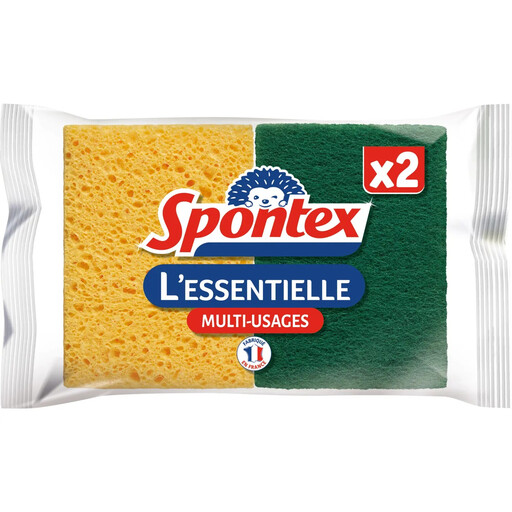
Why this suits this profile: its two-pack format and dual sides let you handle the washing up and small household tasks without needing to buy multiple products.
The soft side is for wiping, while the scouring side tackles stubborn dirt. The manufacturer recommends testing on delicate surfaces first.
PEFC certified vegetable sponge, compact format and dual sides for everyday cleaning.
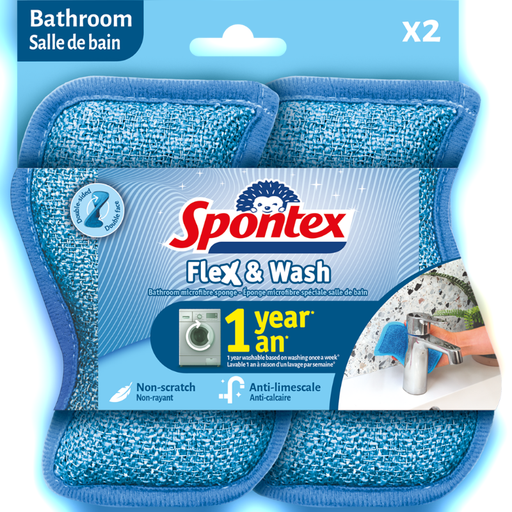
Why this suits this profile: this model is designed for those who want to tackle limescale marks before achieving a flawless finish on mirrors and glass.
Its two sides separate scrubbing from wiping. The product details state machine washing up to 40°C, without fabric softener or tumble drying.
Microfibre side made from recycled fibres, absorbent core and scouring surface advertised as non-scratch.
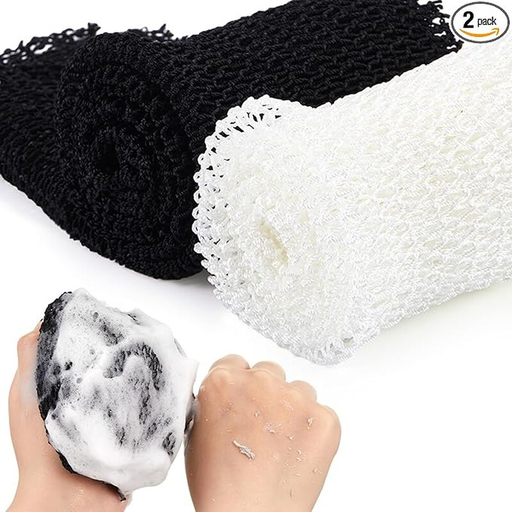
Why this suits this profile: its extra-long design and integrated cords make it easier to reach your back and those tricky areas in the shower.
The open mesh dries quickly and is machine washable. However, avoid using it on irritated or broken skin.
African bath mesh in nylon, open structure, integrated cords and easy care.
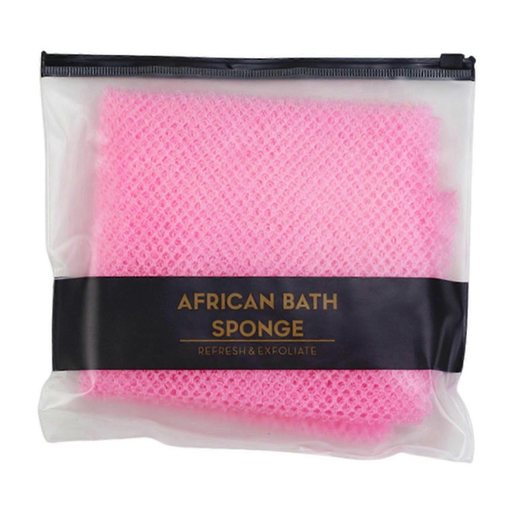
Why this suits this profile: this nylon exfoliating sponge is ideal for a body care routine that focuses on a rich lather and easier access to your back.
The manufacturer recommends machine washing and advises hanging the mesh to dry after rinsing. Start gently, without applying excessive pressure.
100% nylon, stated weight of 90g, integrated cord and open-weave structure for quick drying.
A dual-sided multi-purpose sponge is suitable for plates, pans and everyday surfaces, as long as you use the appropriate side. For a non-stick pan or a fragile surface, opt for a soft side or an explicitly non-scratch model, then test it on an inconspicuous area.
It can reduce how often you need to replace it, provided you follow the recommended wash temperature and care routine. The actual cost also depends on the material’s durability, the quality of drying and when the sponge needs replacing for hygiene reasons.
Rinse it thoroughly after each shower, wring it out without twisting it harshly, then hang it in a well-ventilated space. For nylon models, check the washing instructions and use a laundry bag if the manufacturer recommends it. This sponge is for external use only: avoid irritated or sensitive areas and stop using it at the first sign of discomfort.