
Same-day & Next-day Delivery

Quality Guaranteed

Unlock Your Welcome Offers: FREE Delivery | Up to 80% OFF | Free 30-day JoyPlus trial
Download the APP
A spanner that slips, pliers that leave marks, or a tool that’s too bulky to reach a nut can turn a simple job into a real waste of time. Whether you’re working on car maintenance, plumbing, electrics, or small jobs around the house, your clamping tools and spanners for automotive and DIY should be chosen based on how you’ll actually use them – not just their looks or price.
Some marketing claims, in particular, are worth taking with a pinch of salt:
An open-end spanner, a ring spanner, or a set of metric spanners needs to cover the sizes you actually come across. In automotive work, metric is the most common standard, although some components still use imperial dimensions. So check the range covered, the head thickness, and its offset angle.
A ring spanner with a 75° offset, for example, can make it much easier to reach a stubborn nut near a wall or under a mechanical part. The number of points on the drive also matters: a 12-point head offers more engagement positions, but it must fit the fastener perfectly.
Chrome-vanadium steel, often shortened to Cr-V, is used in many mechanic’s and DIY tools. But this label alone isn’t enough to judge a tool’s quality – you should also look at the forging, heat treatment, and anti-corrosion finish.
A matt chrome finish, a black oxide treatment, or an equivalent protective coating can slow down rust, provided you clean your tools and store them in a dry place. The DIN 838 standard, found on some spanner sets, sets out design and dimensional requirements for offset ring spanners. It doesn’t replace checking the fit and condition of each spanner.
An adjustable spanner is handy for nuts and fittings of different sizes, but its jaws must be adjusted as tightly as possible, with no play, before you apply force. For pipework, a multi-grip plier or a water pump plier offers a better grip on round, hexagonal, or irregularly shaped parts.
When a fastening needs to meet a specific torque value, choose a torque wrench whose range matches the job. Check the units available, the direction of operation, the adjustment method, and the alerts it offers. Displaying a torque value doesn’t automatically guarantee the same accuracy in every situation – follow the manufacturer’s recommendations and avoid using extensions that aren’t designed for the tool.
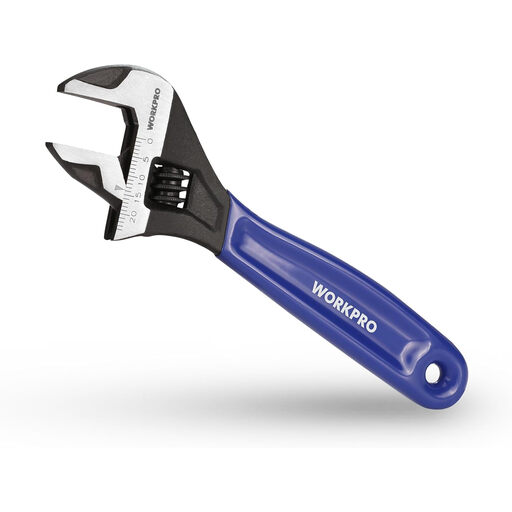
Why this choice suits this profile: At 150mm, it’s ideal for small household repairs, assembly work, and routine maintenance, without cluttering up a beginner’s tool box.
The engraved metric scale helps you set the jaws accurately, while the treated head reduces the risk of deformation within the intended uses.
Cr-V steel, bi-material handle, scale from 0 to 24mm and an opening stated up to 24mm.
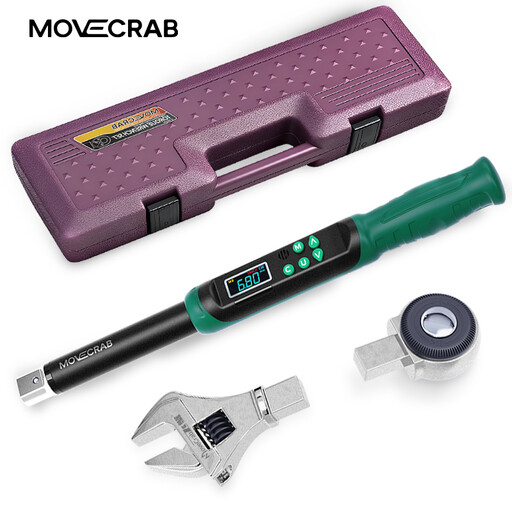
Why this choice suits this profile: It’s aimed at users who regularly work on cars or mechanisms and need precise control over tightening torque.
Its stated range of 6.8 to 135Nm, backed up by audible and visual alerts, lets you monitor the setting instead of tightening by feel.
Digital display, conversion between four units, ratchet and fork heads, with a stated memory of 500 values.
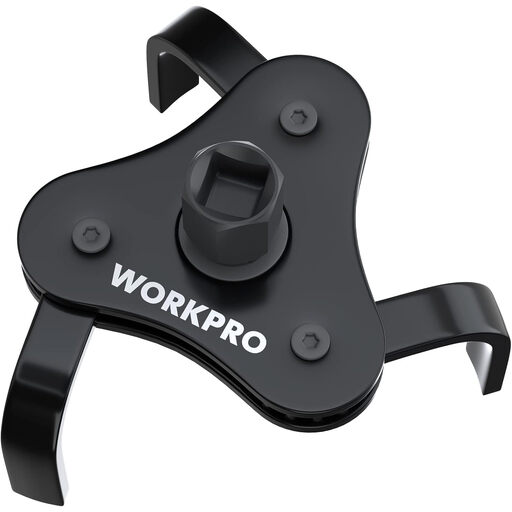
Why this choice suits this profile: This oil filter wrench is designed for regular oil changes on cars, light commercial vehicles, and motorhomes.
Its range of 70 to 110mm should be compared to the filter diameter before buying – an essential precaution with models described as universal.
Self-locking claw mechanism, compact design, and construction stated in heat-treated 45 carbon steel.
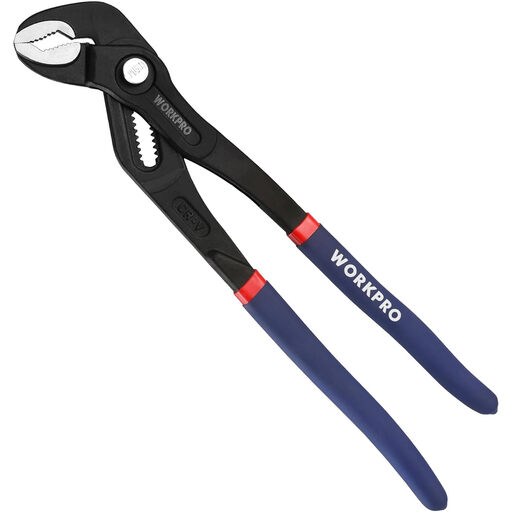
Why this choice suits this profile: At 305mm with a stated maximum opening of 50mm, they’re intended for plumbing work and large-diameter parts.
The quick-adjust button lets you adapt the jaws without forcing when the mechanism is poorly positioned. The teeth are designed to grip several shapes of parts.
Heat-treated Cr-V steel, ergonomic handles, and a stated grip on round, flat, square, and hexagonal parts.
For automotive work, the DURATECH 6 to 22mm metric spanner set brings together eight double-ended ring spanners with a 75° offset and a roll-up pouch. A practical way to stay organised and avoid rummaging through your tool box mid-job, whether on a motorbike, car, or van.
For delicate fittings, a rubber strap wrench can reduce the risk of marking surfaces. The ValueMax model, available in two lengths, covers stated diameters from 100 to 150mm. Inspect the strap before each use and stick to the torque limits stated.
We’ve put together a comprehensive, real-time selection of products that meet these demanding criteria, as well as European safety standards.
An adjustable spanner has a movable jaw and can fit several sizes. An open-end or ring spanner is made for one specific size and generally provides a better fit on the fastener. For repeated jobs, a set of metric spanners reduces play and saves time.
Water pump pliers are suitable for pipes, fittings, and parts of various shapes thanks to their different adjustment positions. Choose the length and opening based on the diameter of the items you need to grip. If the surface is delicate, a strap wrench will reduce the risk of scratches.
Clean off any residue after each use, dry the tools, and store them away from moisture. Never use a spanner as a hammer, and don’t extend its handle unless the manufacturer allows it. Before each job, check the condition of the jaws, teeth, straps, and adjustment mechanisms.