
Livraison le jour même ou le lendemain

Qualité garantie

Débloquez vos offres de bienvenue: Livraison GRATUITE | Jusqu'à -80 % | 30 jours d'essai gratuits à JoyPlus
Téléchargez l'application
Between promises of “universal” paper, sometimes misleading formats and filing accessories that become misshapen after just a few weeks, choosing your Clairefontaine school supplies and stationery deserves a little attention. A pupil, student, teacher, artist or professional will not have the same requirements: an A4 notebook for lessons is not chosen in the same way as watercolour paper or a binder designed to carry documents.
Here are the criteria to consider before filling your basket, along with a selection of products suited to different uses.
Paper weighing 80 or 90 g/m² is generally suitable for everyday writing, taking notes and standard printing. However, it is not designed to absorb large amounts of water or support thick layers of paint. Conversely, paper weighing 250 or 300 g/m² is better able to withstand wet techniques, but it is heavier and less convenient to store in a binder or take to lessons.
An A4 notebook measures approximately 21 × 29.7 cm, while an A4+ format may provide more space or a wider margin. For filing, the A4XL format stands out even more: it allows you to insert pockets and dividers without them sticking out. So check the exact dimensions before choosing an A4 binder, expanding file or A4 document wallet.
A large volume is only useful if the binding, cover and storage method suit the way you intend to use it. Punched and microperforated sheets make filing and removing pages easier, while a glued or stapled pad prioritises note-taking and lightweight transport. A rigid spine, elastic closure or integrated pockets can also save you from having to buy additional accessories.
For writing, 90 g/m² Velvety Vellum paper is a practical option: its smooth surface is suitable for pens, pencils and note-taking. For a Rhodia notepad intended for diagrams, the 5 × 5 grid helps structure tables, calculations and technical sketches.
For drawing, your choice mainly depends on the medium you use:
Drawing paper with two different sides can also be used to compare a more textured surface with a smooth side.
Punched A4 sheets using a universal standard fit most ring binders. Detachable models are practical for handing in homework or archiving notes without tearing the page.
For documents that have already been printed, an A4 document wallet with 60 pockets is often quicker to use. An expanding file with eight compartments, meanwhile, allows you to separate subjects, projects or administrative documents.
Several products carry PEFC certification, confirming that the paper comes from sustainably managed forests. Some papers are also described as acid-free, pH-neutral or made from 100% recycled paper. These statements should be distinguished from general sustainability claims: they describe a specific product feature and do not guarantee the same storage life in every condition.
Store your pads and notebooks flat, in a dry place away from moisture and direct sunlight.
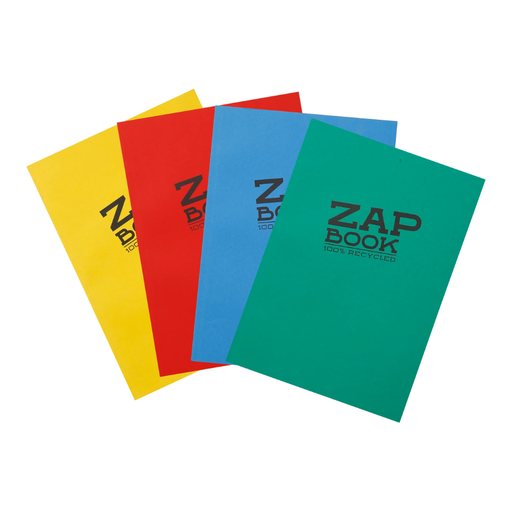
Why this choice suits this profile : This notebook is ideal for taking notes, making lists and creating your first sketches, without needing lots of supplies. Its side-glued binding makes it easy to use every day.
Its 160 sheets provide a clearly stated capacity, while the 80 g/m² paper is suitable for writing and light drawing rather than wet techniques.
100% recycled, acid-free and pH-neutral paper. The cover colour is assigned at random.
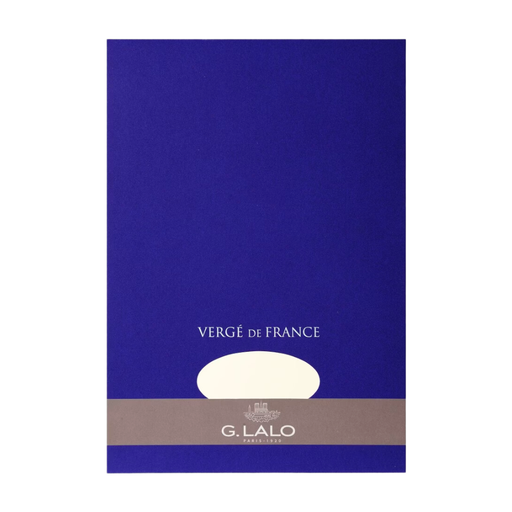
Why this choice suits this profile : This laid paper pad is ideal for correspondence, invitations, menus and any documents that deserve a more polished presentation.
The paper weight, A4 format and composition containing 25 % cotton are clearly stated. The paper is compatible with inkjet and laser printers.
The distinctive texture of laid paper and the supplied guide sheet make it easier to keep your handwriting aligned.
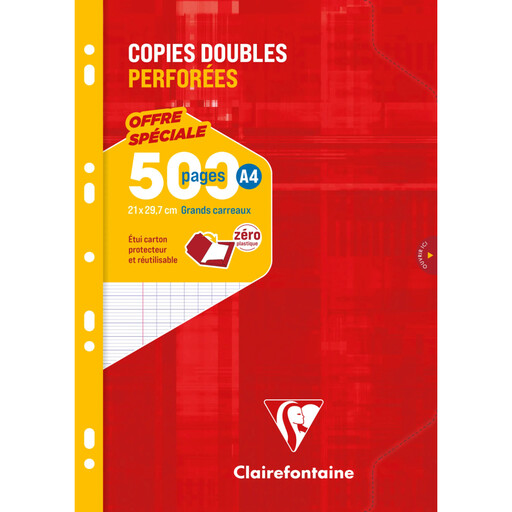
Why this choice suits this profile : This maxi format meets the needs of a full academic year, a shared office or an organisation that regularly uses loose sheets.
The 500 A4 sheets are both punched and detachable. The 90 g/m² paper and large-square ruling are specified, so it cannot be mistaken for art paper.
Universal punching, a reusable recycled-cardboard case, PEFC certification and stated manufacture in France.
To round off this selection, the Rhodia A4+ pad is ideal for structured note-taking, thanks to its microperforated sheets, rigid card-backed cover and 5 × 5 grid. For creative hobbies, the PaintON MIX11 A4 250 g/m² pad lets you explore several tones and surfaces with dry or wet media. If you carry a large number of documents, you can combine an Oxford A4XL binder, an A4 document wallet and an eight-compartment expanding file.
We have compiled a complete, real-time updated list of products that fully meet these strict selection criteria and European safety regulations.
For taking notes, paper weighing 80 to 90 g/m² offers a good balance between writing comfort, weight and bulk. If you use markers or pens with heavily loaded ink, check the risk of show-through and, where possible, choose a thicker paper.
300 g/m² medium-fine grain watercolour paper is better suited to washes and layering water than standard drawing paper. Clairefontaine’s Aquapad A4 pad is described as being made from natural cellulose, acid-free and double-sized. For generous washes, fixing or stretching the sheet helps limit warping.
Store notebooks, pads and sheets in a dry place, avoid overloading the rings of a binder and observe the stated capacity of the pockets. In an expanding file or document wallet, distribute the documents evenly to reduce pressure on the folds, pockets and elastic closure.