Joybuy Insights

Clairefontaine Zap Book: A Guide to Choosing Yours

Choosing a notebook might seem trivial, but who hasn't cursed at paper that tears at the first touch of an eraser, or a binding that falls apart after a few weeks? For creatives, students, and professionals alike, a good notebook is more than just a tool: it's a partner. The wrong choice isn't just a source of frustration; it's a waste of time and money. To avoid falling into that trap, here are the mistakes to steer clear of.

Watch out for these two classic pitfalls:

  1. Trusting vague "eco-friendly" claims: A product can call itself eco-friendly even if its paper isn't made entirely from recycled fibres. True commitment is measured by specific criteria, like 100% recycled paper.
  2. Choosing the wrong paper for your needs: Paper weight that's too low for wet media (watercolour, ink) or repeated erasing is a recipe for disaster: the paper buckles, tears, or pills. Conversely, very thick paper for simple note-taking is often an unnecessary and costly luxury.

The Key Criteria for Making the Right Choice

Paper weight, composition, binding... let's break down the features that truly matter to find the notebook perfectly suited to your needs.

1. Paper Weight (gsm): A Density for Every Purpose

Paper weight is the DNA of the paper. Expressed in grams per square meter (gsm), it defines its thickness and durability. It's a critical factor for compatibility with your favourite tools.

  • 80 gsm: The quintessential standard weight, found in the 80g spiral notebook from the Zap Book range. Ideal for note-taking, quick sketches with pencil, ballpoint pen, or fine-liners. Its light weight makes it a budget-friendly and portable option.
  • 120 gsm: Here, we're moving up in quality. This sturdier paper offers much better resistance. It handles repeated erasing and the use of coloured pencils or markers without immediate bleed-through. An excellent compromise for an A4 drawing pad or A5 for more finished work.
  • 300 gsm and up: The heavyweight champion, essential for wet media like watercolour or gouache. This type of paper is designed to absorb water without excessive buckling.

2. Composition and Finish: Focusing on Ecology and Longevity

Paper weight isn't everything. The paper's composition is just as crucial, especially for the longevity of your creations and your environmental impact.

  • 100% Recycled Paper: The recycled paper sketchbook from the Zap Book line is a perfect example. It uses reclaimed fibres, reducing pressure on forest resources. A logical choice for an eco-friendly notebook.
  • Acid-Free and pH-Neutral: The winning combination to ensure your work and writings stand the test of time without yellowing or becoming brittle. A neutral pH is a guarantee of archival quality, preserving the vibrancy of colours and the clarity of your notes.
  • PEFC Certification: This label guarantees that the paper comes from sustainably managed forests. It's a good indicator to look for when the paper isn't recycled.

3. Size and Binding: A Matter of Comfort and Portability

The choice of size and binding should align with your habits and work environment.

  • Sizes: The A5 notepad is the classic, portable, and versatile choice. The A4 size is the king of the office or studio for large-scale projects. As for the A6, it slips into a pocket to capture ideas on the fly.
  • Bindings:
    • Spiral (or "Wire-O"): Its superpower? A 360° opening that lies completely flat. Ideal for drawing or writing without being hindered by the page curve.
    • Glue-Bound: Perfect for cleanly detaching sheets, whether for sharing, scanning, or filing.
    • Stapled or Sewn: Offers a more traditional finish and great durability, but a perfectly flat opening is less common.

Clairefontaine Zap Books to Consider

To put theory into practice, here are our recommendations, tailor-made for different needs.
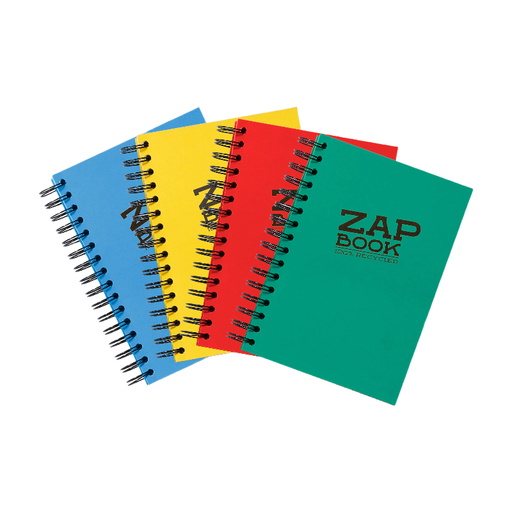
THE PERFECT MATCH FOR: THE STUDENT AND THE MOBILE CREATIVE
CLAIREFONTAINE Zap Notebook R.I. A5 160 Sheets 80 g/m?

CLAIREFONTAINE Zap Notebook R.I. A5 160 Sheets 80 gsm

Why it's the right choice: Its A5 size and spiral binding make it the perfect travel companion. It opens a full 360° to lie flat, making it incredibly practical for taking notes in a lecture hall or sketching on the go. With 160 pages, it has enough to last the entire semester, even with heavy use.

How it avoids the pitfalls

Its sturdy spiral binding prevents breakage and lets you use every square inch of the page. The 80 gsm paper is honest: it's made for notes and quick sketches, with no false promises.

Its key advantage

Its 100% recycled, acid-free, and pH-neutral paper combines an ecological commitment with long-term preservation of your notes.
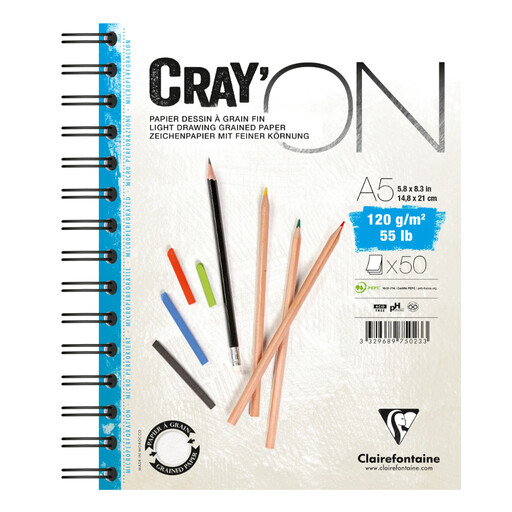
THE PERFECT MATCH FOR: THE DEMANDING ARTIST
CLAIREFONTAINE Bloc Cray'ON R.I. A5, 50 Sheets, 120g

CLAIREFONTAINE Cray'ON Pad R.I. A5, 50 Sheets, 120 gsm

Why it's the right choice: Designed for fans of dry media (pencil, charcoal, pastel), its 120 gsm paper is robust enough to handle repeated erasing and scraping without pilling. Its dual texture (one side with a fine grain, the other smooth) is a real bonus for creating varied effects.

How it avoids the pitfalls

No more paper tearing at the first swipe of an eraser! Its extra-white cellulose and high weight guarantee heavy-duty resistance, helping you avoid the frustration of a medium that gives up halfway through.

Its key advantage

PEFC-certified and acid-free, this paper is tailor-made for drawing. Its durability allows you to work and rework your pieces with complete peace of mind.
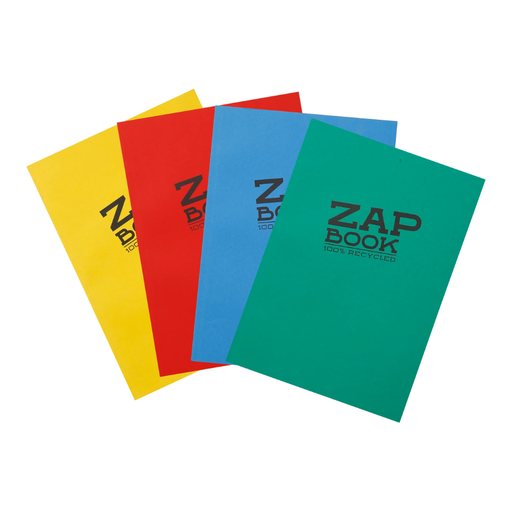
THE PERFECT MATCH FOR: THE ECO-CONSCIOUS PROFESSIONAL
CLAIREFONTAINE Zap Book Glued A4, 160 Sheets, 80 g/m?

CLAIREFONTAINE Zap Book Glue-Bound A4, 160 Sheets, 80 gsm

Why it's the right choice: Its large A4 format is perfect for brainstorming sessions, diagrams, or meeting minutes. Thanks to its glue binding, the sheets detach flawlessly for filing, scanning, or sharing. A pragmatic and efficient choice for daily office life.

How it avoids the pitfalls

It avoids the "greenwashing" trap with paper that is clearly advertised and certified as 100% recycled. No false promises: this is a genuinely ecological choice for those mindful of their impact.

Its key advantage

Excellent value for money: 160 pages, a practical A4 size, and a true ecological commitment.

Need Even More Options?

Explore our full selection of products that meet our quality criteria and current standards.

Frequently Asked Questions (FAQ)

Spiral-Bound vs. Glue-Bound Zap Book: What's the Difference?

It all depends on your use case. The spiral-bound Zap Book opens 360° and lies completely flat, making it ideal for drawing or writing without obstruction. The glue-bound Zap Book, on the other hand, is designed for easy sheet removal. It's perfect if you regularly archive, scan, or share your notes.

Is 80 gsm paper compatible with alcohol markers?

80 gsm paper is primarily intended for dry media (pencil, pen) and water-based markers. Alcohol markers, which are very ink-heavy, tend to bleed through thin paper. For this type of marker, it's best to choose a dedicated paper (like layout paper) or simply slip a protective sheet underneath to avoid damaging the next page.

Drawing Pad: A4, A5, or A6—Which Size to Choose?

  • A4 (21 x 29.7 cm): Perfect for working in a studio or at your desk. It offers a large surface area for detailed drawings or comprehensive layouts.
  • A5 (14.8 x 21 cm): The champion of versatility. Large enough to work comfortably, yet small enough to slip into a bag. It's the go-to size for a daily sketchbook or a creative journal.
  • A6 (10.5 x 14.8 cm): The ultimate pocket size. Ideal for capturing an idea or a quick sketch on the fly, anywhere, anytime.