
Livraison le jour même ou le lendemain

Qualité garantie

Débloquez vos offres de bienvenue: Livraison GRATUITE | Jusqu'à -80 % | 30 jours d'essai gratuits à JoyPlus
Téléchargez l'application
Choosing an envelope seems simple… until the document doesn't fit, the flap won't stick properly, or the paper lacks substance. For a personal letter, an invoice, an invitation or an administrative file, Clairefontaine white envelopes come in several sizes and finishes. The trick is knowing which criteria will actually make a difference in everyday use.
A DL envelope measuring 110 x 220 mm is typically designed for an A4 sheet folded into three. A C6 envelope measuring 114 x 162 mm is better suited to an A4 sheet folded into four, a card or a short note. Choosing a C6 size for regular administrative correspondence risks requiring extra folds, or even creasing the document.
Self-seal envelopes, protected by a silicone strip, close quickly without needing to moisten the flap. They are particularly handy for bulk mailings or office use, when you want to prepare your post neatly and without wasting time.
Gummed envelopes, on the other hand, require you to moisten the flap before pressing it down. They may be better suited to invitations, cards or correspondence where you want a more traditional feel, but their closure requires a bit more handling.
A very white envelope isn't necessarily the best choice for every situation. You also need to consider the grammage, texture, opacity, whether it has a lining, and its compatibility with a printer. 90 gsm paper offers a common compromise between lightness and good quality. A 100 gsm laid paper, meanwhile, gives more texture and a stronger visual presence.
Before ordering a pack of 25 envelopes, measure your document once folded and allow a small margin. This will prevent you from forcing the flaps or damaging the contents.
Grammage refers to the weight of the paper per square metre. The Clairefontaine references shown here are available in 90 gsm and 100 gsm. The former works well for everyday mail while keeping the total weight of your post down. The latter, especially when laid and lined, gives a more robust, premium feel.
Laid paper envelopes are recognisable by their fine embossed lines. This texture adds character to an invitation or formal correspondence, but it won't give the same result as a perfectly smooth surface for printing.
With a self-seal envelope, simply remove the silicone strip and press firmly on the flap. Store envelopes in a dry place at a stable temperature to preserve the adhesive.
For a gummed envelope, moisten only the flap at the time of posting. Prolonged exposure to moisture can damage the gum or warp the paper. Also remember to check whether there is a window: the models selected below are listed as windowless where this feature is stated on their product page.
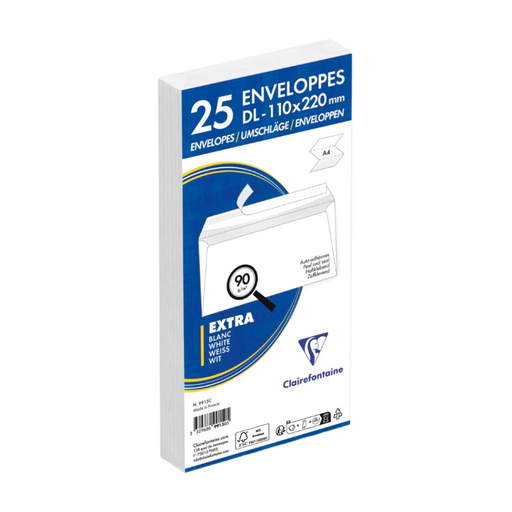
Why this choice suits this profile: its DL size accommodates A4 sheets folded into three, and its self-seal closure makes first personal and professional mailings easy.
The size is clearly stated and the silicone strip prevents the envelope from sealing before it's filled.
White 90 gsm paper, pack of 25 units, stated manufacture in France and FSC certification mentioned on the product page.
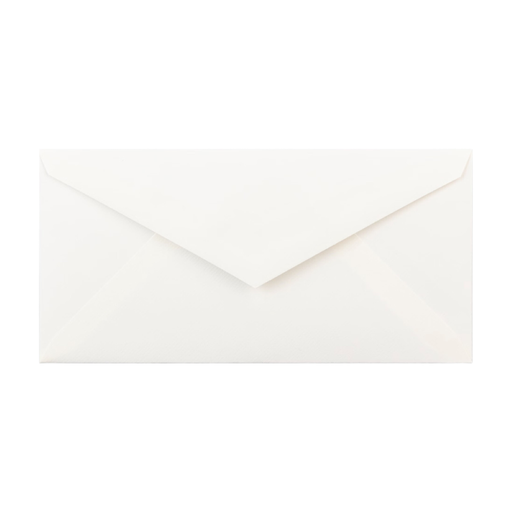
Why this choice suits this profile: its white laid paper, lined according to the product page, is ideal for invitations, announcements and correspondence where you want a visible texture.
The texture and grammage are specified, so you can distinguish a genuine decorative finish from a simple promise of whiteness.
100 g laid paper, gummed flap and stated lining for a more elegant, structured presentation.
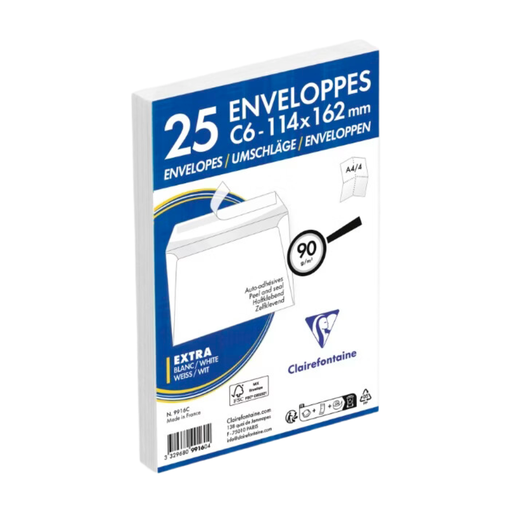
Why this choice suits this profile: this compact size is ideal for cards, invitations, photos and notes folded into four. Its self-seal closure lends itself well to bulk mailings.
The C6 size is intended for small contents: it's better to choose it for this purpose than to try and squeeze an insufficiently folded A4 sheet inside.
90 gsm paper, self-seal closure protected by a silicone strip, FSC certification and stated manufacture in France.
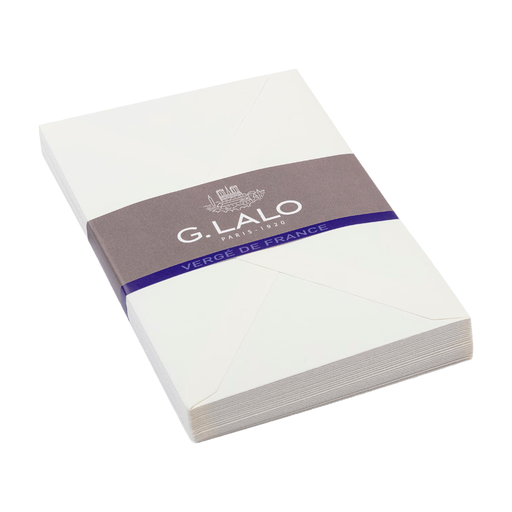
Why this choice suits this profile: its C6 size and laid paper are perfectly suited to announcements, menus, thank-you cards and personalised messages.
The size, gummed closure and texture are clearly stated: this helps you avoid ordering an envelope that's unsuitable for an event.
Stated French laid paper, gummed flap and a surface described as suitable for messages and personalised printing.
We've compiled a comprehensive, real-time selection of products that meet these selection criteria and the requirements of European safety regulations.
The DL 110 x 220 mm size is designed to hold an A4 sheet folded into three. It is commonly used for letters, invoices, summonses and professional correspondence.
It all depends on storage conditions. Keep them away from moisture, excessive heat and direct light. The silicone strip must stay in place until use to protect the adhesive area.
90 gsm paper is generally suitable for everyday mail and helps keep the weight of your post down. 100 gsm, especially when it's lined laid paper, offers a more pronounced texture and better quality. The choice therefore depends on the contents, the desired finish and the volume of mail you need to prepare.