
Livraison le jour même ou le lendemain

Qualité garantie

Débloquez vos offres de bienvenue: Livraison GRATUITE | Jusqu'à -80 % | 30 jours d'essai gratuits à JoyPlus
Téléchargez l'application
Buying Clairefontaine stationery supplies is not simply a matter of choosing a colour or cover. Between notebooks that are too thin, paper that is incompatible with your printer and packaging that tears at the first fold, a few details can quickly turn a bargain into a disappointing purchase.
Students, teachers, professionals, artists and families do not all have the same needs. Here are the criteria to check before filling your basket, along with a selection of Clairefontaine and Rhodia products suited to different uses in France.
A notebook displaying a high number of pages may contain fewer genuinely usable sheets, particularly when it is printed on both sides. To compare two products, always check the number of sheets, paper weight and type of binding.
A tear-off pad is practical in the office, while a bound or spiral notebook is better suited to notes you want to keep for a long time.
80 g/m² paper is suitable for everyday writing and light sketches. For more polished correspondence, invitations or printed documents, 100 g/m² paper provides greater substance. However, a heavier paper can add weight to a file or parcel.
For drawing, also check for the wording ‘blank paper’, the texture and compatibility with your tools. Writing paper will not react in the same way to a wet felt-tip pen or a large amount of ink.
A description such as ‘recycled’ or ‘responsible’ deserves closer examination. Look for specific information: 100% recycled fibres, PEFC certification, manufacture in France or reusable cardboard packaging. These details do not guarantee that the product will suit your needs, but they allow you to compare different eco-friendly school and office supplies more objectively.
If you are buying Clairefontaine A4 paper, also check the type of perforation. Universal perforation makes it easier to file sheets in most ring binders and folders.
Side-glued binding gives a pad a compact appearance. Spiral binding generally allows you to lay the notebook flat, making it easier to write across the pages and draw. Micro-perforated sheets are useful if you want to detach a page neatly.
For intensive use, the cover, spine and cardboard backing matter just as much as the paper. A pad without a rigid backing can quickly become impractical when travelling or taking notes without a desk.
The PEFC label concerns the sustainable management of the forests from which virgin fibres are sourced. It does not mean that the paper is recycled. Conversely, paper may be presented as recycled, but its exact composition should still be checked.
For preserving drawings, letters or archives, the terms acid-free and pH-neutral are useful technical indicators. Nevertheless, store all paper in a dry place, away from moisture and direct light.
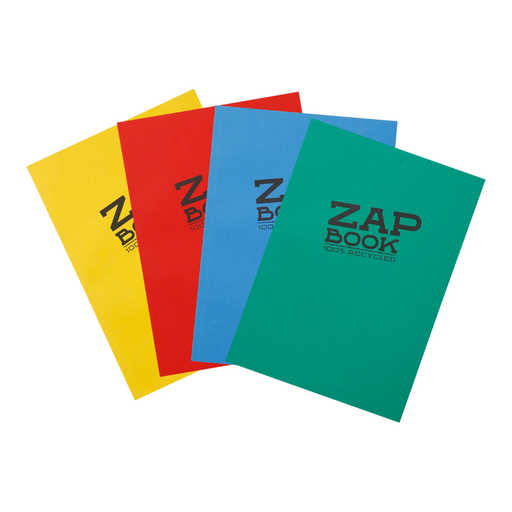
Why this choice suits this profile : Its A5 format is ideal for lessons, lists and everyday notes, without taking up much room in a bag.
The product details specify 160 sheets of 80 g/m² paper, 100% recycled, acid-free and pH-neutral: the key features are clearly stated.
Versatile paper for writing or drawing, side-glued binding and a choice of four colours, subject to availability.
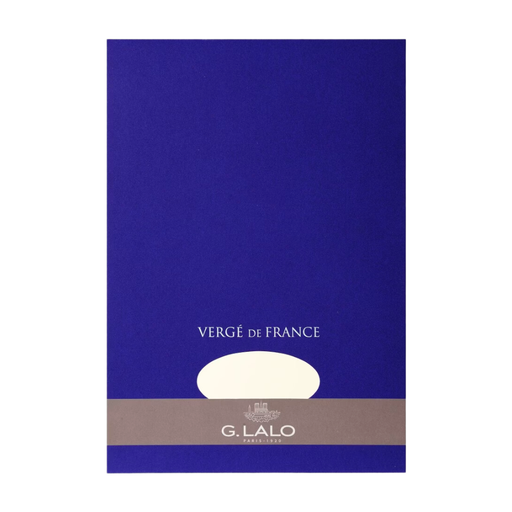
Why this choice suits this profile : This A4 pad is ideal for correspondence, invitations, menus or documents that deserve a more polished presentation.
The 100 g/m² paper weight and 25% cotton composition provide specific, tangible details rather than a simple promise of elegance.
A4 laid paper with chain lines, a guide sheet included and stated compatibility with inkjet and laser printers.
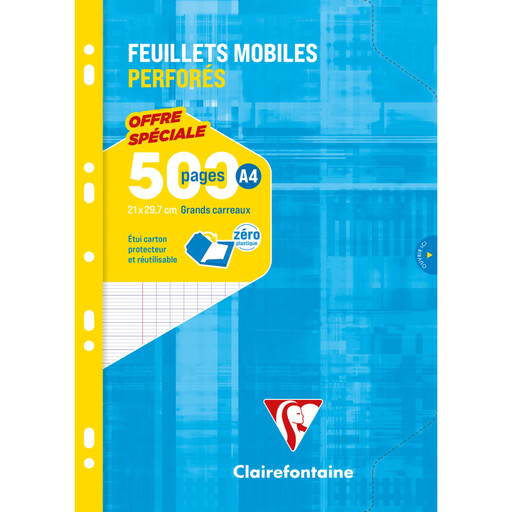
Why this choice suits this profile : The 500-sheet pack meets the regular needs of a school, office or student who frequently prints and files documents.
The format, sheet count and paper weight are specified; universal perforation prevents you from discovering too late that the sheets are incompatible with your binder.
500 sheets of A4 paper at 90 g/m², wide ruling, perforated sheets and a recycled, reusable cardboard case.
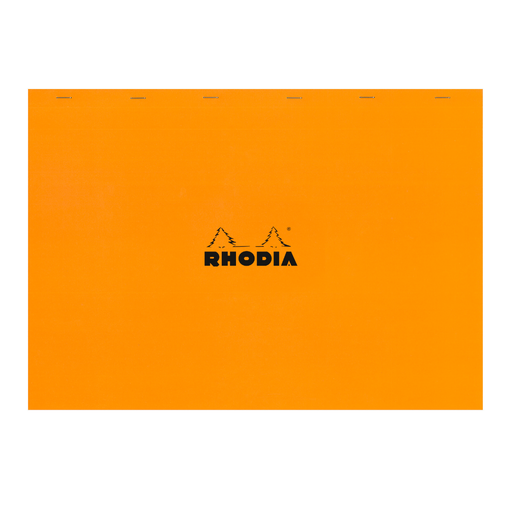
Why this choice suits this profile : Its 42 × 31.8 cm surface provides plenty of room for plans, mind maps, technical diagrams and large sketches.
The exact format, 80 micro-perforated sheets and rigid cardboard backing are specified, so you can check that the pad is right for your workspace.
5 × 5 mm ruling, 80 g/m² vellum paper, rigid backing and stated PEFC certification.
Stationery is not limited to notebooks and sheets. Kraft paper on a 3 × 0.70 m roll is suitable for gift wrapping as well as creative activities and DIY projects. Its PEFC certification and manufacture in France are specified in the product details.
For posting, C5 kraft envelopes can hold an A4 sheet folded in half. The Clairefontaine pack contains 15 envelopes made from 90 g/m² paper, with self-adhesive closure and PEFC certification. Still, check the contents before buying: this model has no window.
For filing, an A4 elasticated folder made from 400 g/m² recycled cardboard protects documents with its three flaps and elastic closures. The Exacompta AutentiK model is described as being made in France from recycled cardboard, dyed throughout. Keep it away from moisture to preserve its rigidity.
We have put together a complete, real-time updated list of products that fully meet these strict selection criteria and European safety regulations.
For notes and pencil sketches, 80 g/m² is generally suitable. If you use more ink, choose a thicker paper such as 100 g/m², and check the stated compatibility with printers or drawing instruments.
Loose-leaf models with universal perforation are designed to fit in many binders. Nevertheless, check the format, ruling style and number of holes before ordering.
Some products specify that they are made from 100% recycled paper, while others display PEFC certification for fibres sourced from sustainably managed forests. These labels refer to different characteristics, so check each product’s details and choose according to your priorities.