
Livraison le jour même ou le lendemain

Qualité garantie

Débloquez vos offres de bienvenue: Livraison GRATUITE | Jusqu'à -80 % | 30 jours d'essai gratuits à JoyPlus
Téléchargez l'application
A Clairefontaine Rhodia small-square notebook is just as useful for taking notes as it is for drawing tables, preparing a technical diagram or structuring a list. But not every model suits every purpose. Too large, and it quickly becomes cumbersome in your bag. Too small, and you soon run out of space for a lecture or a work file.
Before placing your order, three mistakes crop up time and again:
The 5 × 5 mm small-square notebook is particularly versatile. Its fine grid lets you:
For primary school homework or handwriting exercises, a Seyès notebook will often be more suitable. Depending on the model, its ruling includes specific line spacing and a red margin. So don't automatically replace it with a small-square pad.
With dimensions of 14.8 × 21 cm, an A5 notebook slips easily into your bag and works well for meetings, travel and everyday note-taking. The A4 format offers more space for diagrams, reports and technical documents.
The number of pages should mainly be assessed according to how you'll use it:
Also remember to check for micro-perforated sheets. They tear out more easily, but a removed page isn't always as sturdy as one held in the binding.
Clairefontaine 80 gsm paper is fine for everyday writing with a pen, pencil and certain felt-tips. Some ranges also use 90 gsm paper, which is thicker and feels nicer to the touch. The weight is an objective measure, but it doesn't guarantee zero show-through with every ink.
A rigid cardboard back is handy for writing without a table – on the train, for instance, or out in the field. To file your notes, look for a 4-hole notebook or sheets that are already punched. The spacing of the holes must match your ring binder: a punched product isn't automatically compatible with every filing system.
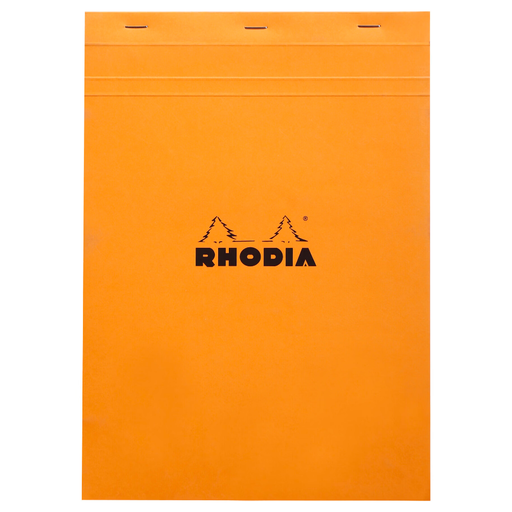
Why this choice suits this profile: Its A4 format and rigid back make it a versatile pad for lectures, lists and diagrams, whether you're a student or a private individual.
The 80 gsm weight, 5 × 5 mm ruling and 80 micro-perforated sheets are clearly stated. This stops you accidentally picking a Seyès notebook.
80 sheets, 80 gsm PEFC-certified paper according to the product sheet, and a rigid cardboard back.
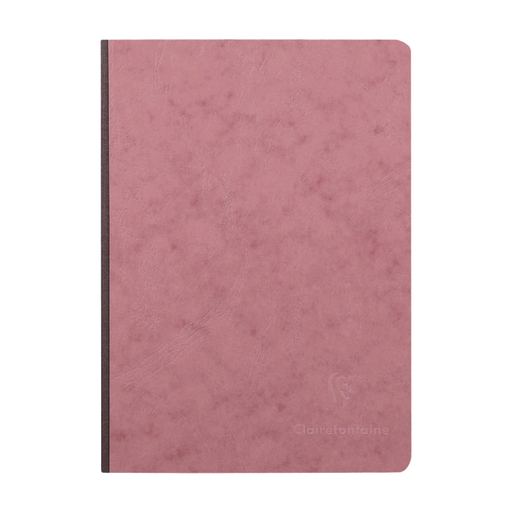
Why this choice suits this profile: This notebook follows you easily on the move, for daily note-taking and creative projects, without the bulk of an A4 pad.
The A5 format is clearly stated, and the soft cover with a textile spine sets it apart from a pad designed to be filed flat.
192 pages, Vélin Velouté 90 gsm paper and a cover dyed through to the core, according to the product information.
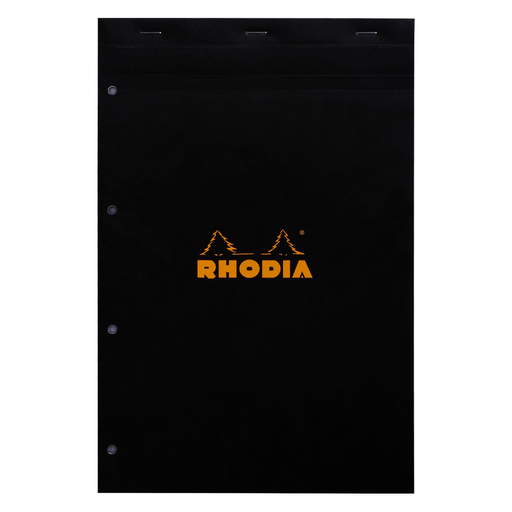
Why this choice suits this profile: Architects, engineers, teachers and other professionals can move from note-taking to archiving thanks to the detachable, perforated sheets.
The 4 holes are clearly mentioned on the product sheet, which reduces the risk of choosing a squared pad that won't fit in your ring binder.
80 micro-perforated sheets, 5 × 5 mm ruling, 80 gsm paper and a rigid cardboard back.
We've put together a complete, real-time selection of products that meet these exacting criteria, while complying with European safety regulations.
The small-square notebook typically uses a 5 × 5 mm grid, ideal for diagrams, tables and calculations. The Seyès notebook has school-style line spacing and a vertical margin, making it more suited to handwriting and presentation exercises.
It all depends on how often you use it, the type of binding and the storage conditions. A pad with detachable sheets might be used up in a few weeks, whereas a stitched 192-page notebook is more likely to accompany a long-term project. Keep it away from damp and avoid squashing it under a pile of things in your bag.
It's close, but it's slightly taller. Before slipping it into a folder, divider or ring binder, measure the space available. For perfect compatibility with A4 documents, the 21 × 29.7 cm format remains the safest choice.