
Livraison le jour même ou le lendemain

Qualité garantie

Débloquez vos offres de bienvenue: Livraison GRATUITE | Jusqu'à -80 % | 30 jours d'essai gratuits à JoyPlus
Téléchargez l'application
Choosing a Clairefontaine Rhodia notepad isn't just about comparing a cover or a colour. Between A4+ size, ruling, paper weight and binding, the wrong choice can quickly become bulky, impractical or ill-suited to your pens and drawing techniques.
Students, teachers, professionals and creatives often run into the same problems: sheets that are difficult to tear out, paper too thin for ink, ruling that doesn't work well for diagrams, or a notebook that's awkward to carry. Here are the criteria to consider before buying, along with a selection of models suited to different uses.
A notepad advertised as having "160 pages" may correspond to a different number of sheets depending on how the manufacturer presents it. For school or professional use, always check the number of sheets, the actual number of usable pages and whether there are any micro-perforated sheets.
Rhodia stapled pads sold in packs usually contain 80 sheets per pad. The micro-perforation allows you to tear them out cleanly, but it does slightly reduce the available surface area if you want to keep a neat margin after removal.
A classic violet ruling works well for note-taking and continuous writing. On the other hand, a 5x5 grid pad is much more practical for tables, graphs, calculations, plans and technical diagrams.
For revision cards, a plain surface or a fine ruling can also be a good choice. The most important thing is to pick a structure that suits your working method, rather than just relying on how the pad looks.
A pad without a sufficiently rigid backing quickly becomes uncomfortable on the train, in a lecture hall or during a standing meeting. Rhodia models with a rigid cardboard back can be used without a desk, making note-taking on the go much easier.
For drawing, the criteria are slightly different: a glued or spiral-bound pad needs to stay stable while also opening completely flat.
Clairefontaine 80 g paper is suitable for everyday writing with a ballpoint pen, rollerball or pencil. Its smooth vellum surface is pleasant for daily notes, but this weight is not designed for washes or heavily wet techniques.
For drawing and mixed media, opt for 250 g/m² paper, like the Paint'ON range. For watercolour, a 300 g/m² weight offers better absorbency for washes and layering.
With dimensions of 21 × 31.8 cm, an A4+ size offers a slightly larger surface than a standard A4. Remember to check the dimensions of your folder or bag before placing your order.
Stapled binding remains lightweight and easy to flip through. Micro-perforated sheets tear out cleanly, while four-hole punched models can be filed directly into a compatible ring binder.
Spiral binding allows the pad to open flat and makes drawing easier. A glued pad is better suited to creations you want to keep or tear out gradually. For archiving, also check for acid-free, pH neutral or PEFC certification, where these are listed on the product page.
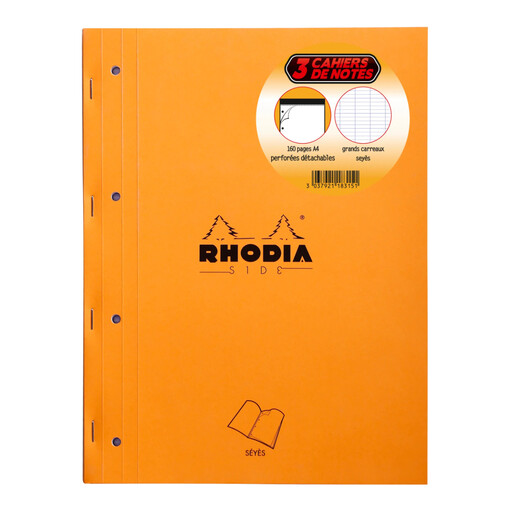
Why this choice suits this profile: This pack of three A4+ pads is ideal for students and families who want a ready supply for lessons, homework or meetings.
The pack saves you from having to restock too often, and each pad has 80 micro-perforated sheets plus a rigid cardboard back.
Clairefontaine 80 g vellum paper, violet ruling, PEFC certification indicated and A4+ size.
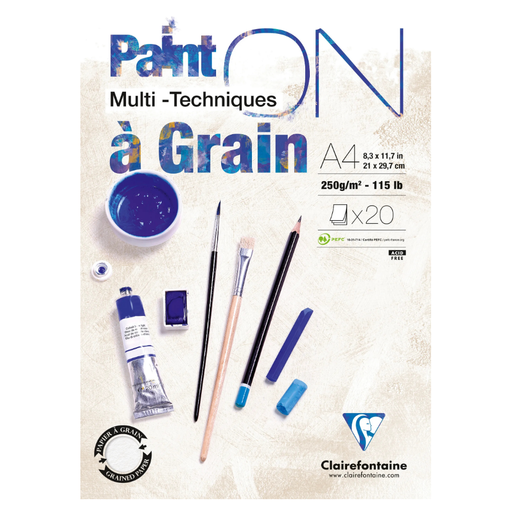
Why this choice suits this profile: This pad is aimed at amateur artists who switch between pencil, marker, ink, gouache or acrylic and want a thicker paper.
With its 250 g/m² weight, it stops you from mistaking a simple writing pad for paper suited to dry and wet techniques.
100% cellulose paper, different grain on each side, A4 size and glued pad of 20 sheets.
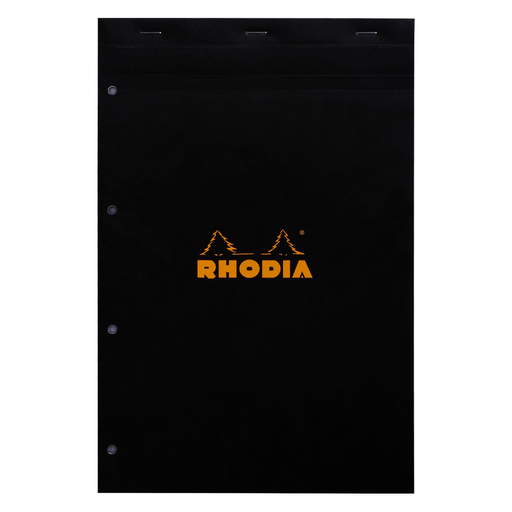
Why this choice suits this profile: Its near-A4 size and perforated sheets make it ideal for professionals, teachers and anyone who writes before filing their documents.
The 5x5 grid, micro-perforation and four filing holes make this pad more versatile than a notebook without an archiving system.
80 sheets, 80 g paper, violet 5 × 5 mm ruling, rigid back and four-hole perforation.
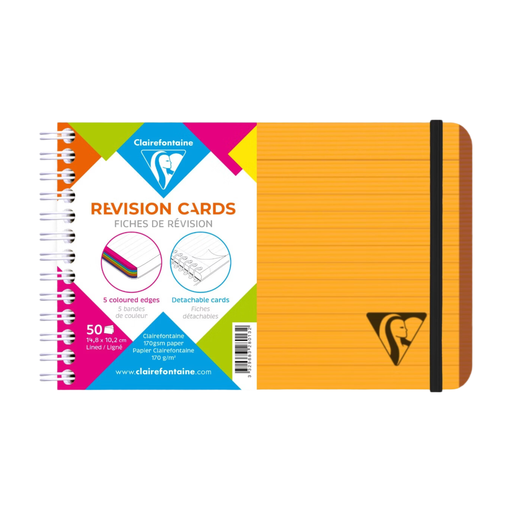
Why this choice suits this profile: Students can organise their definitions and key concepts by subject in a compact, easy-to-carry notebook.
The 50 Linicolor revision cards are split across five coloured bands, which stops you from mixing up subjects.
Compact size, Clairefontaine 170 g paper, opens flat and grooved polypropylene cover.
For watercolour and wet exercises, the Aquapad watercolour paper in 300 g/m², with a fine-to-medium grain and double sizing, is a suitable choice for both practice and learning. To vary your creative experiments, the Paint'ON MIX11 pad brings together several shades and surfaces in 250 g/m².
Sketching enthusiasts can turn to the Zap Book sketchbook, available in A4, A5 or A6, with 160 sheets of 80 g/m² recycled paper, acid-free and pH neutral. For high-contrast drawings, the black Paint'ON pads offer a slightly grained surface designed for light-coloured pencils, metallic inks, gouache and acrylic.
We've put together a comprehensive, real-time updated list of products that fully meet these strict selection criteria and European safety regulations.
A Rhodia A4+ pad with violet ruling is perfect for continuous note-taking. If you use lots of tables, calculations or diagrams, go for a 5x5 grid pad instead. A rigid cardboard back is particularly useful when you're writing without a desk.
Clairefontaine 80 g paper is primarily intended for writing and light dry techniques. With heavily loaded felt-tip pens or liquid ink, marks may appear on the reverse side. To minimise this, choose a thicker paper, such as the Paint'ON range in 250 g/m².
After tearing them out along the micro-perforation, file the sheets in a suitable folder or ring binder. Four-hole models make archiving much simpler. Store your pads and notebooks flat, in a dry place away from moisture and direct light.