
Livraison le jour même ou le lendemain

Qualité garantie

Débloquez vos offres de bienvenue: Livraison GRATUITE | Jusqu'à -80 % | 30 jours d'essai gratuits à JoyPlus
Téléchargez l'application
A thick drawing pad isn't necessarily suitable for watercolour, while a notebook that's pleasant for everyday use might prove ill-suited to felt-tip pens or repeated corrections. To choose Clairefontaine paper and notebooks for drawing and writing, it's best to look beyond the paper weight or the colour of the cover.
Here are the most common mistakes to avoid:
Paper weight refers to the weight of a sheet per square metre. It's not enough on its own to judge paper quality, but it does give a good indication of its durability.
A medium or fine grain holds pigments better and adds texture to washes. Conversely, a smooth surface makes detail work, technical drawing and clean corrections easier. For dry techniques, also check whether the two sides of the paper have different finishes.
Black drawing paper is intended for a very specific use: it makes white pencils, metallic inks and light colours stand out. The Paint'ON black has a deep shade, a slightly rough grain and a cellulose composition. It works with pencil, technical pen, marker, Indian ink, gouache and acrylic. The result depends on the medium chosen and the amount applied, however.
For watercolour, the sizing deserves particular attention. Aquapad pads are described as double-sized, acid-free and with a medium-fine grain. This design allows them to better withstand water and colour layering. For heavy washes, it's still advisable to fix or stretch the sheet.
The choice between an A4, A5 or A6 sketchbook depends mainly on how you work:
A spiral binding generally allows you to open the notebook completely flat. A glued binding makes it easy to remove sheets, while a pad with micro-perforated sheets lets you tear out and file pages easily. Loose-leaf A4 punched sheets are particularly handy in a ring binder or for organising documents by project.
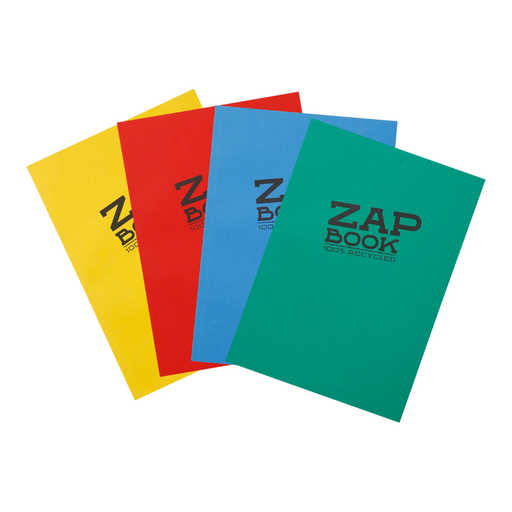
Why this choice suits this profile: With its A5 format and 160 sheets, this notebook is ideal for pupils, students and hobbyists who switch between writing and sketching on a daily basis.
The 80 gsm weight is clearly stated: there's no need to pay more for thick paper when you're mainly looking for a surface for note-taking and dry sketching.
100% recycled paper, acid-free and pH neutral, with glued binding on the long side.
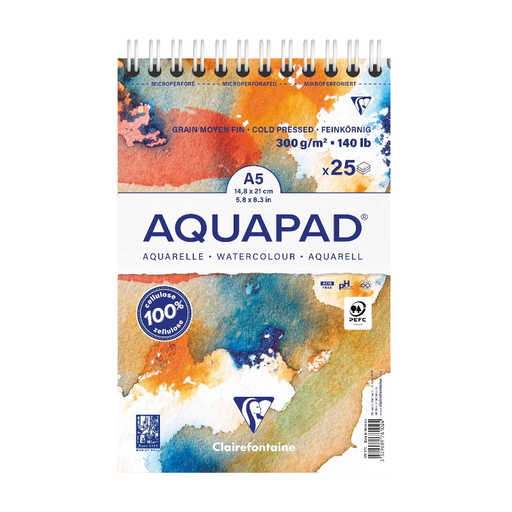
Why this choice suits this profile: This A5+ pad is aimed at those who want to work with watercolour and wet techniques in a format that remains easy to carry around.
The 300 g weight and double sizing provide concrete benchmarks, far removed from a simple promise of water resistance.
Medium-fine grain, acid-free paper, cellulose composition and spiral binding.
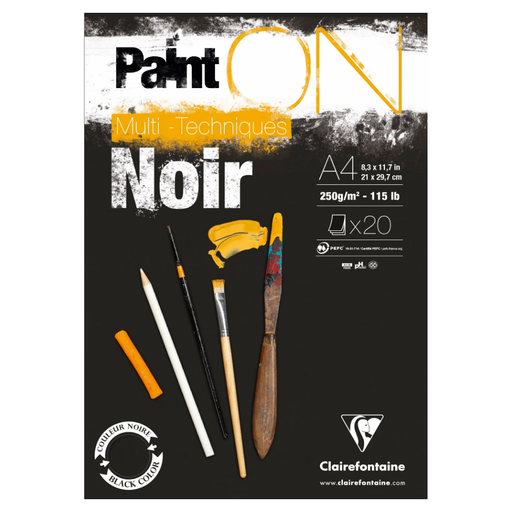
Why this choice suits this profile: Its A4 format and black paper are ideal for illustrators, teachers and creators who work with light or highly contrasting media.
Its multi-technique use and paper weight are clearly specified: this isn't just a coloured paper reserved for writing.
Cellulose with a slightly rough grain, stated ink absorption and the possibility of correction depending on the medium used.
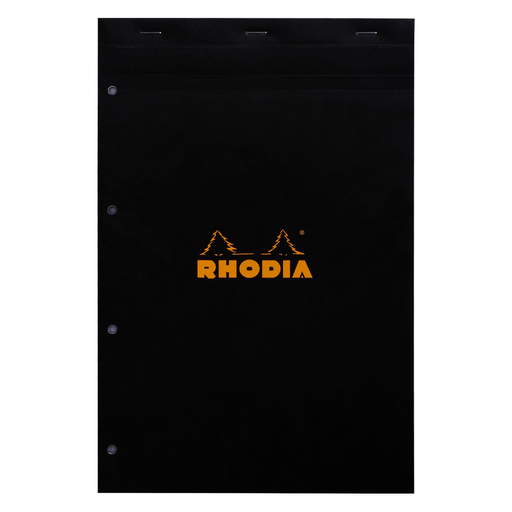
Why this choice suits this profile: This pad is suitable for students, professionals and anyone who regularly organises notes, plans or diagrams.
The 5 x 5 mm grid, micro-perforations and four holes are precisely indicated to simplify use and filing.
80 sheets of 80 gsm, rigid cardboard backing, vellum paper and stated PEFC certification.
We've put together a comprehensive, real-time updated selection of products that meet these demanding criteria, as well as European safety standards.
For mixed use, 80 to 120 gsm is a versatile range. 80 gsm is fine for notes and dry sketches. 120 gsm offers more durability for erasers, coloured pencils and some felt-tip pens. For washes or watercolour, choose a paper designed for wet techniques, generally from 250 or 300 gsm upwards.
Yes, for sketching, pencil and note-taking. The Zap Book models use 100% recycled 80 gsm paper, acid-free and pH neutral. They are less suited to very wet applications, which risk soaking through the sheet or warping it.
Store your notebooks and pads flat, in a dry place, away from direct light and strong humidity fluctuations. For loose sheets, use a suitable ring binder. Mentions of acid-free, pH neutral or PEFC certification are useful indicators, but they don't replace good storage conditions.