
Livraison le jour même ou le lendemain

Qualité garantie

Débloquez vos offres de bienvenue: Livraison GRATUITE | Jusqu'à -80 % | 30 jours d'essai gratuits à JoyPlus
Téléchargez l'application
Buying a notebook might seem straightforward, but a few details really determine how comfortable it is to use and how long it lasts. Whether you're looking at a Clairefontaine 24 x 32 cm notebook, a compact notepad or an A4 sketchbook, the right choice depends mainly on how much you write, the type of ruling you need and the level of protection you're after.
Pupils, students, parents, teachers and professionals often fall into the same traps when comparing Clairefontaine notebooks and pads.
A product listing might mention 96 pages, 96 sheets or 160 sheets. However, these figures don't always mean the same thing. A pad with 160 sheets generally gives you 320 usable sides, whereas a notebook listed as 96 pages offers 96 writing sides.
Before you order, check the manufacturer's terminology carefully. For regular lessons or revision cards, this difference can affect how many notebooks you need to buy.
A lightweight card cover is fine for occasional use, but it's likely to get dog-eared in a packed bag. A plastic cover, particularly polypropylene, stands up better to spills and scuffs. Some models also include flaps for storing loose sheets.
Bear in mind: a protective cover doesn't make the pages waterproof. It's best to keep the notebook in a bag or pouch away from damp.
Stapled binding works perfectly for homework and general note-taking. Spiral binding makes it easy to lay the notebook flat and is especially handy for drawing. Perforated sheets, meanwhile, are invaluable when you need to file certain pages in a ring binder.
The ruling should also match your use: a Séyès (French-ruled) notebook supports school handwriting, while a blank pad gives you more freedom for diagrams, sketches and annotations.
The 24 x 32 cm size offers a larger surface than a standard A4 and can easily accommodate lessons, tables and exercises. It's often the go-to for school use in France, but it does take up more room in a bag.
An A4 sketchbook works well for drawings and large compositions, while an A6 size slips easily into a bag or pocket when you're on the move.
Clairefontaine 90 gsm paper offers a denser, more pleasant surface than a lightweight school paper of 70 or 80 gsm. It's suitable for writing with a pen, mechanical pencil and many felt-tips, while still being relatively easy to carry.
80 gsm paper can be enough for daily notes or pencil sketches. The Zap Book, for example, uses 100% recycled 80 gsm paper, acid-free and pH neutral. It's a great option if you're looking for a recycled paper notebook for both notes and drawing.
Labels like PEFC tell you about the certified origin of the paper, according to the information provided by the manufacturer. They don't replace the need to compare size, binding or paper weight.
To keep a notebook in good condition for longer:
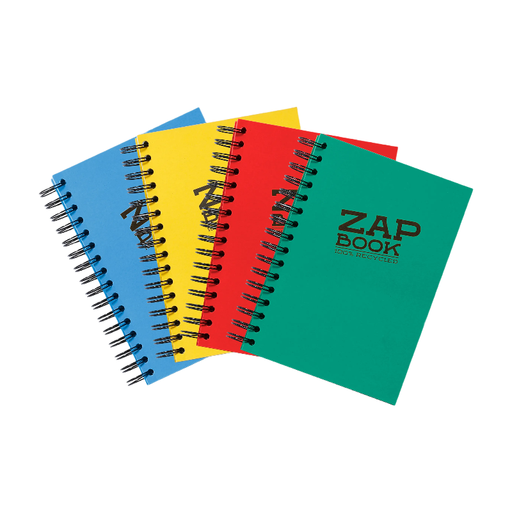
Why this choice suits this profile: Its A6 size is easy to carry and works well for lists, quick notes and small sketches without weighing down your bag.
The listing clearly states 160 sheets of blank 80 gsm paper, not a vague page count. The spiral binding allows it to lie flat.
100% recycled paper, acid-free and pH neutral; four assorted colours depending on availability.
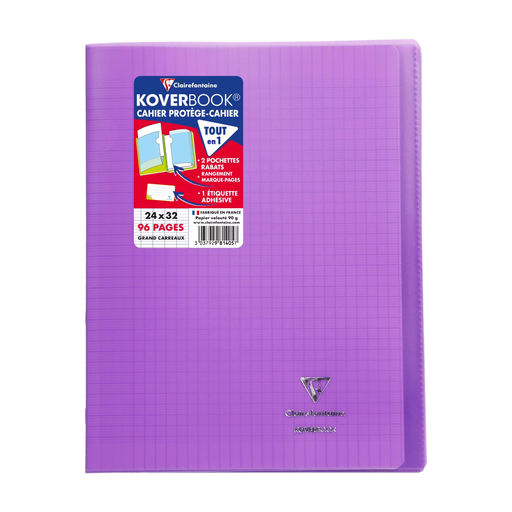
Why this choice suits this profile: It combines a large school format, Vélin Velouté 90 gsm paper and a built-in protective cover.
The transparent polypropylene protects the notebook without needing a separate cover, while the two flaps can hold documents.
96 pages, Séyès ruling and a self-adhesive label for identifying the subject or owner.
Why this choice suits this profile: The A4 size and lay-flat opening are ideal for drawings, plans, rough work and extensive note-taking.
The size, spiral binding and 160 sheets are clearly stated, so you can check the capacity before buying.
Blank 80 gsm recycled paper, acid-free and pH neutral; a surface designed for writing or drawing flat.
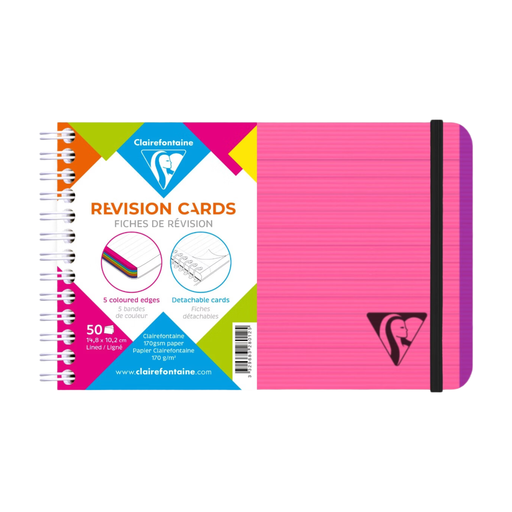
Why this choice suits this profile: These compact cards are designed for organising definitions, dates and key concepts during revision.
The size, 50 cards and five coloured dividers are clearly specified, so there are no nasty surprises when you come to organise them.
Lined cards on 170 gsm paper, binding that allows full opening and a grooved polypropylene cover.
We've put together a comprehensive, real-time selection of products that meet these demanding criteria and comply with European safety regulations.
For school and the office, go for Séyès or large-square ruling, a size that fits in your school bag and a sturdy cover. The Koverbook comes in several finishes, including transparent, opaque and two-tone.
For university lectures and meetings, a Rhodia pad with perforated sheets makes filing easy. The Rhodia Orange N°20 offers a size of 21 × 31.8 cm, 80 sheets, Séyès ruling and four holes.
For drawing, choose a blank pad like the Zap Book. For structured note-taking, a Cornell A4 notebook with 200 pages and 8 mm ruling could suit users who want to separate notes, keywords and summaries.
Yes. This size is used for many school purposes in France, particularly homework, exercises and written lessons. It offers more space than A4, but you'll need a bag that's big enough.
The Koverbook has a built-in polypropylene cover that protects the notebook directly. Its flaps can be used as bookmarks or pockets. With a standard notebook, you often need to add a separate cover.
It depends on how often you use it, where you store it and the type of binding. Kept dry, handled without forcing the spiral and protected from scuffs, a notebook can stay usable for a long time. For important documents, choose acid-free, pH neutral paper when this feature is stated.