
Livraison le jour même ou le lendemain

Qualité garantie

Débloquez vos offres de bienvenue: Livraison GRATUITE | Jusqu'à -80 % | 30 jours d'essai gratuits à JoyPlus
Téléchargez l'application
A Clairefontaine notebook can accompany you through lecture notes, professional project organisation, drawing, or even document filing. But the choice goes far beyond just the brand and the colour of the cover. The size, ruling, paper weight and level of protection all play a part in how comfortable it is to use.
Before you place your order, here are the main pitfalls to avoid and the criteria to examine so you can find the notebook or journal that truly suits your daily life.
Easy to carry, an A5 notebook still offers less surface area than a 24 x 32 cm notebook. Conversely, a larger size is more comfortable for lectures, plans and diagrams, but it also takes up more room in your bag.
Rely on the precise dimensions given by the seller rather than just the words "large format" or "pocket". If you plan to carry several notebooks, a laptop and a few accessories, remember to check the compartment dimensions of a 17-inch laptop backpack too.
Pleasant to handle and lightweight, a soft cover works well for travel. A hard cover offers better protection for pages when they are squashed inside a bag. As for polypropylene, it generally withstands scuffs well and can be easily cleaned with a slightly damp cloth.
However, be aware: a transparent or opaque cover is not a substitute for a waterproof pouch. The pages remain vulnerable to moisture, spilled drinks and pressure from heavy objects.
The paper weight alone does not determine a notebook's purpose. Clairefontaine 90 g paper is perfectly suited to writing and note-taking. For watercolour, however, you are better off choosing a thicker paper. For drawing and painting, 140 g drawing paper provides a more suitable base for dry techniques and light watercolour.
The type of pen, the amount of ink you use and your working style also matter. Thicker paper offers more resistance, but it often increases the weight and bulk of the notebook.
Also check the number of pages or sheets. A product advertised with 96 pages does not offer the same capacity as a model listed as containing 20 sheets: one sheet has two pages.
The Seyès notebook, often called a large square notebook, features a specific grid made up of horizontal lines and interlines. It remains essential in French primary and secondary schools.
Large square notebooks are also suitable for structured note-taking, exercises and tables. For journaling or writing correspondence, a lined notebook will often be more pleasant. Artists and sketchers should instead look for blank pages or a multi-technique sketchbook.
A polypropylene-protected cover helps limit marks and scratches from transport. Some models have two flaps or integrated pockets: a handy storage space for a sheet of paper, a card or a small document, without needing to carry a folder.
The type of binding is also worth a look. Staple binding is sufficient for a classic notebook. Sewn binding generally makes it easier to lay flat, a useful advantage for a multi-technique sketchbook or intensive use.
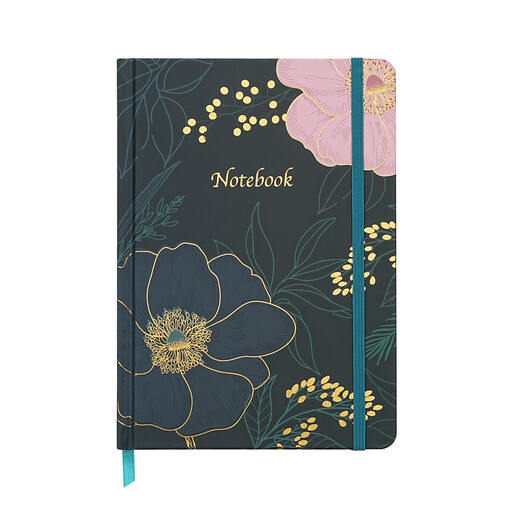
Why this choice suits this profile: Its A5 size slips easily into a bag or rucksack. It works just as well for personal notes as it does for lectures and everyday writing.
The hard cover limits creasing during transport, while the elastic keeps the notebook securely closed.
192 pages, 100 g cream offset paper, ribbon bookmark and patterned cover.
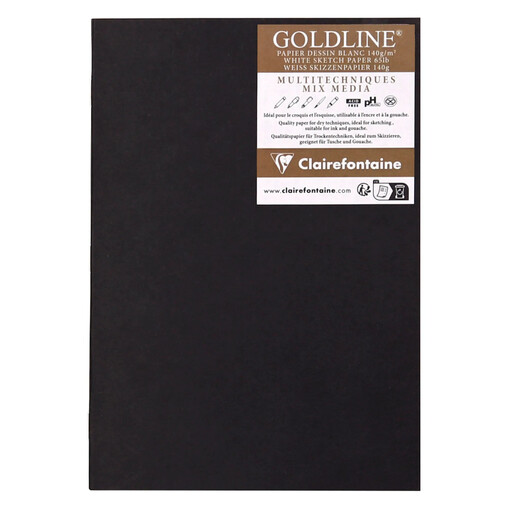
Why this choice suits this profile: This multi-technique sketchbook is designed for those who want to combine writing, sketching and dry techniques in a single medium.
With its 140 g paper, it avoids limiting you to a simple writing notebook when you are using pencil, charcoal, pastel or a little watercolour.
20 blank sheets of 140 g, sewn binding and lay-flat opening as stated on the product page.
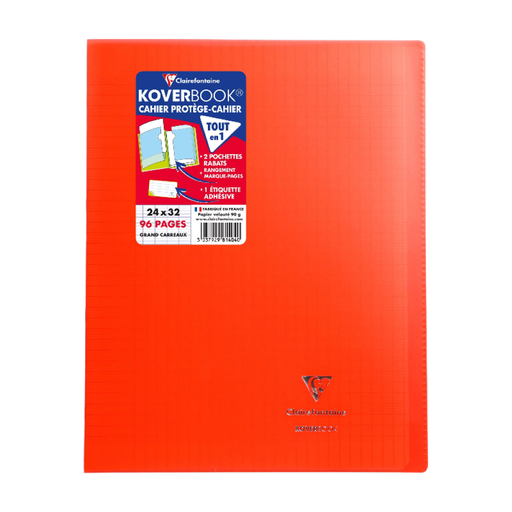
Why this choice suits this profile: Its large size is ideal for students, professionals and anyone who regularly carries sheets of paper or notes.
The polypropylene cover and two integrated flaps protect the notebook without needing an extra pouch.
96 pages, Vélin Velouté 90 g paper, Seyès ruling and 24 x 32 cm size.
We have compiled a complete selection, updated in real time, of products that meet these selection criteria as well as European safety regulations.
Store your notebook flat or upright in a dry place, away from excessive heat and direct sunlight. To clean a polypropylene cover, simply use a soft, slightly damp cloth without any abrasive products.
With a sketchbook, let the pages dry before closing the book after a watercolour session. On 140 g paper, applying thin layers can help limit warping, though it will not completely prevent the paper from buckling.
For exercises and note-taking, a 24 x 32 cm size with Seyès or large square ruling offers a comfortable surface. A polypropylene cover with flaps proves practical if the notebook is carried every day.
Yes, it is designed for writing and note-taking. However, the result depends on the type of ink, the pen nib and the pressure you apply. For wet drawing, check instead for 140 g drawing paper or paper specifically intended for watercolour.
The A5 notebook is more compact and easy to carry. The 24 x 32 cm size offers more space for lectures, tables and documents. The right choice depends mainly on your bag, the volume of notes you need to take and whether you need to work on large sheets of paper.