
Livraison le jour même ou le lendemain

Qualité garantie

Débloquez vos offres de bienvenue: Livraison GRATUITE | Jusqu'à -80 % | 30 jours d'essai gratuits à JoyPlus
Téléchargez l'application
A Clairefontaine notebook can accompany you through lecture notes, meeting organisation, revision, drawing or simply keeping a daily journal. But a pretty cover and the promise of quality paper aren't enough to guarantee the right choice. Over time, the size, ruling and binding make all the difference when it comes to comfort.
An A4 notebook offers plenty of room for lectures, professional files and diagrams, but it also takes up more space in your bag. Conversely, an A5 notebook is easy to carry around, at the cost of a more limited writing surface. A small format can quickly become restrictive if you need to copy out lengthy passages or draw tables.
5 × 5 mm small squares are perfect for tables, graphs, plans and calculations. On the other hand, they can make a page feel cluttered if you write in a larger hand. A lined ruling will be more pleasant for continuous text, while a sketchbook is best with blank pages.
A spiral notebook opens wide and is practical on a small desk. A stapled binding is more compact, but it is less flexible when the notebook is thick. For drawing, paper weight becomes even more important: 140 gsm paper will handle wet techniques much better than 80 gsm paper, which is generally intended for writing and light sketching.
Also think about the opening direction. A side binding works well for standard use, whereas a model that opens completely flat can be more comfortable for writing across both pages.
A small-square notebook is versatile for maths, structured note-taking and diagrams. The Séyès ruling, very common in French school notebooks, effectively supports learning and practising handwriting. Blank pages offer more freedom for drawing, sketching and creative journaling.
For revision, a flashcard notebook can prove more practical than a standard notebook. The Linicolor model shown below features coloured bands that allow you to organise topics by subject or chapter.
Clairefontaine Vélin Velouté 90 gsm paper is used in several models and is suitable for writing, note-taking and sketching. However, weight isn't everything: texture, whiteness, ruling and the type of ink used also influence comfort.
For drawing and watercolour, 140 gsm paper provides a more suitable base for a variety of techniques. If the origin of materials matters to you, look for PEFC or recycled paper mentions when they appear on the product page. A certification or specific composition should be checked in the model's description, not inferred from the range name alone.
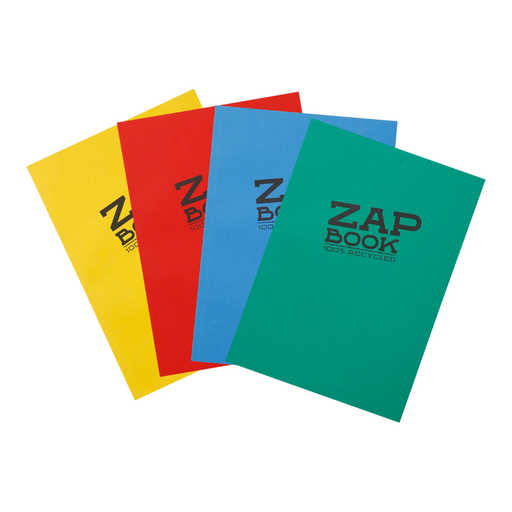
Why this choice suits this profile: Its A5 size slips easily into a bag and its 160 sheets are enough for daily notes as well as simple sketches.
The 80 gsm paper and glued binding keep the price and weight down, without forcing you into a notebook that's too specialised for a beginner.
100% recycled paper, acid-free and pH neutral, with four colours distributed at random.
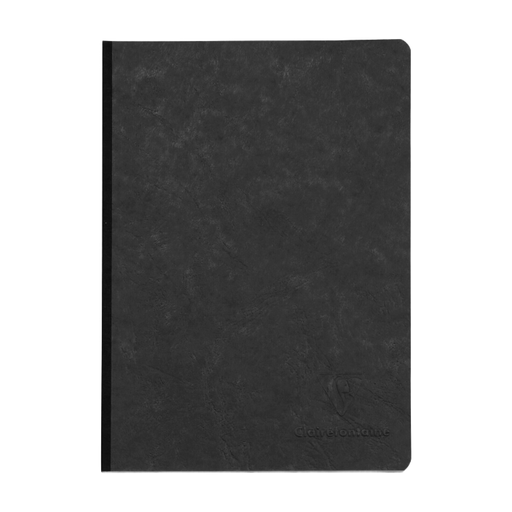
Why this choice suits this profile: This A5 notebook is aimed at those who want a polished look and a durable companion for work, personal writing or travel.
The product page mentions a binding that allows it to lie flat, so you don't have to hold the pages open while writing.
192 pages, Vélin Velouté 90 gsm paper, 5 × 5 mm ruling and a tinted cover with a leather-grain finish.
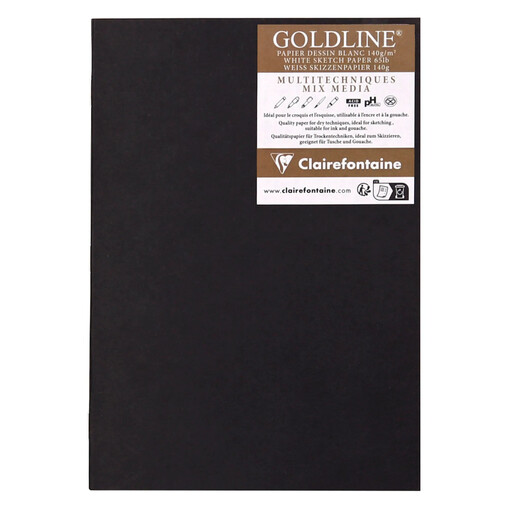
Why this choice suits this profile: This A4 sketchbook is aimed at artists and creatives who move from pencil to charcoal, pastel or watercolour.
Its 140 gsm weight is clearly stated, so you won't mistake a lightweight writing pad for a support suited to multiple techniques.
Multi-technique white paper, A4 portrait format and sewn binding designed to stay open flat.
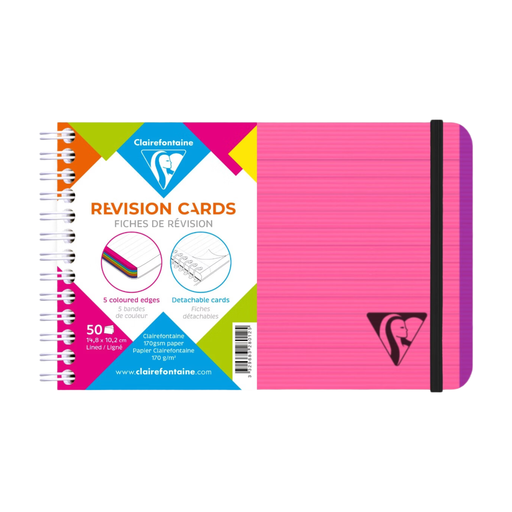
Why this choice suits this profile: Its compact size and five coloured bands make it easy to organise definitions, dates and key concepts for memorisation.
The full binding opens 180 degrees and the coloured sections prevent you from mixing subjects in the same pad.
50 lined sheets in 170 gsm paper, polypropylene cover and 15.2 × 10.2 cm format.
For taking notes on removable pages, the Rhodia Colors No. 18 pad offers 80 micro-perforated sheets, a violet 5 × 5 mm grid and a rigid cardboard back in A4 format. The Rhodia Stapled A4+ Pad Pack of 3 will also suit those who want to stock up on tear-off pads.
Fans of the spiral notebook can turn to the Koverbook 24 × 32 cm, which offers 100 pages of Vélin Velouté 90 gsm paper, a 360-degree opening and two storage flaps. For a recycled and eco-friendly notebook in a large format, the Zap Book R.I. A4 brings together 160 sheets of 100% recycled, acid-free, pH-neutral paper.
We have compiled a complete, real-time updated list of products that fully meet these strict selection criteria and European safety regulations.
The A4 format offers more room for lectures, tables and diagrams. The A5 format is more manageable for summaries, flashcards and revision on the go. The right choice really depends on how much information you need to write down and your daily travel habits.
For pencil and writing, 80 to 90 gsm paper can be sufficient. To vary your techniques, a weight of 140 gsm provides a more suitable base. Watercolour may still require gradual use of water and page preparation, depending on the effect you want to achieve.
Small squares make calculations, tables, diagrams and precise layouts easier. Lined pages are better suited to continuous text and reports. For journaling or free drawing, blank pages offer maximum freedom.