
Livraison le jour même ou le lendemain

Qualité garantie

Débloquez vos offres de bienvenue: Livraison GRATUITE | Jusqu'à -80 % | 30 jours d'essai gratuits à JoyPlus
Téléchargez l'application
An A5 notebook should be easy to carry, durable enough for everyday use and suited to the way you write. However, some product listings focus mainly on appearance or page count, without specifying the details that really make a difference at work, in class or while travelling.
The Clairefontaine Nomaddict A5 notebook is available with several types of covers, rulings and bindings. Here are the criteria to consider to avoid disappointment and choose a model that genuinely suits your routine.
A leather-effect cover can create a vintage look and withstand regular handling well, but that does not mean it is made from leather. In the Age Bag collection, the cover is described as board dyed throughout with a leather-like grain. This detail makes it clear exactly what to expect and avoids any confusion about the material.
This type of cover is ideal for anyone looking for an elegant, easy-to-maintain notebook. It is still best to keep it away from moisture and clean the surface with a soft, dry cloth.
A squared A5 notebook is well suited to tables, diagrams, lists and structured sketches. By contrast, a lined A5 notebook is a more natural choice for writing, reports or keeping a personal journal. Choosing a ruling solely for its appearance can therefore limit how you use the notebook.
The 5 × 5 mm squares are practical for structuring a page, but may feel too prominent if you write in a very free-form style. Lines provide more guidance for continuous text.
A 192-page notebook provides plenty of space for a long-term project, but its thickness and weight will be noticeable in a bag. A 96- or 120-page model will be lighter and can be replaced more regularly.
Also remember to distinguish between fixed pages and microperforated, detachable pages. The latter are useful for handing over a note, filing a sheet or reorganising your documents. However, they are not intended for keeping every page permanently in the notebook.
The models featured use Clairefontaine 90 g/m² Vélin Velouté paper, manufactured in France according to the information given in the product listings. Paper weight refers to the weight of the paper per square metre, but it does not fully describe how it feels under a pen. The finish and manufacturing quality also affect how smoothly the pen glides.
This paper is described as smooth and suitable for pens, pencils and fountain pens. However, the risk of ink showing through depends on the type of nib, the amount of ink applied and the drying time. If you use heavily inked felt-tip pens, it is best to test a back page before filling the entire notebook.
A sewn binding or one designed for lay-flat opening makes writing more comfortable, particularly when the notebook stays open on a desk. This is a sensible choice for students taking notes, writers and anyone who works across two facing pages.
A stapled binding is generally lighter and well suited to taking quick notes. Hardback versions or those with a textile spine may better withstand frequent use, while a softcover model slips more easily into a bag.
The A5 format, measuring approximately 14.8 × 21 cm, offers a good balance between writing space and portability. It is suitable for professional notes, journaling, sketches and travel notebooks. Before ordering, also check the colour, ruling, page count and whether pockets are included: these features may vary from one reference to another.
For a more responsible choice, some models in the collection are described as PEFC certified. This refers to the responsible management of forest resources according to the standard associated with the certification. It does not remove the need to check the product’s other features.
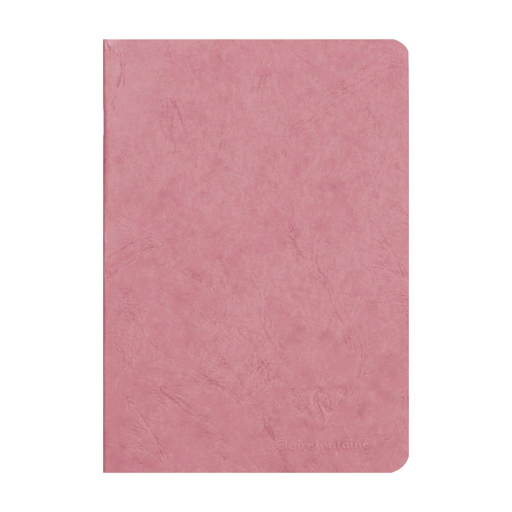
Why this choice suits this profile: Its A5 format and stapled binding make it ideal for everyday note-taking, journaling or starting a personal notebook.
The listing specifies that the cover is made from dyed board with a leather-effect grain, contains 96 pages and uses 90 g/m² paper: the key features are clearly set out.
Clairefontaine 90 g/m² paper, textured cover, stated French manufacture and an easy-to-carry format.
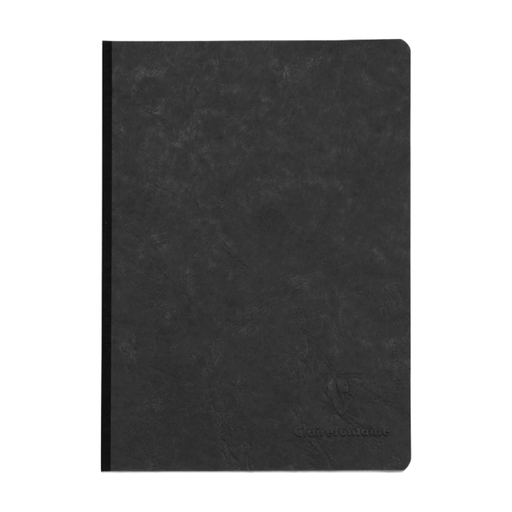
Why this choice suits this profile: With 192 pages, sewn binding and a lay-flat opening, this model is made for regular, structured and long-lasting use.
The description mentions the sewn binding and matching textile spine. You can therefore check how the notebook is made rather than relying solely on its external appearance.
192 pages, 90 g/m² Vélin Velouté paper, lined ruling and stated lay-flat opening.
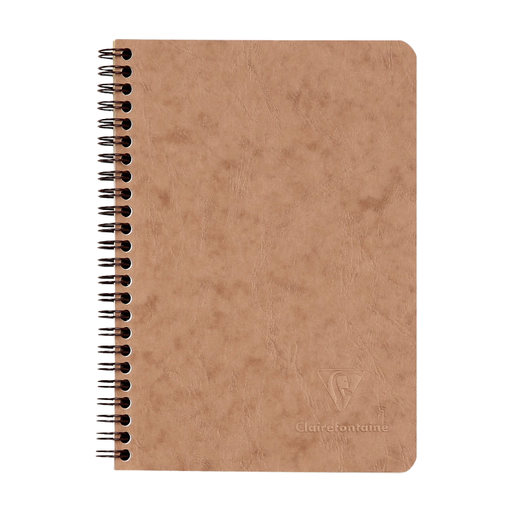
Why this choice suits this profile: Its pockets and microperforated pages meet the needs of professionals, students and travellers who need to sort, share or file their notes.
The listing clearly distinguishes between the detachable pages and the three divider pockets. The storage function is therefore not based on a simple marketing promise.
120 microperforated pages, three pockets, 90 g/m² paper and a leather-effect grain cover.
To protect a notebook made in France with a textured cover, avoid liquids, abrasive surfaces and repeatedly bending the binding. When carrying it in a bag, a separate pocket or compartment will reduce rubbing against keys and metal objects.
Its lifespan will then depend on how often you write, the pressure applied to the paper and how the notebook is carried. A lay-flat binding makes it easier to consult, but you should still handle the spine carefully.
We have selected a complete, real-time updated list of products that meet these demanding criteria as well as European safety regulations.
Yes. The A5 format offers enough space for regular writing while remaining easy to carry. A lined version is suitable for personal writing, while a squared model offers more freedom for lists, calendars, drawings and collages.
The product listings state that it is suitable for use with fountain pens. However, the result may vary depending on the nib and ink used. Test a back page to check the drying time and any potential ink transfer before starting a notebook dedicated to notes and sketches.
Choose 192 pages for an ongoing project, a travel journal or lecture notes that you want to keep in a single volume. The 96- or 120-page versions are easier to replace and may be better suited to separate subjects, meetings or detachable notes.