
Livraison le jour même ou le lendemain

Qualité garantie

Débloquez vos offres de bienvenue: Livraison GRATUITE | Jusqu'à -80 % | 30 jours d'essai gratuits à JoyPlus
Téléchargez l'application
Choosing a notebook seems simple enough… until the cover warps, the pages start falling out, or the size just won't fit in your bag. Whether it's for lessons, meetings, sketching or everyday organisation, the Clairefontaine Koverbook comes in several sizes and finishes. The trick is knowing which features really deserve your attention.
A 24 × 32 cm notebook is larger than a standard A4 sheet, which measures 21 × 29.7 cm. This extra space gives you more room for annotations and offers better protection for punched documents. On the downside, the notebook takes up more room in a bag or folder.
Before you order, check how much space you have on your desk, in your bag and in your storage. The 24 × 32 cm size often works well for lessons and folders, while an A5 notebook is easier to carry around.
A colourful or glossy cover doesn't guarantee lasting protection. For regular school or professional use, it's better to choose a polypropylene plastic cover: it's easy to clean and stands up better to everyday wear and tear.
Koverbook models also come with two flaps that include pockets. These let you tuck in loose sheets, tickets or index cards, and can even double as bookmarks. Handy for not having to carry an extra folder everywhere, but not enough for a large number of documents or bulky accessories.
A stapled or stitched binding holds the pages together, but the notebook doesn't always lie completely flat. A spiral binding usually allows 360° opening, which is particularly useful for writing on the go or working at a small table.
Your choice also depends on your habits. Spiral binding makes it easier to flip through and turn pages, while a stapled notebook keeps the traditional format most often seen in classrooms.
The large square notebook, also known as the Seyès notebook in many school catalogues, is suitable for structured note-taking and exercises. The Seyès ruling has three colours: a red margin, purple main lines and blue interlines.
For maths, plans, tables or technical sketches, small squares are often more practical. The Clairefontaine A5 Nomaddict notebook featured later uses a 5 × 5 grid, ideal for journaling, planning and light technical drawing.
Clairefontaine's Vélin Velouté 90 g paper is used in several Koverbook and Nomaddict references. At 90 g/m², it offers a more substantial surface than some very thin school notebooks. It works well with ballpoint pens, rollerballs and pencils.
However, results can vary with felt-tip pens and liquid inks, depending on how much ink is deposited and the nib you use. If you draw regularly, choose paper that's compatible with your materials, rather than relying solely on the word "premium".
The large-format Koverbooks shown here typically have 96 pages, while some spiral-bound versions offer 100 or 160 pages. A higher page count means you won't need to change notebooks as often, but it also adds weight.
For a student using one notebook per main subject, 96 pages should be plenty. On the other hand, for daily note-taking or projects that span several weeks, a 160-page spiral model will cut down on how often you need to switch notebooks.
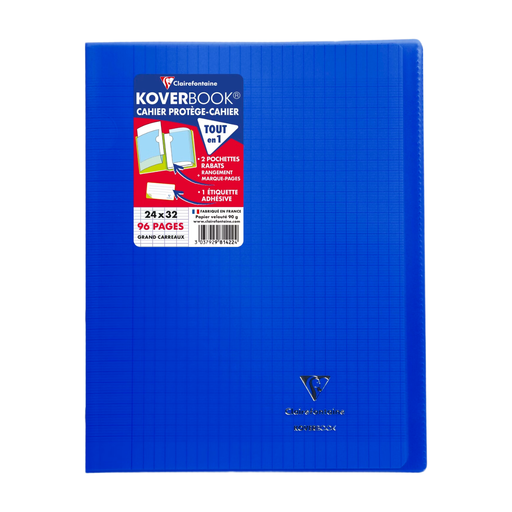
Why this suits this profile: This size is ideal for school pupils and students looking for a versatile notebook for lessons, with a cover already built in.
The transparent polypropylene cover protects the pages, while the two flaps let you store loose sheets without buying extra protection.
96 pages, Vélin Velouté 90 g paper, Seyès ruling, self-adhesive label and made in France.
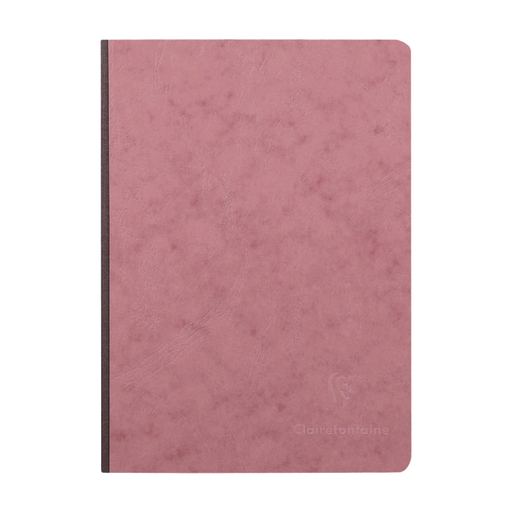
Why this suits this profile: This A5 notebook is aimed at professionals, creatives and travellers who want a polished look in a portable size.
The binding with a textile spine is designed to lie flat, while the colour-through cover feels less fragile than a simple printed cardboard.
192 pages, 5 × 5 grid, Vélin Velouté 90 g paper, leather-inspired textured cover and made in France.
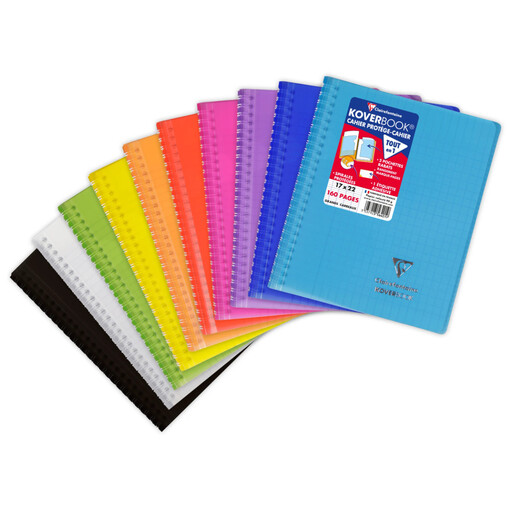
Why this suits this profile: Its 360° opening is ideal for frequent note-taking, meetings, workshops and working on the move.
The spiral binding means you don't have to hold the pages open, while the wrap-around cover protects the binding area during transport.
160 pages, compact size, wide ruling, two flaps with pockets and Vélin Velouté 90 g paper.
We've put together a comprehensive, real-time selection of products that meet these exacting standards and European safety regulations.
The references shown indicate PEFC-certified paper and manufacture in France. This information helps you understand the product's origin and material management, but it doesn't guarantee its lifespan in every condition. To keep your notebook in good shape, avoid moisture and clean the plastic cover with a soft cloth.
Yes, its size is slightly larger than A4. It leaves more margin around the sheets, but also takes up more space in a bag. Check the internal dimensions of your storage before buying.
The stapled model has a traditional binding and works well for lessons or structured folders. The spiral model opens 360° and is easier to handle on a small surface. Your choice really depends on how mobile you are and how often you use it.
No. They're designed to store a few sheets, index cards or small documents. For carrying a large amount of paper or bulky accessories, a separate folder or pencil case will still be more suitable.