
Livraison le jour même ou le lendemain

Qualité garantie

Débloquez vos offres de bienvenue: Livraison GRATUITE | Jusqu'à -80 % | 30 jours d'essai gratuits à JoyPlus
Téléchargez l'application
Between a Clairefontaine notebook, a Rhodia A4 pad and a small-squared notepad, the differences go far beyond the colour of the cover. Format, ruling, paper weight, binding and the ability to tear out sheets all directly affect writing comfort and how long the product lasts.
Whether you’re a student, teacher, architect, engineer or simply someone who takes notes in meetings, a few checks before you buy can save you a lot of disappointment.
A product advertised as “160 pages” may actually contain 80 sheets that can be written on both sides. To compare two products, always check whether it’s sheets or pages being referred to, as well as how many items are in the pack.
A pack of three 80-sheet pads isn’t the same as a single 200-page notebook, even if the numbers look similar at first glance.
5 × 5 mm small squares are particularly handy for tables, diagrams, calculations and structured note-taking. For school exercises, Seyès ruling is generally more suited to French habits. For quick notes, airy text or organised note-taking methods, lined pages often make things much easier to read.
A sketchbook with blank pages serves a completely different purpose: it gives you more freedom for sketches, plans and visual annotations.
Stapled binding is compact but doesn’t always keep the notebook open flat. Spiral or integral binding makes it easier to write across a double-page spread and to draw flat. If you’re writing on a train, on a bench or while travelling for work, a rigid cardboard back is particularly useful.
Micro-perforation can also make all the difference if you need to hand over a note, file a page away or store a document in a folder.
The A4 format of 21 × 29.7 cm slips easily into a ring binder, a work bag or a desk drawer. The A4+ format offers a little more space, while the 24 × 32 cm Seyès notebook is the large school format commonly used in France.
For technical work, plans and diagrams, those extra centimetres can save you from having to shrink your annotations. When you’re on the move, though, A4 is still more practical to carry.
The Cornell A4 notebook combines a note-taking-friendly layout with a specific ruling. Depending on the version you choose, you’ll find small squares, 8 mm lines or a more spaced-out page design.
Clairefontaine 90 g paper is used in several products designed for everyday writing. Lighter 80 g/m² paper is fine for notes, lists and pen diagrams. At 120 g/m², the paper in the Cray’ON pad offers a surface better suited to dry techniques and repeated corrections.
PEFC certification means the paper comes from forests managed under a certified chain of custody. It doesn’t guarantee that all components of the product are recycled. If your priority is to limit the use of virgin fibres, look specifically for the 100% recycled paper label, as found on some Zap Book models.
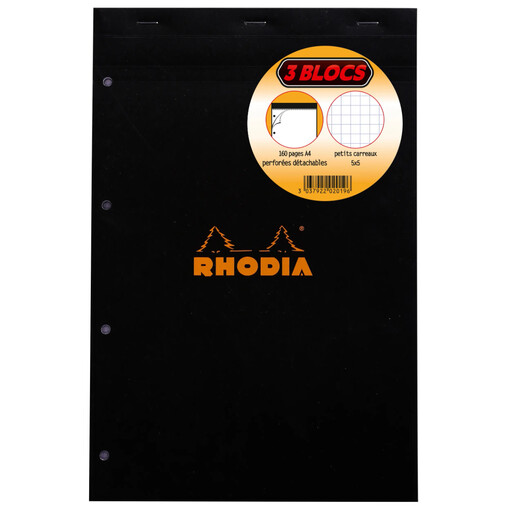
Why this choice suits this profile: This pack gives you three A4+ pads for classes, the office or personal lists, with a particularly versatile small-square ruling.
The product page details the pack contents, the micro-perforated sheets and the rigid cardboard back. This makes it much easier to compare with a single pad.
Three pads, 80 g/m² vellum paper, 5 × 5 mm ruling and tear-out sheets.
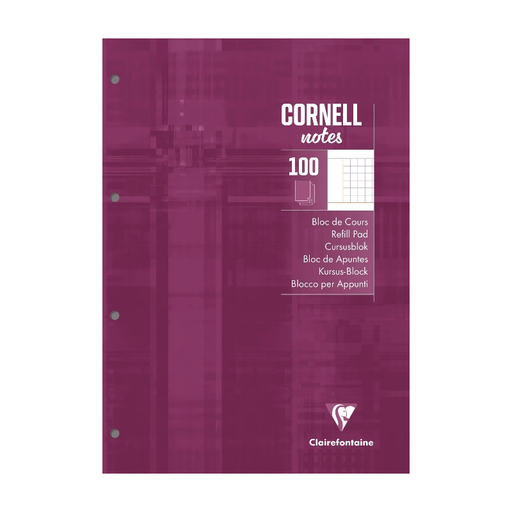
Why this choice suits this profile: With 200 pages and a structured layout, it’s ideal for students, professionals and anyone who prefers to keep all their notes in one place.
The laminated cover and very rigid back stand up to being carried around. The micro-perforated sheets and four holes make filing easy.
Clairefontaine Vélin Velouté 90 g paper, made in France, Cornell format and small-square ruling.
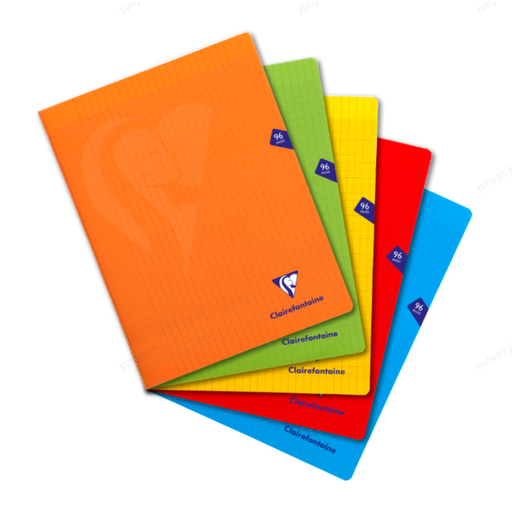
Why this choice suits this profile: This pack meets the needs of a family, a class or a professional who regularly uses large-format notebooks.
The format, quantity and number of pages are all listed separately. The polypropylene cover protects the notebooks from everyday spills.
Five notebooks, 24 × 32 cm format, 96 pages and Vélin Velouté 90 g paper with three-colour Seyès ruling.
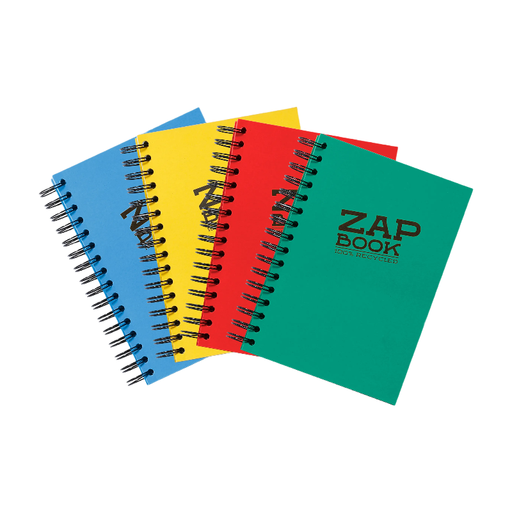
Why this choice suits this profile: Its spiral binding and lay-flat design make it just as suitable for drawing and sketching as for continuous note-taking.
The product page clearly states that these are blank pages, not a squared notebook. This saves you from an unpleasant surprise when you use it for graphic work.
100% recycled, acid-free, pH-neutral paper, spiral binding and 160 sheets in A4 format.
We’ve put together a comprehensive, real-time selection of products that meet these exacting criteria, while also complying with European safety regulations.
A Rhodia A4 pad with 5 × 5 mm small squares works very well for structured notes, tables and diagrams. If you want to file your sheets away, choose a micro-perforated and punched model instead, like some Rhodia or Cornell references.
The A4 format measures 21 × 29.7 cm. The larger 24 × 32 cm format is very common for school notebooks with Seyès ruling. It gives you more space, but also takes up more room in your bag.
An eco-friendly notebook made from 80 g/m² recycled paper is fine for sketching, pencil drawing and creative notes. For dry techniques that need lots of corrections, a pad like the Cray’ON at 120 g/m² will offer a more suitable surface. Always check that the paper is compatible with your drawing materials.