
Livraison le jour même ou le lendemain

Qualité garantie

Débloquez vos offres de bienvenue: Livraison GRATUITE | Jusqu'à -80 % | 30 jours d'essai gratuits à JoyPlus
Téléchargez l'application
Whether for jotting down a fleeting idea, organising your day, or keeping a travel journal, the choice of a notebook is far from trivial. The wrong writing companion can quickly become a source of frustration. To avoid buyer's remorse, it's best to know the pitfalls to avoid and select a notebook that will truly meet your needs.
Even for a simple pocket notebook, the purchase deserves careful thought. Many models that look appealing on the surface reveal their flaws with use. Here are the most common issues:
To be sure you're making the right choice, focus on a few technical specifications that make all the difference.
The way the notebook is assembled determines its durability and comfort in use. A lay-flat opening is a crucial selection criterion. Models with a sewn binding allow the notebook to open a full 180° without force, offering a perfectly flat writing surface across both pages. This is a guarantee of comfort and longevity, as the binding is not put under stress.
The quality of the paper is at the heart of the writing experience. Clairefontaine's 90 gsm brushed vellum paper is the gold standard in this field.
A quality notebook is also recognisable by its cover. A rigid, dyed-through cardstock cover with a textured grain will withstand friction and daily wear much better than a simple printed cover. Finally, opting for stationery made in France is often an indicator of craftsmanship and adherence to high production standards, as evidenced by the PEFC certification, which ensures sustainable forest management.
There's a notebook for every need. Here are our recommendations, tailored to different profiles.
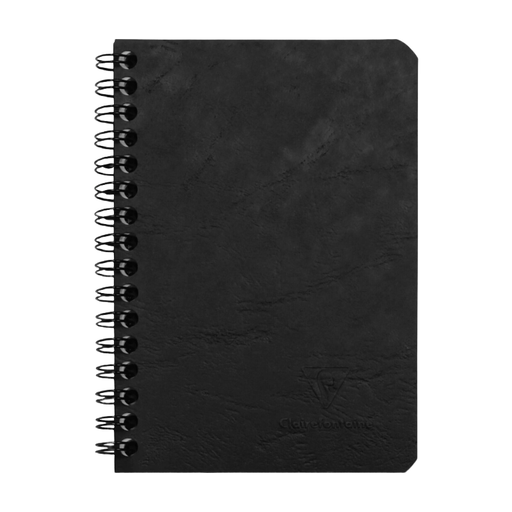
Why it's the right choice: Perfect for those seeking a robust and versatile notebook. Its black pocket notebook format slips into any bag, and its small grid ruling is ideal for notes, lists, or quick sketches, especially for keeping a travel journal.
Its sewn binding guarantees rock-solid durability and a lay-flat opening. The textured hardcover withstands the wear and tear of travel.
Durability and versatility. The 90 gsm paper ensures a flawless writing experience, no matter the tool.
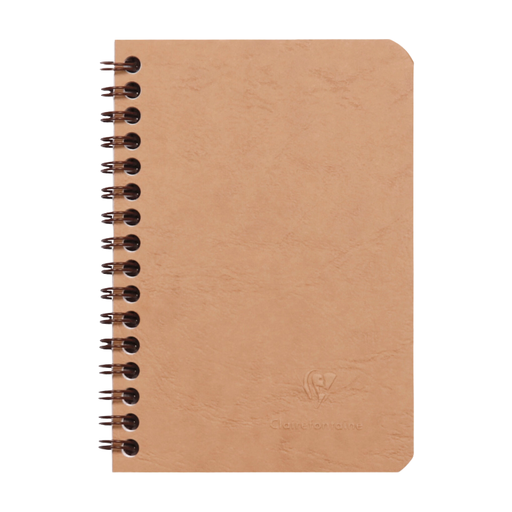
Why it's the right choice: Its understated aesthetic and tan colour give it a discreet elegance, perfect for a professional setting. The lined ruling is ideal for structured note-taking in meetings or appointments.
The lay-flat opening is a major asset for writing comfortably at a desk. The 90 gsm brushed vellum paper prevents any risk of smudging, ensuring your notes are always impeccable.
Elegance and functionality. A reliable tool that projects a polished, professional image.
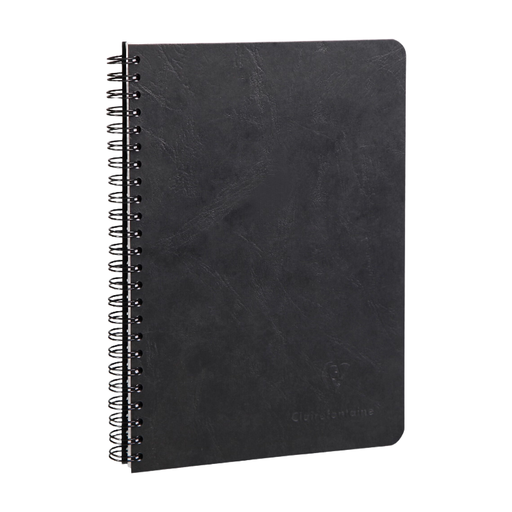
Why it's the right choice: For those who need more space, the A5 format is more comfortable. The wire binding allows the notebook to be folded back on itself completely, which is very practical for writing without a stable surface, on public transport, or in a lecture hall.
The sturdy wire binding offers a different kind of flexibility than a sewn binding. It retains the essential feature: the famous Clairefontaine 90 gsm paper that prevents any ink problems.
More writing space and great flexibility of use thanks to the spiral binding.
We've curated a full range of products that meet these strict quality standards.
Yes, absolutely. It's one of its greatest strengths. Its high weight and very smooth surface prevent ink from bleeding through or feathering. The glide is fluid, which makes writing with a fountain pen particularly pleasant, and the ink dries relatively quickly.
A sewn binding means that the page signatures are stitched together and then glued to a rigid cover in a way that allows the notebook to open completely flat (180°). The main advantage is writing comfort: you can use the entire surface of each page without being hindered by the fold in the centre of the notebook. It is also a mark of great durability.
The dyed-through cardstock cover, with its leather-like grain, is designed to be highly resistant to wear. For maintenance, a simple dry, soft cloth is usually sufficient. In case of a small stain, you can use a very slightly damp cloth, but avoid any liquids or cleaning products to preserve the quality of the material and the paper.