
Livraison le jour même ou le lendemain

Qualité garantie

Débloquez vos offres de bienvenue: Livraison GRATUITE | Jusqu'à -80 % | 30 jours d'essai gratuits à JoyPlus
Téléchargez l'application
Citrus products serve a wide range of purposes: orange juice at breakfast, ponzu sauce to lift a dish, a sparkling drink served ice-cold, or a few lemons squeezed on demand. In these circumstances, it's hard to compare different options at a glance.
Some marketing claims can, however, lead you to buy a product that isn't right for you. Here are the main pitfalls to avoid before making your choice.
An orange juice made purely from fruit may contain no added sugar yet still have a significant amount of naturally occurring sugars from the citrus fruit. Start by checking the nutritional information per 100 ml, then look at the ingredients list.
The phrase "100% orange" also doesn't guarantee the same texture or acidity as freshly squeezed juice made at home.
An electric citrus juicer may seem convenient, but pulp and membranes quickly build up in the filter, cone or spout. Removable parts, dishwasher compatibility and a drip-stop system all directly affect how easy it is to clean — and therefore how often you'll actually use the appliance.
The wattage alone isn't enough to judge how comfortable a citrus juicer is to use. The capacity of the jug, the size of the cones, the stability of the base and bi-directional rotation all matter just as much.
A 20 to 40 W appliance can be perfectly adequate for moderate daily use. If you regularly prepare several glasses in a row, a 60 W motor will generally cope better.
Start by identifying how you'll use it:
The difference between a ready-to-drink product and an ingredient you need to prepare is essential for comparing prices per litre or per kilogram accurately.
A 0.4 litre jug is generally enough for one glass or a small preparation. A capacity between 0.7 and 1.4 litres will be more practical for a family or multiple servings. For bottles and cartons, also think about the space available in your fridge and how long the product keeps once opened.
Fresh juices need to be consumed quickly and stored in the fridge. For commercially produced products, follow the instructions on the packaging rather than automatically applying the same rules as you would for homemade juice.
For an electrical appliance used near the sink, check the usage instructions, compatibility with the UK mains supply, and the separation between the motor unit and the washable parts. The motor unit must never be immersed.
For a manual citrus juicer, the weight, grip and sturdiness of the material have a real impact on comfort. The 5 Five model shown below is made from acrylic plastic and has a 0.4 litre capacity. However, it is not stated as being dishwasher safe.
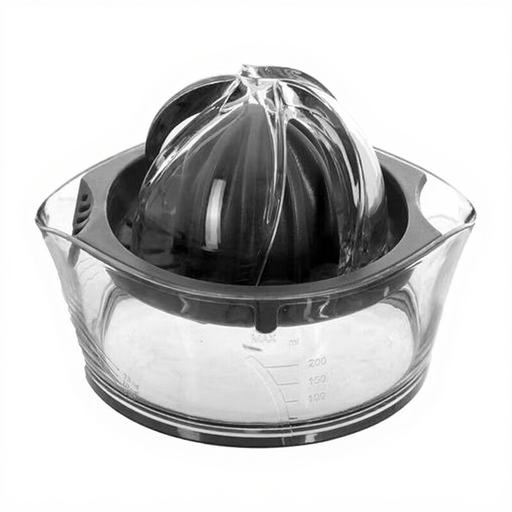
Why this choice suits this profile: This manual citrus juicer is ideal for anyone who wants to prepare lemon, lime or orange juice without needing a power socket. Its compact size makes it easy to store, even in a small kitchen.
Its manual operation means you don't pay for a motor when you're only making small quantities. The separate pulp collector also lets you control the texture of the juice more easily.
0.4 litre capacity, 180 g weight and dual function for collecting juice and pulp. Hand washing recommended.
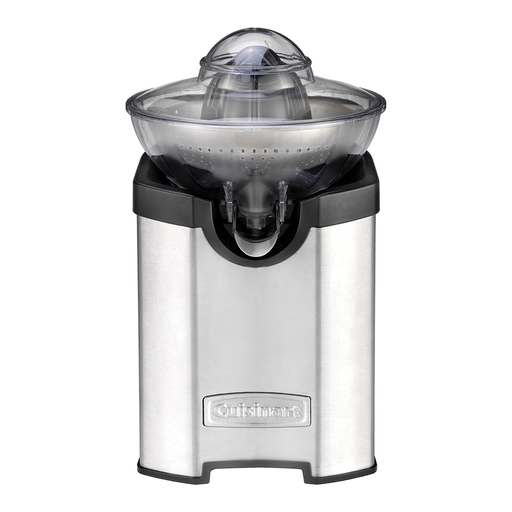
Why this choice suits this profile: With its brushed stainless steel base and compact design, it fits easily into a kitchen where the citrus juicer stays on the worktop and gets regular use.
The "Quick Press" lid, elongated spout and drip-stop system reduce repeated handling and splashes when serving.
Automatic cone suitable for different sizes of citrus fruit, fast rotation and removable parts designed to simplify cleaning.
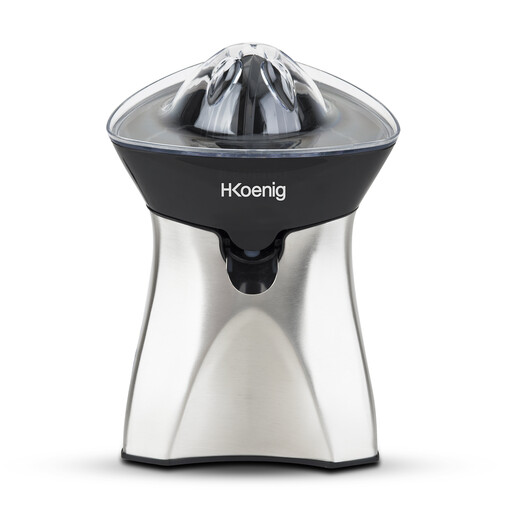
Why this choice suits this profile: If you regularly squeeze oranges, lemons, grapefruits or limes for several people, its two interchangeable cones and 60 W motor can make all the difference.
The two cones prevent you from having to use a small accessory on a large grapefruit. The drip-stop spout reduces splashes when pouring the juice.
Stated power of 60 W, two cones and a removable cover. The manufacturer recommends unplugging the appliance before cleaning.
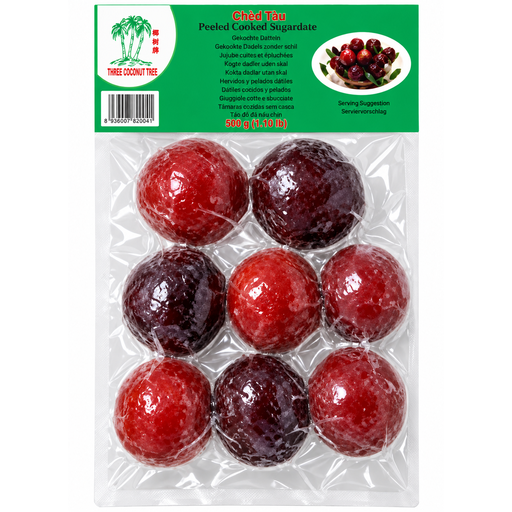
Why this choice suits this profile: This frozen passion fruit can be added to smoothies, desserts, sauces or simply stirred into yoghurt, without needing a citrus juicer.
The product listing states it is 100% fruit, with no added sugar, preservative, colouring or artificial flavouring. However, it must be stored at -18 °C.
500 g format, natural pulp and seeds preserved, product stated as gluten-free.
We've put together a comprehensive, real-time selection of products that meet these exacting criteria, in line with European safety regulations.
For a ready-to-drink beverage, Schweppes Citrus Soda 6 × 330 ml blends orange, grapefruit and lime flavours. Its label shows 4.4 g of sugar per 100 ml. Lipton Green Citrus Loose Tea 100 g, on the other hand, offers a loose-leaf green tea with four citrus peels.
On the juice front, Tropicana Orange Juice with Pulp 1 L is presented as pure pressed orange juice, with no added sugar or preservative. The mention "near its best-before date" does, however, mean you should check the delivery conditions and the date actually printed on the packaging.
To accompany a dish, Kikkoman ponzu citrus sauce 1 L contains soya, wheat and 6.6 g of salt per 100 ml. It may suit certain recipes, but anyone with allergies should carefully check the ingredients list and the quantities used.
An electric model with a jug of at least 0.7 litres reduces the amount of handling when you need to prepare several glasses. Two cones and a drip-stop spout also make the process cleaner. If you only squeeze a few lemons each week, a 0.4 litre manual model can be more than enough.
It depends entirely on the product. Freshly squeezed juice should be put in the fridge promptly and consumed without delay. For packaged juice, follow the instructions on the packaging: some products keep for a few days after opening, while others need to be consumed more quickly.
Yes. When made from fruit, a juice contains the sugars naturally present in the orange, lemon or other citrus fruit. To tell the difference between these sugars and any that may have been added, check the "of which sugars" line on the nutritional panel as well as the ingredients list.