Anyone keeping an eye on how much they snack
If the film runs long, compare the kcal per 100 g across products, then serve a set amount in a bowl. The DGCCRF says that nutrition information per 100 g makes it easier to compare products.


To keep the calories down during a film night, compare savoury snacks by their kcal per 100 g, then decide how much to serve rather than relying on the word ‘lighter’ alone. Check the salt and allergens too. A Nutri-Score, if shown, can be a useful extra guide, but it’s voluntary in France, as the DGCCRF points out.
If the film runs long, compare the kcal per 100 g across products, then serve a set amount in a bowl. The DGCCRF says that nutrition information per 100 g makes it easier to compare products.
A lower energy value may not be your only priority. Compare the salt per 100 g as well. If there’s a Nutri-Score on the pack, use it as an additional guide alongside the nutrition table.
Check the ingredients list and allergen information for the flavour you’ve chosen before serving it. ‘Light’ positioning doesn’t tell you whether it may contain wheat, peanuts, milk or sesame.
For a film night, start by comparing the nutrition information per 100 g, then factor in how much you’ll actually serve.
| Priority | What to check | Who is it for? |
|---|---|---|
| Calories and portion size | The kcal per 100 g, followed by the pack weight and the amount you plan to put in the bowl. | If I snack throughout the film, I want to compare the energy content of the snacks and stay in control of how much I serve. Around 50% of consumers rank this as their top priority. |
| Salt and nutritional profile | Salt and fat per 100 g; the Nutri-Score, if shown. | Cutting calories isn’t enough if the product I choose is high in salt. This is the top priority for around 38% of consumers. |
| Allergens and dietary requirements | Allergens in the ingredients, ‘may contain’ warnings and the exact recipe. | Before sharing the pack, I need to make sure the product is suitable for any guests with dietary requirements. Suitability for different diets is the top priority for around 12% of consumers. |
A recipe made with vegetables or pulses isn’t necessarily lower in calories. UFC-Que Choisir found that some savoury snacks promoted this way had less favourable nutritional profiles than conventional products.
Compare the kcal, fat and salt per 100 g across the products you’re considering.
The DGCCRF explains that displaying it is voluntary in France. So its absence alone isn’t enough to judge a savoury snack.
If it’s shown, read it alongside the nutrition information and ingredients.
Two products you’re comparing may also have different salt levels. If that matters to you, energy values alone won’t help you decide between them.
Check the salt per 100 g before you choose, and serve the amount you’ve planned rather than leaving the pack open during the film.
Your chosen flavour may contain allergens or carry ‘may contain’ warnings that matter to some guests.
Check the information on the exact product’s packaging before serving it.
The range includes several types of snacks, including crisps and puffed snacks, so compare individual products rather than the brand as a whole.
The brand offers puffed savoury snacks and peanut-flavoured recipes, among other products.
The retailer offers a range of savoury snacks, including crackers and breadsticks.
The retailer offers savoury snacks in a variety of recipes and formats.
This selection includes crunchy biscuits, rice crackers and savoury wafers to consider for a film night. Compare their nutrition information and ingredients according to what matters most to you.
 Image unavailable
These crispbreads can be served in a set portion to enjoy during the film, although the product listing doesn’t describe them as savoury snacks.
The listing gives 400 kcal, 6.6 g of fat and 1.1 g of salt per 100 g, as well as a Nutri-Score A. It also lists gluten from wheat and barley, so check the pack label if this affects your choice.
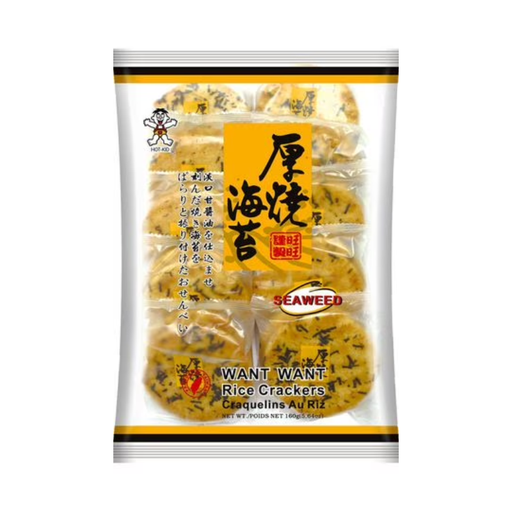 Image unavailable
These savoury rice crackers make a crunchy snack to enjoy before the film; serve an amount that’s right for sharing from the pack.
The listing gives 440 kcal, 15 g of fat and 2.5 g of salt per 100 g. It lists wheat, soya and fish, so check the packaging if any guests need to avoid one of these ingredients.
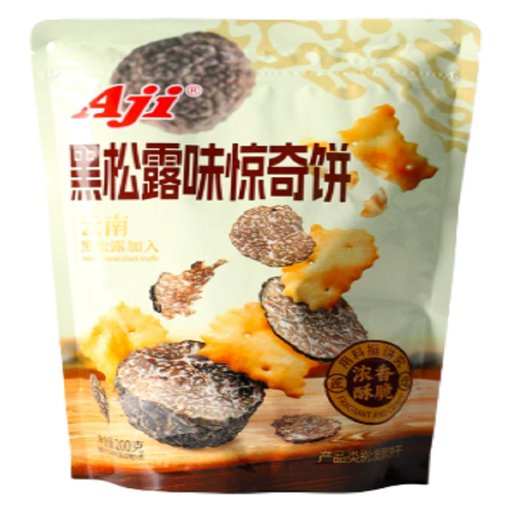 Image unavailable
These truffle-flavoured savoury wafers offer another crunchy option for sharing before a film. Their texture alone doesn’t tell you how many calories they contain.
The listing gives 461 kcal, 14.9 g of fat and 1.6 g of salt per 100 g. It lists wheat, soya and milk, and says the product may contain traces of other allergens. Read the pack information before sharing.
No. The DGCCRF says that displaying the Nutri-Score is voluntary in France, while nutrition declarations are compulsory for most prepacked foods. So even if there’s no logo, you should still check the nutrition information.
First compare their kcal per 100 g, the common basis shown in nutrition declarations according to the DGCCRF. Then think about how much you plan to serve: the full pack weight isn’t necessarily the amount you’ll eat during the film.
No. On its own, the claim doesn’t tell you whether a product has fewer calories than the other options you’re considering. UFC-Que Choisir found that some recipes promoted for their ingredients or claims have a less favourable nutritional profile than conventional products. Compare the figures per 100 g.
Check the ingredients, highlighted allergens and any ‘may contain’ warnings for the exact flavour you plan to serve. Information about a single ingredient or gluten alone won’t tell you about all the other allergens.