What should you look for?
When cooking for a group, first decide between salt-free stock and a relative reduction in salt. Then choose a recipe that suits each dish and guest.
Salt-free stock
Worth considering: when you want to season a sauce, stuffing or soup gradually without adding salt from the stock cube.
Bear in mind: you’ll need to build flavour with the other ingredients in the dish, and still check the stock’s ingredients.
Reduced-salt stock cube
Worth considering: when you want a pre-seasoned stock and a relative reduction in salt meets your needs.
Bear in mind: add the salt in the cube to the salt in your other ingredients; ‘-25%’ does not mean ‘salt-free’.
| What to check |
Look for |
Who is it for? |
| Salt in the meal |
The ‘salt’ value for the amount prepared and the amount of stock cube added, taking other salty ingredients into account. |
If several dishes contain stock, I want to be able to control their seasoning without losing sight of the salt in the menu. Around 36% of consumers would make managing salt a priority. |
| Stock recipe |
Whether it’s vegetable or chicken stock, and whether the chosen product contains ingredients of animal origin. |
For a side dish everyone can share, I need a recipe that suits both the dish and the people eating it. Around 29% of consumers would make this their priority. |
| Ingredients and allergens |
The ingredients list and any ‘may contain’ statements on the exact pack. |
If a guest needs to avoid an ingredient, I can’t rely on the words ‘vegetable’ or ‘reduced salt’ alone. Around 21% of consumers would prioritise this check. |
| Pack size |
The number of cubes, net weight and recommended amount for the dishes you’re making. |
If I’m cooking several dishes, I look for a pack size that matches the quantities I need. Around 14% of consumers would put this first. |
A reduced-salt vegetable stock cube on Joybuy
This option is for dishes where you’re looking for a vegetable stock cube with a relative reduction in salt. Check separately that it’s suitable for the ingredients in your Christmas meal and the people you’re serving.
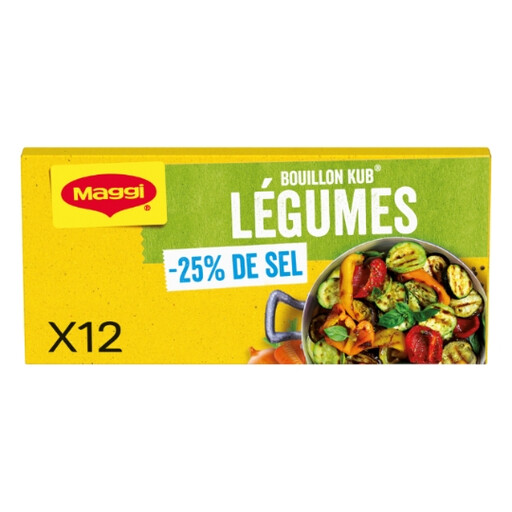 Image unavailable
MAGGI KUB Vegetable Stock, -25% salt, 120 g
A good option for a dish where vegetable stock is suitable and a relative reduction in salt is enough. Joybuy’s product information for this item gives a salt content of 0.67 g per 100 ml when prepared. Adjust the amount you use to suit your recipe, and check the ingredients and allergens before serving.
View on Joybuy
Frequently asked questions
Is a ‘reduced-salt’ stock cube salt-free?
No. ‘-25% salt’ describes a relative reduction, but a reduced-salt stock cube still contains salt. For example, Knorr gives a salt content of 1.4 g per serving for its reduced-salt vegetable stock. Check the ‘salt’ value for the amount you’ll prepare rather than relying on the claim on the front of the pack.
How much stock should you use in a Christmas sauce or stuffing?
First, take account of the amount of stock cube and the other salty ingredients in the recipe, then taste before adding salt. Manger Bouger lists stock cubes among the seasonings that contribute to salt intake. The salt content shown on the product can help you work out how much you’re adding to your dish.
Can reduced-salt stock cubes contain potassium chloride?
Yes. Some reduced-salt Maggi recipes list potassium chloride in their ingredients. Anses warns that potassium-based salt substitutes may pose risks for some people. If a guest has medical guidance about salt or potassium, ask their healthcare professional for advice before choosing this product.
What should you check on the packaging before serving stock?
Check the ingredients, allergens and nutritional information for the exact product you bought, as well as the recommended preparation amount. The European Commission says that the ingredients list, allergen information and nutrition declaration are all mandatory on prepacked foods. The flavour name is no substitute for checking them.


