Hosts who want to measure out every bite
If you’re preparing a sweet Christmas party spread, decide how much to serve in each mini holder before choosing between an individual portion and a jar that you portion yourself.


For a Christmas party, choose between an individually packaged option, after checking how it is packed, and a jar that you portion into mini bites in advance: a small jar doesn’t measure out each bite for you. Then compare sugars per 100 g, the portion size if one is given, the ingredients and the allergens. Nutri-Score can provide extra context if it appears on the packaging, but Santé publique France says its use is voluntary.
If you’re preparing a sweet Christmas party spread, decide how much to serve in each mini holder before choosing between an individual portion and a jar that you portion yourself.
Compare sugars per 100 g and, if listed, the amount per portion. Also check the Nutri-Score if it appears on the packaging, but don’t use it as a substitute for the nutrition information.
Before serving a shared buffet, check the ingredients and any warnings about possible allergens for the product you’ve chosen: depending on the recipe, it may contain hazelnuts, milk, soya or peanuts.
First decide how much you want to serve per bite. You can then choose a format, compare labels and check the ingredients with that amount in mind.
| What to consider | What to check | Who it matters to |
|---|---|---|
| Amount per bite | Check whether the product comes in individual portions. If you’re buying a jar, plan to portion out the mini bites before serving. | If I want to serve evenly sized bites without leaving the jar on the table, how the product is portioned matters more than the weight of the jar. Around 42% of consumers would put this need first. |
| Sugars and nutrition information | Compare sugars per 100 g, then per portion if that information is provided. Check the Nutri-Score only if it’s displayed. | When choosing between several recipes, I want to compare their labels and the amount I’ll actually serve. Around 33% of consumers would have this as a priority. |
| Ingredients and allergens | Read the ingredients list, check which allergens are highlighted and look for any warnings about possible presence before serving the product to guests. | If some guests need to avoid certain ingredients, I need to know which recipe I’m serving and be able to show them the label. This would be a priority for around 25% of consumers. |
A 200 g jar is still a sharing format: its weight doesn’t determine how much each guest gets. Auchan’s product listings for Nestlé Dessert and Pastador say that these products don’t come in individual sachets.
If you’re using a jar, spoon the spread into the mini holders before serving. If you want ready-portioned servings, check explicitly how the product is packaged.
According to Santé publique France, displaying the Nutri-Score is voluntary. It doesn’t replace checking sugars, ingredients and the amount you’re serving.
Use it as an extra point of reference when it’s shown, then compare the nutrition information for the products you’re considering.
The levy described by the French Ministry of the Economy applies to sugary drinks. It isn’t a way to compare the sugar content of spreads.
For this choice, check the sugars per 100 g on the label, then take into account how much you plan to serve per bite.
The recipes listed by Auchan and E.Leclerc have different ingredients and warnings, particularly for nuts, milk and soya. The recipe name alone doesn’t give guests all the information they need.
Keep the packaging, or a clear photo of its label, close to hand at the buffet and check your guests’ needs before serving.
Carrefour and Auchan list Nutella cocoa and hazelnut spread in several jar sizes, including a 220 g jar at Auchan.
Auchan lists Nestlé Dessert chocolate and hazelnut spread in a 340 g jar, with nutrition information per 100 g and per 15 g portion.
E.Leclerc lists a 400 g jar labelled as containing 35% hazelnuts from Lot-et-Garonne.
E.Leclerc lists EQUADOR hazelnut spread with hazelnut pieces in a 200 g jar.
Auchan lists Pastador dark chocolate spread in a 300 g jar, with 24 g of sugars per 100 g according to its product listing.
These options suit two ways of preparing a party spread: consider a 25 g format for serving small amounts, or choose a jar and portion the spread into mini bites yourself. Check the packaging and the label for the variant you choose.
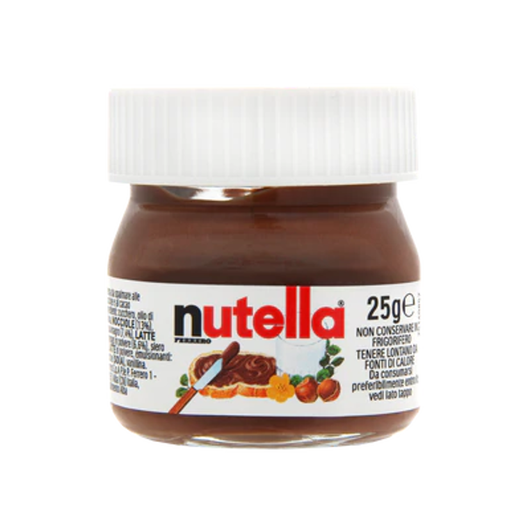 Image unavailable
The 25 g format may suit you if you want to prepare small amounts for serving. Check whether the units are individually wrapped, and read the label for ingredients, allergens and sugars.
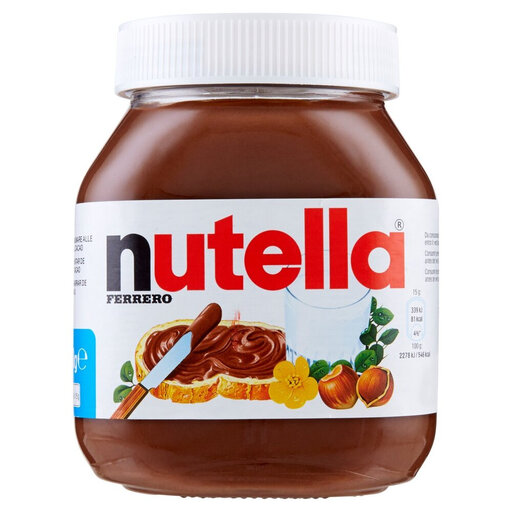 Image unavailable
This 630 g jar may suit you if you plan to portion the spread into mini bites yourself before serving; it doesn’t determine the amount in each bite. Check the packaging for ingredients, allergens and nutrition information.
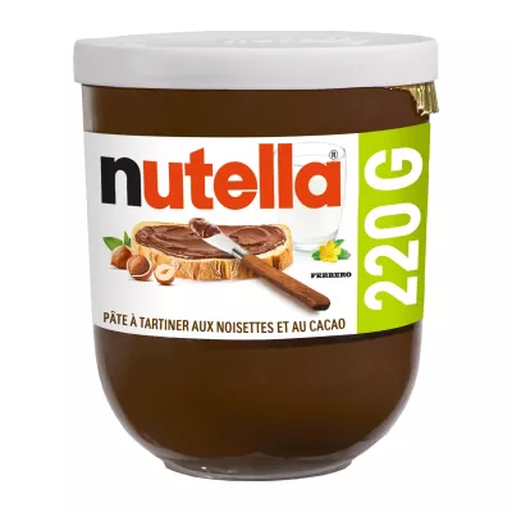 Image unavailable
This 220 g jar may suit you if you’re preparing a small batch of mini bites yourself, but you’ll still need to measure out each one. Before serving it to guests, check the packaging for ingredients, allergens and sugars.
No. 200 g is the amount in the jar, not the amount in each bite. To control portions, spoon out the spread in advance or check that another product is genuinely packaged in individual units.
No. Santé publique France says that displaying Nutri-Score is voluntary. The European Commission says that most prepacked foods must carry a nutrition declaration, so compare this information even if the Nutri-Score logo isn’t there.
Check the allergens in each product, particularly nuts, milk and soya, as well as any warnings about the possible presence of peanuts or other nuts. The DGCCRF reminds shoppers that allergens must be highlighted in the ingredients list on prepacked foods. Keep the label where guests can see it.
No. The levy described by the French Ministry of the Economy applies to sugary drinks and doesn’t tell you how much sugar is in a spread. To compare these products, check the sugars per 100 g and take into account how much you plan to serve.