Stall or buffet organisers
If several visitors need to help themselves quickly, check the number of pieces and whether they’re individually wrapped. Product listings from Lindt France and Carrefour feature portioned bags in different sizes.


For a Christmas market where visitors help themselves, individually wrapped bites or mini bars mean you won’t need to break up and serve chocolate bars; however, check the packaging for each product. Traditional bars are suitable if you’re planning to serve them on a platter. Whichever format you choose, compare the ingredients, allergens and nutritional information on the packaging.
If several visitors need to help themselves quickly, check the number of pieces and whether they’re individually wrapped. Product listings from Lindt France and Carrefour feature portioned bags in different sizes.
Compare sugars and saturated fats per 100 g, then check the ingredients and allergens for the recipe you’ve chosen. With an assortment, check the information for each type of chocolate included.
A bar can be broken up and served on a platter, but you’ll need to plan how to serve it. Carrefour lists a 180 g Côte d’Or Milk Chocolate with Whole Hazelnuts bar, for example; this isn’t a bag of portions ready to hand out.
First decide how you’ll serve the chocolate, then compare the quantity and recipe of products that suit your plans.
| What to consider | What to check | Who it matters to |
|---|---|---|
| Individual portions | Number of pieces and whether they’re individually wrapped. | If visitors are helping themselves, I want to avoid breaking up chocolate while serving. Around 36% of consumers put ease of distribution first. |
| Nutritional composition | Sugars and saturated fats per 100 g; Nutri-Score, if shown. | When comparing two recipes, I look at their nutritional information rather than just the size of the bag. This is the main consideration for around 29% of consumers. |
| How much to buy | Net weight and number of pieces, considered in relation to the number of people you’ll be serving. | When I’m buying supplies for a stall, I need to know how much chocolate is in each pack. Around 21% of consumers prioritise quantity. |
| Allergens | Ingredients list, highlighted allergens and any ‘may contain’ statements for the exact product. | If I’m buying chocolate for a group whose dietary requirements I need to know, I check each recipe before choosing a format. This is the main concern for around 14% of consumers. |
A bar needs to be broken up and served; bites or mini bars may already be separated into individual portions. This makes a difference when organising self-service.
Check how the pieces are packaged, and plan a suitable way to serve them if you choose bars.
You may need a platter, small bowls or tongs to serve the pieces.
The levy described by Légifrance applies to non-alcoholic drinks, not solid chocolate bars or bites. It doesn’t tell you how much sugar is in the product you’ve chosen.
To compare recipes, check the ‘of which sugars’ line in the nutritional information per 100 g.
Nutri-Score isn’t compulsory on chocolate bars in France. The European Commission does, however, state that a nutrition declaration is required for most prepacked foods.
Check the nutritional values and ingredients; use Nutri-Score as additional information when it’s shown.
A different recipe or an assortment may contain different allergens. In the European Union, allergens used as ingredients must be clearly indicated, according to the European Commission.
Check the packaging of every product you buy, and keep this information to hand when serving.
Lindt France features LINDOR bags of sharing-size chocolate bites, including 1 kg Milk and Assorted varieties.
For portions similar in size to a chocolate bar, Carrefour lists a bag of eight Milka mini bars, with a total weight of 200 g.
Carrefour lists the 180 g Côte d’Or Milk Chocolate with Whole Hazelnuts bar, which is better suited to serving in pieces than as ready-separated portions.
These products include mini bars, chocolate-coated wafers and bites in bags. For a Christmas market, distinguish between individually wrapped pieces and bites that need to be served.
 Image unavailable
The nine individually wrapped mini wafers can be handed out without breaking up a chocolate bar. This 104,4 g pack contains chocolate-coated wafers, not traditional bars. Check that there are enough for the number of visitors, and read the nutritional information on the packaging.
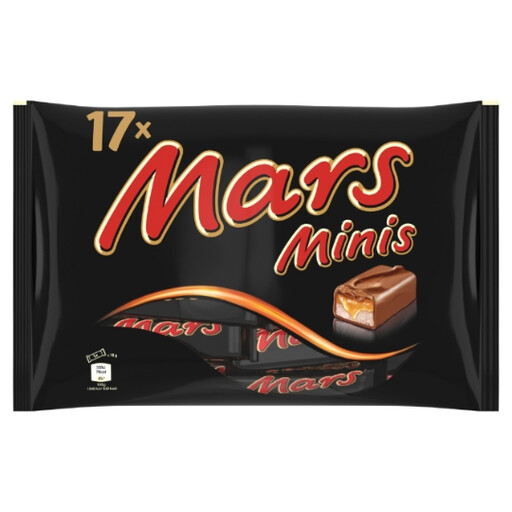 Image unavailable
These individually wrapped mini bars are suitable for handing out one at a time; the product description states that there are around 17. The title gives the weight as 333 g: check the net weight and allergens on the packaging. These are caramel and nougat bars, not traditional chocolate bars.
 Image unavailable
These bites can be served for sharing, but don’t assume that each one is individually wrapped. The title states 192,5 g, while the detailed description gives 192 g: check the net weight on the bag and plan a suitable way to serve them.
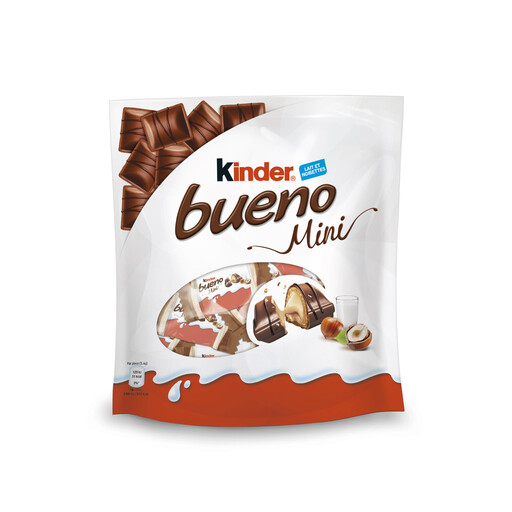 Image unavailable
The resealable 108 g bag contains mini bars rather than chocolate bars to break up. Before choosing it for handing out individual pieces, check how many there are and whether they’re individually wrapped. Also read the nutritional values and allergens on the pack.
No. The levy described by Légifrance applies to non-alcoholic drinks, not solid chocolate. To check the sugar content of a bar or chocolate bites, read the product’s nutritional information.
No. Nutri-Score is additional labelling; the European Commission states that a nutrition declaration is required for most prepacked foods. Compare sugars and saturated fats per 100 g in particular, even if no Nutri-Score is shown.
Check the number of pieces, the net weight and how each piece is packaged. Also read the ingredients, highlighted allergens and any ‘may contain’ statements for each product. According to the European Commission, allergens used as ingredients must be clearly indicated on prepacked foods in the European Union.
No; compare the specific recipes. Lindt France states that 1 kg bags of LINDOR Dark 70% contain 25 g of sugars per 100 g, compared with 42 g for LINDOR Milk in the same format. These figures don’t apply to all dark and milk chocolates.