People handing out treats
If you’re handing out cakes one by one, without plates or cutting, look for genuinely individually wrapped portions, a number of pieces that’s easy to count and a label you can check before handing them out.


To give each person a cake without needing plates or cutting, choose a product with portions that are genuinely individually wrapped. For a dessert served at the table, fresh pastries in individual portions offer more ways to present them, but you’ll need to organise collection, serving and storage. In either case, check the number of pieces and the information for each recipe.
If you’re handing out cakes one by one, without plates or cutting, look for genuinely individually wrapped portions, a number of pieces that’s easy to count and a label you can check before handing them out.
If guests are helping themselves from a table, an assortment of individual pastries gives you a choice of shapes and recipes. However, make sure you plan for collection, serving space and the storage requirements of each product.
If you need to check certain ingredients or allergens, read the information for each recipe before buying. Don’t assume that two flavours in the same range have the same ingredients.
First, decide whether the cakes will be handed out directly or served at the table. Then compare the packaging, number of portions and storage requirements of the format you choose.
| What to consider | What to check | Who is it for? |
|---|---|---|
| Handing them out individually | Whether each cake has its own wrapper and how many pieces there are, rather than just the total pack weight. | If I’m giving each visitor a cake, I want to avoid separating the portions on the spot. Around 33% of consumers would make individually wrapped portions their top priority. |
| Presentation and variety | The number of pastries, choice of recipes and order or collection slot. | For a dessert table, I prefer to offer several pastries for guests to choose from. This variety would come first for around 27% of consumers. |
| Ingredients and allergens | The ingredients and allergens for each recipe, including any warnings about possible traces. | When cakes are being shared by people with different dietary needs, I want to be able to check every label. Around 20% of consumers would put this check ahead of other considerations. |
| Quantity and storage | How many portions you can use, the date shown and the storage instructions. | If I know how many guests are coming, I want to make sure there are enough portions without buying a format that doesn’t suit the occasion. Getting the quantity right would be the priority for around 20% of consumers. |
A dessert sold in several portions isn’t necessarily ready to hand out one piece at a time. For example, St Michel says that its x54 madeleines come in 54 individually wrapped sachets. For handing out treats, this detail matters more than simply knowing how many portions there are.
Before buying, check how many sachets are included if each person needs to receive a separate cake.
Separating portions on the spot can take time and require extra containers or napkins.
Carrefour Traiteur gives different availability lead times for different pastries, including two or three days for the products shown. An assortment for a dessert table also needs to be stored according to the requirements of the product you choose.
Confirm the number of guests and serving time, then check collection arrangements, the date and storage instructions for the exact product you’re ordering.
Information about a recipe or its nutritional values doesn’t, on its own, tell you about all its allergens. Ingredients may differ between flavours or products.
Check the ingredients list, highlighted allergens and any warnings about possible traces on every relevant pack.
Selling food at a market raises food hygiene and contamination prevention issues that go beyond choosing a cake. The DGCCRF’s guidance on mobile or temporary sites relates specifically to selling food.
If you plan to sell or handle cakes at a stall, check with the organiser and find out what rules apply to your activity before making serving arrangements.
Madeleines worth considering when individually wrapped portions are a priority.
A biscuit brand to consider if a compact format suits you better than fresh pastries served at the table.
A retailer to consider for individual pastries and assortments to serve.
Desserts in multi-portion packs to consider for planned serving, rather than assuming they can be handed straight to each visitor.
These two Orion Choco Pie formats could be suitable for handing out individual cakes. Check the exact packaging before choosing them if you want to hand them out without any extra handling; they aren’t a substitute for an assortment of fresh pastries served at the table.
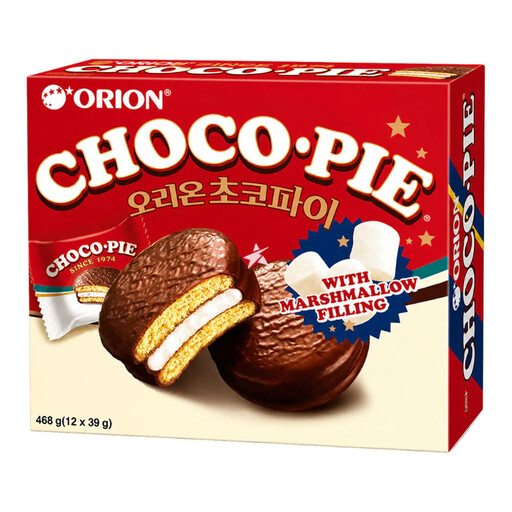 Image unavailable
Worth considering if you want to count the cakes you’ll be handing out and the packaging is suitable for giving them out individually.
Listed size: 468 g. Before buying, check the pack for the number of pieces, how they’re packaged, allergen information and the best-before date.
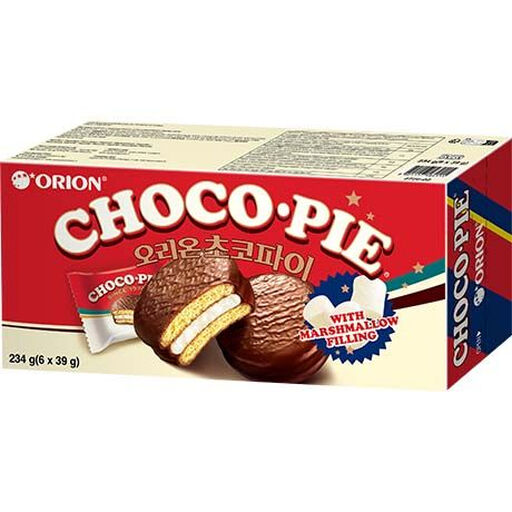 Image unavailable
Worth considering if you’re looking for a lighter pack for a distribution with a set number of portions.
Listed size: 234 g. Check the number of pieces and whether they come in separate sachets, as well as the allergen information and best-before date on the pack.
No. The size of a portion doesn’t tell you how it’s packaged. If you want to hand out the cakes one by one, look for clear information about the wrappers. For example, St Michel says its x54 madeleines come in 54 individually wrapped sachets.
For each pre-packed product, check the ingredients list, highlighted allergens, quantity, date and any specific storage instructions. The French Ministry of the Economy explains the difference between use-by dates and best-before dates in its food labelling guidance.
A use-by date (DLC) and a best-before date (DDM) are two different types of date label. Check which one is shown on the product you buy and follow its storage instructions too. Don’t choose a fresh dessert based only on its collection date without planning how it will be transported and served.
Choosing a suitable cake doesn’t mean you’re automatically allowed to sell it at a stall. If you plan to sell food, check the organiser’s requirements and the rules that apply to your situation. The DGCCRF provides guidance on preventing contamination when selling food at mobile or temporary sites.
No. Check the ingredients, allergens and any warnings about possible traces for the exact recipe. A claim highlighted on the front of the pack doesn’t replace reading this information, especially when several flavours are available.