Fans of rich cocoa flavours
If you’re after the taste of dark chocolate rather than the sweetness of white chocolate, start by checking how the bar is described. For a two-tone recipe, check which part the stated cocoa percentage applies to.


For Christmas drinks, choose a bar clearly labelled as dark chocolate if a rich cocoa flavour is your priority, or white chocolate if you’d prefer something milder. A bar combining dark and white chocolate gives you a contrast in one recipe, but it isn’t the same as an entirely dark bar. In every case, compare the nutritional values per 100 g and check the allergens before serving.
If you’re after the taste of dark chocolate rather than the sweetness of white chocolate, start by checking how the bar is described. For a two-tone recipe, check which part the stated cocoa percentage applies to.
To put together a selection, you could pair a dark chocolate bar with a white one, or choose a two-tone recipe. If any guests need to avoid certain ingredients, check the label of each product you serve separately.
To compare two bars, start with the sugars and saturated fat listed per 100 g, then check the ingredients and highlighted allergens. The DGCCRF notes that using a 100 g basis makes it easier to compare nutritional values.
For your Christmas drinks, decide first which flavour you want to offer. You can then use the nutritional values and ingredients to compare the recipes that fit the bill.
| Criterion | What to check | Who is it for? |
|---|---|---|
| Cocoa flavour | The description “dark chocolate” and the stated cocoa percentage; for a two-tone bar, check which part that percentage refers to. | I mainly want to serve a bite with a rich cocoa flavour, rather than a white or mixed recipe. Around 42% of consumers rate this intensity as their top priority. |
| The sweetness of white chocolate | Sugars and saturated fat per 100 g, followed by the portion you plan to serve. The DGCCRF explains that nutritional information uses a 100 g basis to make products easier to compare. | I’m choosing white chocolate as a milder option, but still want to compare recipes before preparing the portions. This is the main consideration for around 33% of consumers. |
| Selection and allergens | Highlighted allergenic ingredients and any “may contain” statements on each pack, as recommended in the DGCCRF’s guidance on reading labels. | When several guests are sharing a platter, I want to offer a variety of flavours without assuming that a white, filled or two-tone recipe will suit everyone. Around 25% of consumers put the selection and allergen checks first. |
These two types of bar suit different tastes. Lindt France also offers a bar combining 70% dark chocolate and white chocolate: this blend is not an entirely dark bar.
If a rich cocoa flavour is your main priority, look for the words “dark chocolate” and check which part the stated percentage applies to. Choose a two-tone recipe when that contrast is exactly what you’re after.
According to the DGCCRF, displaying Nutri-Score is voluntary. Whether or not it appears on the pack, it doesn’t replace the bar’s nutritional information.
Compare sugars and saturated fat on the same 100 g basis, then consider the portion you plan to serve your guests.
A white, filled or dark-chocolate combination recipe may contain ingredients that some guests need to avoid. The DGCCRF says that allergenic ingredients must be highlighted in the ingredients list.
Read the label on the exact pack before serving, including any statements about the possible presence of other ingredients.
Auchan describes Nestlé Dessert Blanc as white chocolate for baking. That intended use alone doesn’t tell you whether its format and flavour are right for the bites you want to arrange on your platter.
If you’re serving chocolate to eat as it is, choose according to the recipe and portions you have in mind. Bear its intended use for baking in mind if you’re planning to make something with it instead.
The range mentioned by Lindt France includes white chocolate and a bar combining dark and white chocolate.
The white chocolate products featured by Auchan include Nestlé Dessert Blanc, intended for baking, and Galak.
Carrefour lists products including Milka Oreo white chocolate, a recipe with biscuit.
The Carrefour range includes white chocolate bars as well as a Lindt recipe combining dark and white chocolate.
E.Leclerc offers a white chocolate ECO+ bar in a pack of 4 × 100 g.
The range featured by Auchan includes white chocolate bars from Auchan, Nestlé Dessert and Galak, as well as a Lindt dark and white chocolate recipe.
These bars give you two options for Christmas drinks: dark chocolate labelled as containing 70% cocoa, or a white chocolate recipe. Choose according to your guests’ tastes and check the ingredients on the pack before serving.
 Image unavailable
The 35 g size could be a good choice if you’d like to serve a small dark chocolate bar rather than a white chocolate recipe. The product name states 70% cocoa; if any guests need to avoid certain ingredients, check the allergens on the exact pack.
 Image unavailable
This 100 g dark chocolate bar is a good fit for a selection where a rich cocoa flavour is what you’re looking for. Before sharing it, check the label for ingredients to avoid and any consumption advice given for this recipe.
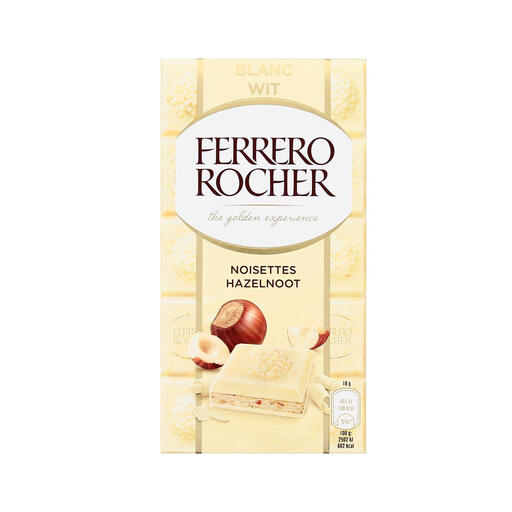 Image unavailable
This white chocolate recipe gives you another option for your platter alongside the two dark chocolate bars. It’s not a substitute for dark chocolate if a rich cocoa flavour is your priority; check the ingredients and allergens on the pack before serving.
No. In the case discussed here, the Official Bulletin of Public Finances describes this levy as applying to non-alcoholic drinks containing added sugars, not chocolate bars. To compare chocolate bars, look at their nutritional values and ingredients instead.
No. The DGCCRF says that displaying it is voluntary. Nutritional information, on the other hand, is required for most prepacked foods and lets you compare sugars and saturated fat per 100 g, among other things.
Read their nutritional values on the same 100 g basis, then compare the ingredients lists and allergens. According to the DGCCRF, information given per 100 g makes this comparison easier; the brand name or any Nutri-Score doesn’t replace these details.