Parents looking for a little Christmas treat
You’d like to give them some chocolate without putting a large gift box in their lunchbox. The pack’s weight and whether you can take out a single piece matter more than having a generous assortment.


For a secondary school pupil’s lunchbox, a small pack or individually wrapped piece lets you choose what to take along; a Christmas assortment is better suited to sharing out at home. Check the ingredients, allergens, nutritional information and storage instructions for the specific product you choose, rather than relying on the box’s festive design. Manger Bouger recommends limiting sugary and fatty foods in children’s and teenagers’ diets.
You’d like to give them some chocolate without putting a large gift box in their lunchbox. The pack’s weight and whether you can take out a single piece matter more than having a generous assortment.
You want to choose how much to take along and compare the “of which sugars” line in the nutritional information, without assuming that no Nutri-Score means there’s no information on the packaging.
You’ll need to check the exact recipe, especially when a gift box contains several different chocolates. Depending on the product and its recipes, assortment listings checked at Auchan flag milk, soya, wheat, hazelnuts or possible traces of other allergens.
When choosing a little Christmas treat for a lunchbox, first decide how much you’ll take along, then check the exact product’s ingredients and storage instructions.
| What matters | What to check | Who is it for? |
|---|---|---|
| Format and portion | Net weight and the amount you’ll actually put in the lunchbox; individual wrapping if needed for carrying. | If you’re popping a small treat into a lunchbox, you may prefer to take out one piece rather than bring the whole box; around 45% of consumers are said to prioritise format and portion size. |
| Sugars and labelling | The “of which sugars” line per 100 g and the amount you’ll take along; Nutri-Score only if it’s shown. | When choosing chocolate for a secondary school pupil, being able to read the nutritional values helps you compare products and choose how much to take; sugar content is said to be the main consideration for around 33% of consumers. |
| Allergens | The ingredients in each recipe and any “may contain” warnings on the exact product packaging. | If an allergen needs to be avoided, the gift box’s name alone won’t tell you what’s in each chocolate it contains; this check is said to come before other criteria for around 22% of consumers. |
The French public finance bulletin describes the levy in question as applying to non-alcoholic drinks, not as a way to assess solid chocolate.
To compare chocolates, look instead at their net weight and the “of which sugars” line in the nutritional information.
According to Santé publique France and the DGCCRF, Nutri-Score is voluntary. If it’s not shown, you should still read the nutritional information on prepacked food; if it is shown, it won’t tell you how much to take along.
Compare values on the same per-100 g basis, then take your chosen portion into account.
A box can contain several different recipes. The European Commission says allergens must be emphasised in the ingredients list; it’s also worth reading any “may contain” warnings shown on the product.
Check the packaging for the exact product and the ingredients of the chocolates you plan to take along.
Storage instructions vary by product. Auchan’s listing for the 210 g Riegelein assortment recommends storing it between 12 and 18 °C.
Before planning to take it along, check the instructions on your chosen chocolate and where the lunchbox will be kept.
The gift range featured by Lindt France includes a 98 g Petite Boîte Cadeau CHAMPS-ÉLYSÉES Assorti, which may suit you if the festive gesture matters more than the quantity.
This brand selection includes festive chocolates and Kinder bars; your choice depends on whether you’re prioritising a Christmas gift or a piece that’s easy to carry.
The 210 g Christmas chocolate assortment featured by Auchan is best kept as a box to share out before packing a lunchbox, rather than taken along in its entirety.
This selection pairs an Advent calendar to share out with two chocolates in individual portions to take along. The latter two are not presented as Christmas gifts.
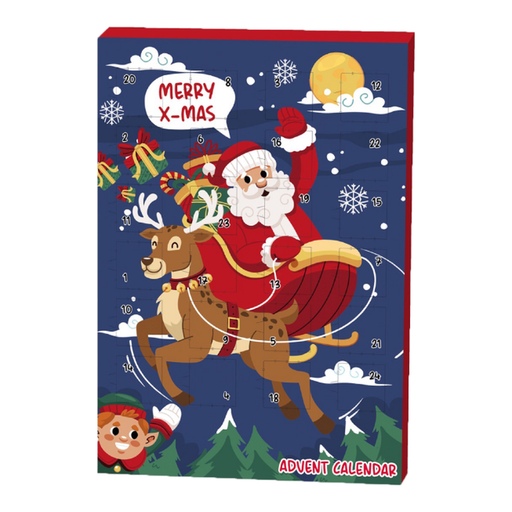 Image unavailable
Weighing 50 g, this calendar makes a small Christmas gift to keep at home and share out. If you plan to take one piece along, check the packaging to see how it’s wrapped, and read the ingredients and allergen information.
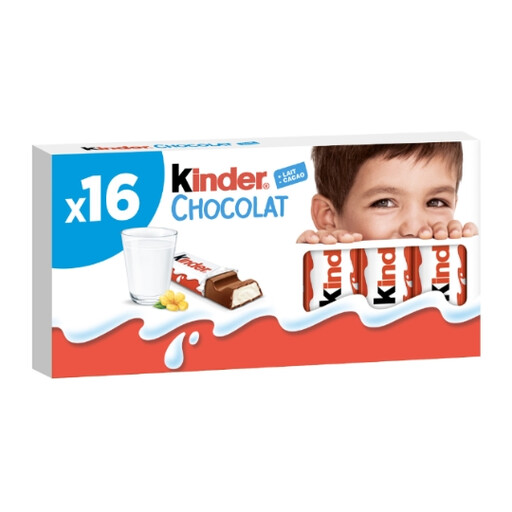 Image unavailable
If carrying an individual piece matters more than a Christmas theme, the bars are described as individually wrapped, so you can take one without bringing the whole pack. This product contains milk and soya; check the label before putting it in a lunchbox.
 Image unavailable
Another option in individually wrapped portions for a lunchbox, though it isn’t presented as a Christmas product: the nine pieces are described as individually wrapped. The ingredients include milk, wheat and soya. If you’re comparing this product with another chocolate, check the nutritional information on the packaging too.
No. The rates in the French public finance bulletin cited for this levy apply to non-alcoholic drinks, not solid chocolates. If you’re concerned about sugar, check the “of which sugars” line on the label instead.
No. Santé publique France and the DGCCRF describe Nutri-Score as a voluntary label. For prepacked food, check the ingredients list and nutritional information, whether or not the logo is displayed.
Read the ingredients list for the exact product and check which allergens are emphasised, then look at each recipe in the assortment and any “may contain” warnings. Auchan’s listings for the Riegelein and KINDER & Co assortments flag different allergens, so the festive name on the box doesn’t tell you what’s inside.
First check the product’s storage instructions and where the lunchbox will be kept. For example, Auchan’s listing for the 210 g Riegelein assortment recommends storing this specific product between 12 and 18 °C; that temperature range won’t necessarily apply to other chocolates.