For an individual gift
You’re looking for a gift box for someone whose preferences you know: dark chocolate, milk chocolate or a selection of flavours. The size matters, but it’s also worth checking the ingredients of the box you choose.


For a personal gift, choose a small box to suit what you know the recipient likes. If you’re buying for several people, focus on the quantity and how easy it is to share. Before giving an assortment, check the ingredients, allergens and sugar content per 100 g for the exact product. If the person follows a particular diet, check with them or someone close to them that the gift box is suitable.
You’re looking for a gift box for someone whose preferences you know: dark chocolate, milk chocolate or a selection of flavours. The size matters, but it’s also worth checking the ingredients of the box you choose.
You’re bringing chocolates for a group. Check the quantity, and keep the packaging handy so guests can check the ingredients and allergens.
You need to check the sugar content, allergens or any known dietary restrictions before buying. If the recipient eats very little or is losing weight, a box of chocolates is a treat, not a solution to the issue; Manger Bouger advises watching for the risk of malnutrition from the age of 75.
Start with the recipient’s preferences and any dietary restrictions, then choose a quantity that suits the occasion.
| What to consider | What to check | Who is it for? |
|---|---|---|
| Nutritional composition | Compare the sugar and fat content per 100 g in particular, and take any known dietary requirements into account. | If I need to follow dietary requirements, I want to check the nutritional information before choosing. Around 50% of consumers are thought to put nutritional composition first. |
| Ingredients and allergens | Read the ingredients list for the exact product and check the highlighted allergens, including for the different recipes in an assortment. | If someone has a known allergy, I want to check the ingredients before sharing the chocolates. Allergens are thought to be the top priority for around 30% of consumers. |
| Size and sharing | Check the net weight, type of assortment and storage instructions, and keep the label accessible. | When I’m bringing people together, I look for a suitable quantity rather than choosing a box just for its presentation. Around 20% of consumers are thought to prioritise size and sharing. |
The DGCCRF states that displaying the Nutri-Score is voluntary in France. Even if it’s not shown, you should still read the gift box’s nutritional information.
Compare the values given per 100 g and consider how much you plan to give, rather than relying on the logo alone.
The French contribution described by Légifrance applies to drinks and liquid preparations for drinks, not to a box of solid chocolates.
When choosing chocolates, check the sugar content in the nutrition table rather than relying on this tax rule.
Different chocolates in the same box can contain different ingredients. For example, Auchan’s product information for a Kinder & Co assortment lists milk, hazelnuts and soya in some varieties.
Check the label on the exact gift box before buying, and keep it available during afternoon tea.
A tasty gift is no substitute for an appropriate assessment if an older person is eating very little or losing weight. Manger Bouger identifies malnutrition as a risk to watch for from the age of 75.
Give the gift box as a treat for afternoon tea. If the recipient is affected, seek advice from a healthcare professional.
Lindt France offers assortments in boxes, gift sets, bags and cones. These are different presentation options to compare depending on the gift you have in mind.
Ferrero products sold by Carrefour include chocolates to give as gifts and assortments to compare based on the number of people sharing.
The retailer includes chocolates in its Christmas range, giving you several types of product to consider for afternoon tea.
Auchan lists a 232 g Révillon gift box, which highlights its 70% dark chocolate.
This assorted chocolate gift box could be a thoughtful choice for someone who enjoys different kinds of chocolate. Check the ingredients before giving it.
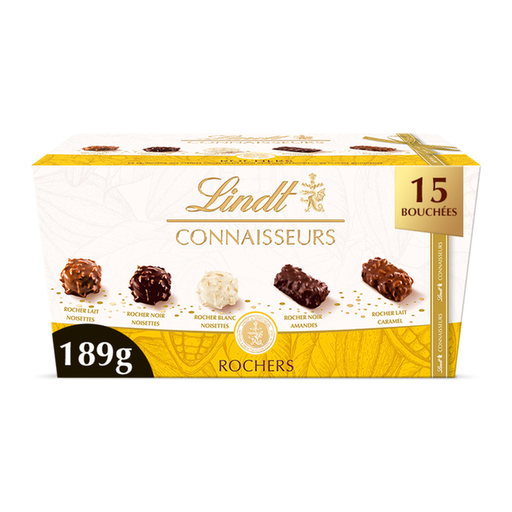 Image unavailable
Worth considering as a gift for someone whose tastes you know. The box contains 189 g of chocolates. If you need to check any ingredients or dietary requirements, read the label for this product before buying.
No. The DGCCRF states that displaying the Nutri-Score is voluntary in France. When comparing pre-packed gift boxes, also check their nutrition declaration, which is usually given per 100 g.
Read the ingredients and highlighted allergens on the packaging for the exact product. Don’t assume every chocolate in an assortment has the same ingredients, and keep the label handy during afternoon tea.
No, not when it contains solid chocolates. The French contribution described by Légifrance applies to drinks and liquid preparations for drinks. Check the gift box’s nutritional information to find out its sugar content.
It can still be a gift to enjoy at afternoon tea, but it isn’t a solution to a loss of appetite or weight. Manger Bouger identifies malnutrition as a risk from the age of 75. If the recipient is affected, seek advice from a healthcare professional.