What should you check before buying?
For an egg hunt, start by checking the packaging if you’ll be handing out the chocolate. Then compare the labels of products that meet your needs.
| What to consider |
What to check |
Who it’s for |
| Format and serving |
Check the net weight and packaging: will you need to break up the bar, or are the portions already individually wrapped? |
If you’re handing out chocolate during the hunt, you’ll need to be able to offer suitable portions rather than a whole bar. Around 42% of consumers put preparing portions first. |
| Nutritional information |
Compare the ‘sugars’ figure per 100 g in particular. If there’s a Nutri-Score on the packaging, use it alongside the nutrition declaration. |
When I compare two recipes, I want to look at their values on the same basis rather than relying on the logo alone. For around 33% of consumers, this is their main priority. |
| Allergens |
Read the highlighted allergenic ingredients and any ‘may contain’ warnings on the exact product packaging. |
If the chocolate is going to be shared, the recipients’ allergies will affect which product you choose. Checking allergens is a priority for around 25% of consumers. |
Chocolate bars and slabs on Joybuy
These chocolate bars and slabs are suitable for enjoying on your own or preparing to share before an egg hunt. Their format alone doesn’t confirm that they come in individually wrapped portions.
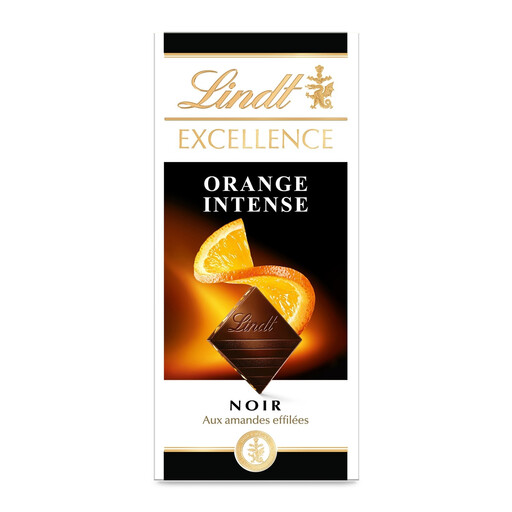 Image unavailable
Lindt Excellence dark chocolate with orange, 100 g
This 100 g bar could be enjoyed by one person or broken up in advance of the hunt. If you’re planning to hand out the pieces, check how they’re packaged. The product listing mentions almonds, milk and soya; if anyone has an allergy, check the exact packaging too.
View on Joybuy
 Image unavailable
Lindt Excellence 85% cocoa dark chocolate, 100 g
This 100 g bar is worth comparing with other recipes before enjoying on your own or preparing to share. Its Joybuy listing gives the sugar content as 15 g per 100 g. Check the exact packaging for allergen information and how the bar is wrapped if you need separate portions.
View on Joybuy
 Image unavailable
POULAIN Fine 70% dark chocolate, 100 g
This 100 g bar is worth considering if you’re planning to enjoy it on your own or break it into portions. Its product listing mentions maltitol and warns that excessive consumption may have a laxative effect. Check the allergen labelling and packaging before sharing it too.
View on Joybuy
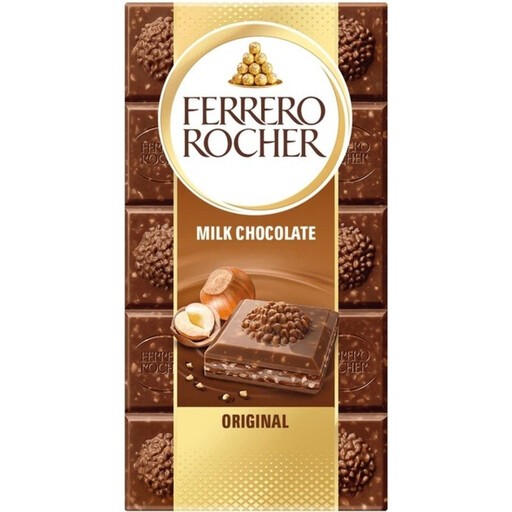 Image unavailable
Ferrero Rocher Original, 90 g bar
This 90 g bar can be enjoyed by one person or shared after preparing the portions. Its product listing mentions milk, hazelnuts and soya, as well as possible traces of other nuts. Check the exact packaging and how you’ll hand out the pieces.
View on Joybuy
Frequently asked questions
Can you hide a 100 g bar in individually wrapped portions?
Not necessarily. The 100 g weight refers to the whole bar and doesn’t confirm that it comes in separate wrappers. Check the packaging and, if needed, plan to break up and wrap the portions before the hunt.
What should you check if you’re sharing chocolate with people who have allergies?
Read the highlighted allergenic ingredients and any ‘may contain’ warnings on the packaging of the product you buy. Product listings from Lindt France and Carrefour France show why a description such as ‘milk’ or ‘dark’ chocolate isn’t enough to identify all the allergens listed.
Does a chocolate bar have to show a Nutri-Score?
No. The DGCCRF and Santé publique France describe Nutri-Score as a voluntary label. To compare pre-packed chocolate bars, check their nutritional information per 100 g, whether or not the logo is shown.
Does the ‘soda tax’ apply to chocolate bars?
No. The levy described by Légifrance in Articles 1613 ter to 1615 applies to drinks and liquid preparations for drinks, not chocolate bars. To check the sugar content, refer to the nutrition declaration.
How should you store a chocolate bar before an egg hunt?
Follow the instructions for the product you buy and check its best-before date. For Lindt Excellence 85%, the Joybuy listing recommends keeping the unopened bar in a cool, dry place out of direct sunlight, then storing it in an airtight container once opened.


