For moulding or coating Christmas chocolates, choose couverture made for the job and check the tempering instructions. Callets also save you from having to break up a bar. For a yule log or ganache, choose a chocolate whose flavour suits the recipe. A box of chocolates is ideal for serving or giving as a gift, but it is not automatically a substitute for baking chocolate.
Who are these chocolates for?
Fans of moulding and coating chocolate
For making chocolate figures, decorations or Christmas chocolates, start with a chocolate designed for coating, then follow the tempering instructions for the product you choose. Valrhona, for example, describes these uses for its couvertures.
Anyone making yule logs and entremets
In a ganache or mousse, the chocolate’s flavour should complement the other ingredients. The cocoa content and the recommended use for each product can help you choose, but the percentage alone should not be your only guide.
Hosts giving or sharing chocolates
An assortment of chocolates is ready to serve or give as a gift. As recipes can vary, check the ingredients and allergens for the specific box before offering it to your guests.
What should you look for?
First decide whether you’ll be using the chocolate in a recipe or enjoying it as it is. Then narrow down your choice by considering the baking technique, flavour and ingredients.
| What matters to you |
What to check |
Who it’s for |
| Moulding and coating |
Whether it is labelled “couverture chocolate”, comes in callet form and includes tempering instructions for that product. |
If I’m making chocolate figures or coating chocolates, I want a chocolate designed for those techniques, with instructions I can follow. Around 30% of consumers would make this technical suitability their top priority. |
| Dessert flavour |
The cocoa percentage, the stated flavour profile and the recommended use for the recipe. |
If my yule log combines chocolate and fruit, I want a flavour that leaves room for the other ingredients. Around 30% of consumers would put a well-balanced recipe first. |
| Ingredients |
The ingredients, allergens and sugars per 100 g shown on the packaging of the product in question. |
Before serving several guests, I need to know what each chocolate contains. Around 20% of consumers would make this check their top priority. |
| Gift or serving |
The difference between chocolate for baking and an assortment of chocolates ready to eat. |
If I’m adding something to a festive table or bringing a gift, I prefer chocolates that are ready to serve. Around 20% of consumers would make this their main consideration. |
To compare the ingredients in pre-packed chocolates, check the nutritional information on the same basis, including sugars and fat per 100 g. The DGCCRF says that nutritional information is generally shown on this packaging. Any Nutri-Score label does not replace checking the ingredients and allergens.
What should you avoid?
-
Assuming a gift box is couverture chocolate
An assortment may include ready-made ganaches, pralines or nougatine. Its presentation does not tell you whether it is suitable for melting, tempering or moulding.
For a technical preparation, look for chocolate made for baking and instructions that suit your recipe. Save the gift box for serving or giving, if that is what it is intended for.
-
Relying on Nutri-Score alone
According to the DGCCRF, displaying Nutri-Score is voluntary in France. Whether it appears on the packaging or not, it does not replace the nutritional information or ingredients list.
Compare sugars and fat per 100 g, then check the ingredients and allergens for the specific product.
-
Assuming every chocolate in the box has the same ingredients
A Christmas assortment may contain several different recipes, so the ingredients and allergens to check may vary from one chocolate to another.
Check the information on the box in question, including highlighted allergens and any “may contain” warnings.
-
Choosing based on cocoa percentage alone
Cocoa content gives you an idea of the flavour profile, but it is not enough to tell you whether a product is suitable for ganache, moulding or giving as a gift.
Start with how you plan to use it, then compare the cocoa percentage and the manufacturer’s guidance with the other ingredients in your recipe.
Brands to know
Valrhona
A brand to consider for couverture and callets when your recipe calls for moulding, coating or ganache.
- Valrhona describes callets as a format that saves you from having to break up a bar before use.
- Choose a couverture to suit your specific recipe and follow its working instructions, rather than relying on the range name alone.
Cacao Barry
Dark couvertures to compare by cocoa profile and recommended use.
- Cacao Barry recommends its Excellence 55% couverture for several preparations and presents Ocoa 70% as suitable for coating and moulding.
- These are the uses stated by the manufacturer; also check the format and ingredients of the product you choose.
CLUIZEL
The brand distinguishes its baking chocolate from its collection of Christmas chocolates.
- Manufacture CLUIZEL describes Secrets de Pros as a couverture range and its Christmas collection as ready-to-eat products.
- Check the recipe and intended use of each product: a gift assortment is not interchangeable with a baking ingredient.
A gift or serving option
This Joybuy gift box is a good choice if you’re looking for chocolates to give or share, rather than couverture for moulding or coating.
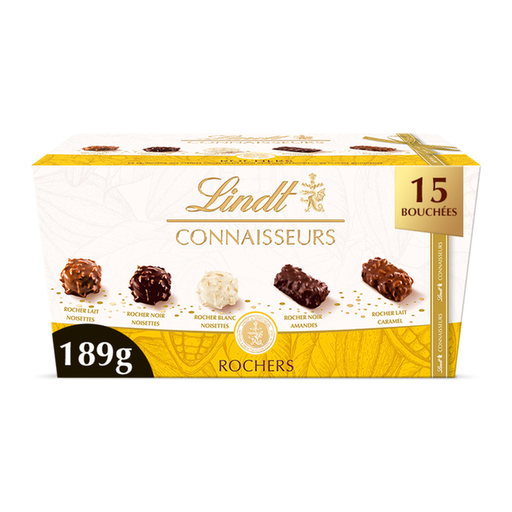 Image unavailable
Lindt Connoisseurs assorted chocolate rochers gift box, 189 g
An assortment to consider for serving or giving as a gift. If you want to use it in a recipe, check separately whether this product is suitable for the preparation. Also check the allergens on the packaging before sharing it.
View on Joybuy
Frequently asked questions
Is Nutri-Score compulsory on Christmas chocolates in France?
No. The DGCCRF explains that displaying Nutri-Score is voluntary. Nutritional information is generally compulsory for pre-packed foods and allows you to check, among other things, the sugars and fat per 100 g.
Does the “soda tax” apply to solid chocolate?
No. The contribution described by the Official Bulletin of Public Finances for non-alcoholic drinks containing added sugars does not apply to solid chocolate. To compare the sugar content of different chocolates, check their nutritional information instead.
What should you check before giving someone an assortment of chocolates?
Read the ingredients and allergens for the specific box, as its chocolates may have different ingredients. Also check for any “may contain” warnings if these could affect your guests.
How should you store chocolate bought before Christmas?
Follow the storage instructions on the packaging and check the best-before date. Always follow the instructions for the product you have bought rather than assuming the same rule applies to all chocolate.


