Anyone making Christmas desserts
For a ganache, layered dessert, mousse or cake, look for a bar labelled ‘dessert’ or ‘baking’ to identify chocolate intended for this use. Make sure the type and ingredients also suit your recipe.


For a ganache, mousse or Christmas cake, start by choosing a bar clearly labelled for baking and suited to the type of chocolate your recipe calls for. If you’re buying a gift, a box is better suited to anyone who enjoys a selection of chocolates. A tasting bar with added ingredients can also work if you’re looking for those extra textures, but neither option automatically replaces plain baking chocolate. Whatever you choose, check the ingredients and allergen information for the specific product.
For a ganache, layered dessert, mousse or cake, look for a bar labelled ‘dessert’ or ‘baking’ to identify chocolate intended for this use. Make sure the type and ingredients also suit your recipe.
If you want to give someone a selection of chocolates to enjoy, the presentation and contents of a gift box matter more than whether the chocolates can be melted for a recipe.
If you’re comparing sugar content or need to take a recipient’s or guest’s allergies into account, check the details for the exact product, including each chocolate in an assortment.
Whether you’re making a Christmas dessert or buying a chocolate gift, start by deciding how it will be used. Then check the type of chocolate and the label of the product you’re considering.
| What to consider | What to check | Who is it for? |
|---|---|---|
| Baking | Look for ‘dessert’ or ‘baking’ on the label, then check the type and quantity required by the recipe. | If I’m melting chocolate for a ganache or mousse, I want to choose the type my recipe calls for. Around 50% of consumers would put baking use first. |
| Gifting and sharing | Check the type of selection, net weight and ingredients of the chocolates. | For a Christmas gift, I’m mainly looking for chocolates to share rather than an ingredient for baking. Around 30% of consumers would prioritise a gift format. |
| Ingredients and allergens | Check the nutritional information per 100 g, the ingredients list and any allergen information. | If the ingredients matter to the people who’ll be eating the chocolate, I check the label of every product before choosing. Around 20% of consumers would put this check first. |
The DGCCRF says that displaying Nutri-Score is voluntary in France. If it isn’t shown, you should still check the nutritional information on prepacked food.
Compare the values per 100 g, ingredients and allergens. Use Nutri-Score as an extra guide when it appears on the packaging.
Hazelnuts, biscuits or fillings change the composition and may not give you the texture you want in a ganache or icing.
If your recipe calls for a plain bar to melt, start with the type specified. Choose a bar with added ingredients only if the recipe calls for them.
Article 1613 ter of the General Tax Code, published by Légifrance, applies to drinks and liquid preparations for drinks, not solid chocolate bars.
To compare the sugar content of chocolate bars, check their nutritional information per 100 g instead.
Even if the type of chocolate is right, the bar may not contain enough for the amount your recipe calls for.
Check the net weight before deciding how many bars to use.
If the pack is too small, you may need to buy an extra bar.
Nestlé positions its Dessert range for chocolate-based recipes and also offers Les Recettes de l’Atelier bars separately.
Lindt offers Dessert bars as well as boxes and assortments intended for enjoying or giving as gifts.
Carrefour stocks a range of dark dessert chocolate bars under its own brands.
The Tablette d’Or range includes several types that E.Leclerc describes as baking chocolate.
Milka offers tasting bars in a variety of recipes and textures.
Côte d’Or offers tasting bars, some of which contain added ingredients.
These products suit two different uses: an assortment to give as a gift, and Dessert bars to choose according to the type of chocolate your recipe calls for.
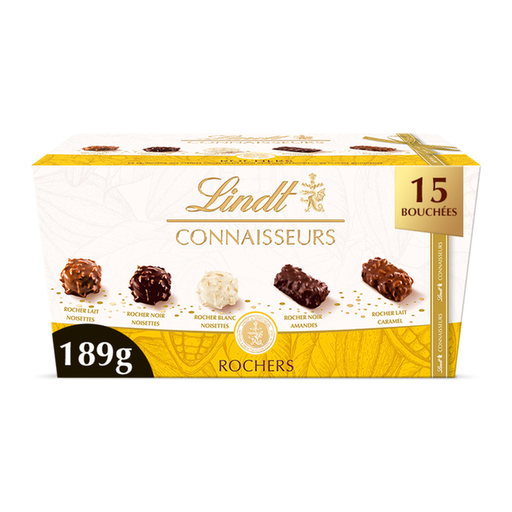 Image unavailable
Consider this assortment if the chocolate is mainly intended as a gift or to share, rather than to melt for a recipe.
Net weight: 189 g. The ingredients include hazelnut praline, almonds and caramel. Check the full allergen information for the person you’re buying it for.
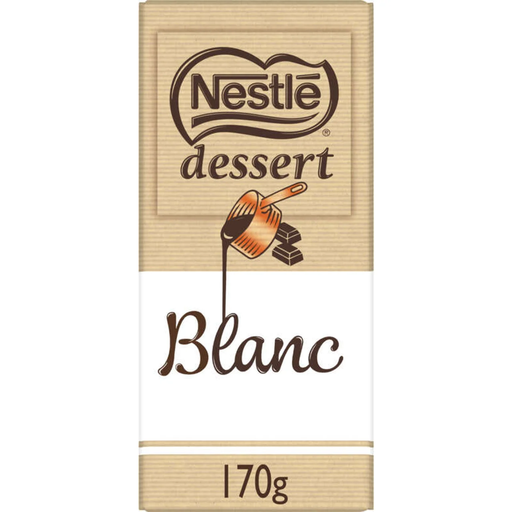 Image unavailable
Choose this for a recipe that specifically calls for white baking chocolate, rather than dark or milk chocolate.
Pack size: 170 g. The product information lists milk and warns that it may contain traces of egg, gluten and nuts. Check the packaging if you’re serving anyone who needs to avoid these ingredients.
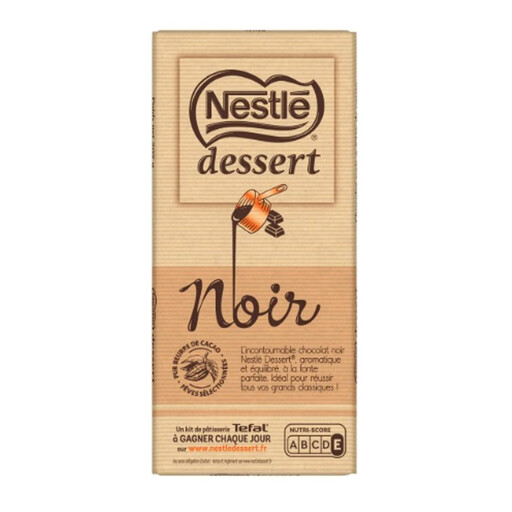 Image unavailable
A Dessert bar to consider when your recipe calls for dark chocolate to melt or mix in.
Pack size: 205 g. If your recipe specifies a particular cocoa percentage, check the packaging. The product information warns that it may contain traces of milk and nuts.
No. The DGCCRF says Nutri-Score is voluntary; the requirement to provide nutritional information on prepacked food is a separate matter. When comparing chocolate bars, check their values per 100 g, even if no Nutri-Score is shown.
No. Solid chocolate bars are not covered by the drinks and liquid preparations for drinks referred to in Article 1613 ter of the General Tax Code published by Légifrance. If you want to compare sugar content, use the nutritional information on the bars.
Check the ingredients, any highlighted allergens and any warnings about possible traces on the specific product. The Ministry of the Economy reminds businesses that they must declare allergens. For an assortment, check the ingredients of the different chocolates too.
Only if the recipe works with the chocolates in the box, including any fillings or added ingredients. If your recipe calls for a bar to melt, it’s better to choose the type and quantity of chocolate specified.