
Livraison le jour même ou le lendemain

Qualité garantie

Débloquez vos offres de bienvenue: Livraison GRATUITE | Jusqu'à -80 % | 30 jours d'essai gratuits à JoyPlus
Téléchargez l'application
A board that is too thin and slips, wood that warps after a few washes, or a DIY blade used on an unsuitable material can quickly turn a practical purchase into a needless expense. Searching for chopping boards and cutting tools actually covers a wide range of needs: meal preparation, serving at the table, sealing work, cutting PVC or carrying out joinery projects.
To avoid disappointment, it is best to look beyond marketing claims and check three points: the material, the genuinely useful dimensions and whether it is suitable for your intended use.
A large wooden chopping board is not necessarily more durable if it is too light or poorly maintained. Conversely, a small, thick board can quickly feel cramped when preparing several ingredients. Always check its dimensions, weight and stability on your worktop.
For everyday use, a rectangular wooden board measuring 400 × 280 mm, such as the Zhang Xiaoquan model, provides a comfortable surface for vegetables, herbs and everyday ingredients. However, it must be washed by hand and dried carefully.
Bamboo and wood do not cope well with repeated high-temperature cycles or prolonged soaking. Changes in moisture levels can cause cracking, warping or delamination. So, the phrase ‘easy to clean’ does not mean that the board is dishwasher-safe.
The bamboo boards featured here must be washed by hand and dried immediately afterwards. Applying a suitable food-grade mineral oil regularly can help preserve their appearance, in accordance with the manufacturer’s recommendations.
Multi-angle mitre shears are designed for flexible materials such as sealant, plastic, PVC or certain mouldings. They are not a substitute for a saw when cutting metal, hardwood or thick pieces.
Meanwhile, bi-metal reciprocating saw blades may be suitable for wood containing nails, metal or plastic, depending on their design. However, they must be selected according to the material and its thickness. A 24 V cordless circular saw also requires a compatible battery, which may sometimes be sold separately.
A set of chopping boards can be useful for separating different tasks or having several sizes available. A set of four small 14 × 22 cm boards is easy to store on a stand and is suitable for cheese, bread or appetisers. For slicing vegetables or preparing larger pieces, a bigger board will be considerably more comfortable.
A chopping board with a juice groove contains liquids when cutting fruit, vegetables or meat. It does not remove the need for immediate cleaning, particularly after preparing raw food.
For boards:
For DIY tools:
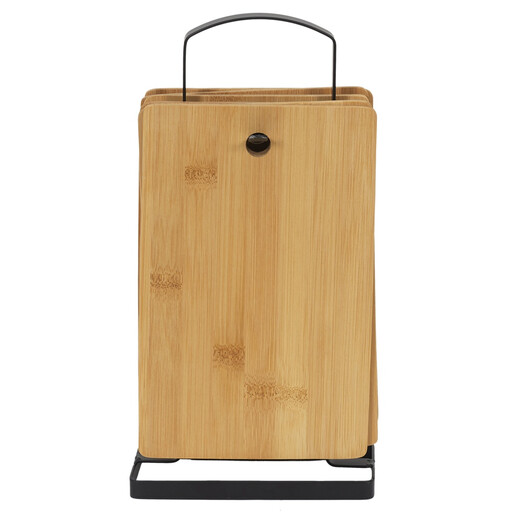
Why this choice suits this profile: This set of four compact boards is ideal for setting up your first kitchen and is easy to store on a smaller worktop.
The dimensions and care instructions are clearly specified: hand wash only, with no dishwasher use or prolonged soaking. The metal stand prevents the boards from remaining in contact with a damp surface.
Four 14 × 22 cm bamboo boards and a metal stand. They can also be used as small serving boards for cheese, bread or charcuterie.

Why this choice suits this profile: Its three sizes and carbonised bamboo look complement meals where preparation and presentation at the table should follow the same style.
The dimensions, handles and juice grooves are described in detail. However, care is still manual: an important point to consider before buying.
Set of three boards, integrated handle and juice groove. The largest boards measure approximately 40.6 × 29.2 cm, making them suitable for cutting or serving a charcuterie board.
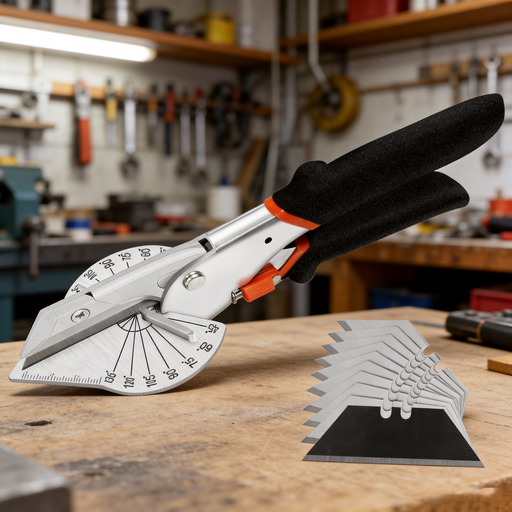
Why this choice suits this profile: This tool is designed for renovation and finishing work requiring repeated cuts in sealant, mouldings, plastic or flexible PVC components.
The 45° to 135° adjustment range and engraved scale make it easier to control the cutting angle. The tool is not designed for metal or hardwood, reducing the risk of misuse.
Replaceable SK5 blades, aluminium-alloy handle and ten spare blades included. The rotary lock makes secure storage easier.
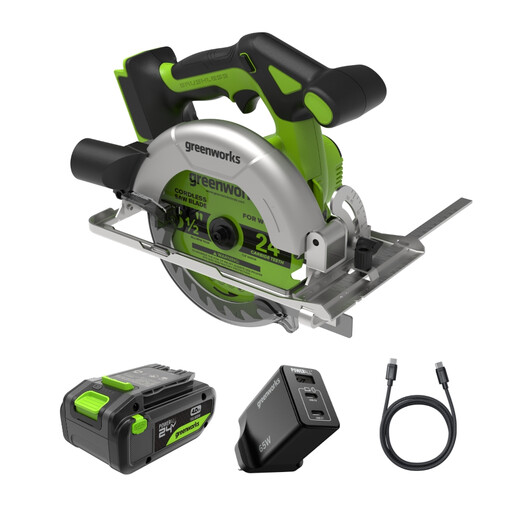
Why this choice suits this profile: This saw is intended for wood cutting, fitting and renovation work requiring straight or bevel cuts without a mains cable.
The stated maximum cutting depth is 57 mm at 90°, while the bevel angle can be adjusted from 0° to 45°. The battery and charger are not included: check compatibility with your Greenworks equipment before ordering.
165 mm carbide-tipped blade, stated no-load speed of 5,000 rpm, LED light, cutting guide and 35 mm dust-extraction connection.
We have compiled a complete, real-time updated selection of products that meet these demanding criteria, while also taking European safety regulations into account.
A medium-sized solid-wood board is suitable for everyday preparation, while a set of bamboo boards makes it easier to separate different tasks and move from worktop to serving. For a family, compare the available surface area, stability and ease of drying above all, rather than focusing solely on appearance.
Yes, when cutting food that releases liquid. It helps prevent liquid from running onto the worktop, but the board must be cleaned promptly and dried completely. A juice groove does not replace essential hygiene rules after preparing raw meat, fish or poultry.
Use each tool only on the materials for which it is designed, clean the blades after use and store them in a dry place. For bi-metal reciprocating saw blades, check the condition of the teeth before each project. With mitre shears, replace a blunt blade rather than applying more force. A suitable tool wears more slowly and gives you better control while cutting.