
Livraison le jour même ou le lendemain

Qualité garantie

Débloquez vos offres de bienvenue: Livraison GRATUITE | Jusqu'à -80 % | 30 jours d'essai gratuits à JoyPlus
Téléchargez l'application
A chopping board isn't something you should pick based purely on looks or price. A board that's too small, a surface that slips, fiddly maintenance, or a material that's not ideal for meat – these are flaws that only become apparent after a few weeks of use.
Preparing vegetables, jointing poultry, slicing bread, or serving a charcuterie board all call for different equipment. Here are the key factors to consider before you buy, along with a selection of models suited to various needs.
A beautiful wooden board might be perfect for presenting cheeses or cured meats, but that doesn't mean it's designed for repeated chopping. Natural wood models generally need hand washing, immediate drying, and, depending on the type of wood, regular application of food-safe oil.
Plastic and stainless steel are often easier to clean, but their cutting comfort, weight, and how they treat your knives all differ. So it's important to distinguish between food preparation and serving at the table.
A chopping board that's dishwasher-safe can save you precious time every day. But you need to check that this compatibility is clearly stated on the product page. Wood, bamboo, and certain decorative finishes don't cope well with the prolonged heat and moisture of a dishwasher cycle.
For a bamboo chopping board, a serving board, or a wooden charcuterie board, hand washing is often the only option.
A board without a handle, non-slip feet, or a juice groove can quickly make food preparation more difficult. For meat, fish, or very juicy fruit, a chopping board with a juice groove helps prevent spills onto your worktop.
A reversible board or one with two sides also lets you reserve one side for meat and the other for vegetables. This organisation doesn't replace thorough cleaning, of course, but it does help you maintain good kitchen habits.
The phrase "food contact safe" should appear in the information provided by the seller or manufacturer. This doesn't guarantee the board can withstand all temperatures: a kitchen board may not be suitable for use as a trivet.
For everyday preparation, a large enough surface stops ingredients from falling off while you chop. Smaller boards are handy for bread, fruit, or serving, whereas a large board is better suited to meat, bulky vegetables, and family meals.
Also remember to check:
Whatever the material, clean the board after every use, especially after preparing raw meat, fish, or poultry. Dry it completely before storing it. Replace it if it develops cracks, splinters, noticeable warping, or grooves that are too deep to clean properly.
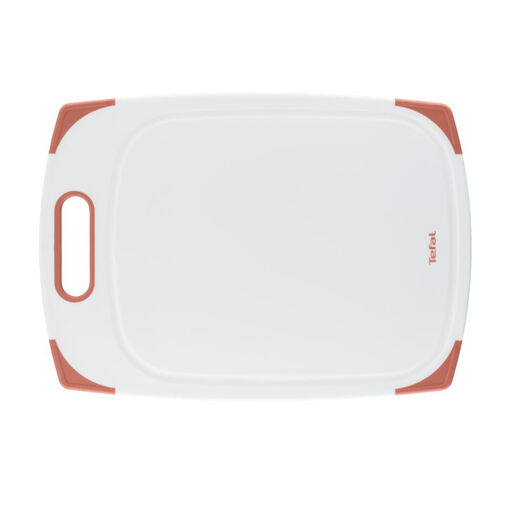
Why this choice suits this profile: This plastic board is designed for everyday food preparation. It has a thickness of 0.9 cm, a handle, and dishwasher compatibility as stated on the product page.
The non-slip surface and integrated juice groove help prevent slipping and spills on your worktop.
Plastic, carrying handle, juice groove, and dishwasher-safe according to the available information.
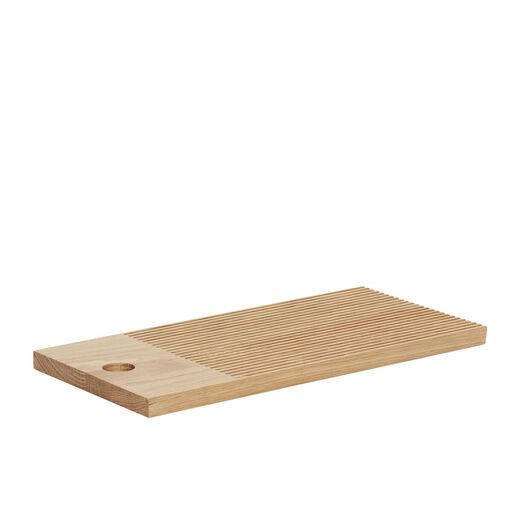
Why this choice suits this profile: This solid oak board, FSC certified, is aimed at those looking for a durable item that's equally at home in the kitchen and on the dining table.
The product page clearly states that the board is not dishwasher-safe – essential information to avoid the classic care mistake with wood.
Solid oak, FSC certification, 20 × 40 × 2 cm size, and dual use for both preparation and presentation.
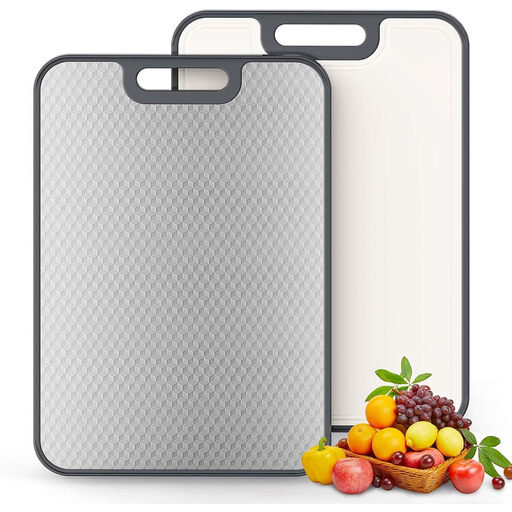
Why this choice suits this profile: With dimensions of 43.2 × 30.5 cm and its double-sided design, it's ideal for kitchens where you regularly switch between meat and vegetables.
The two sides make it easy to separate uses, while the materials used are resistant to water, grease, and odours.
Combination of stainless steel and PP plastic, textured surface, double-sided, and hand or dishwasher washable according to the product page.
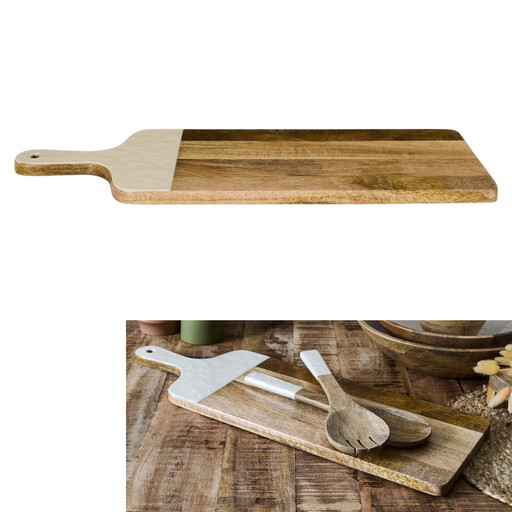
Why this choice suits this profile: At 58 cm long, this serving board is made for large gatherings, dinner party nibbles, and assortments of cheese or charcuterie.
Its purpose is clearly for serving: the product page advises against heavy chopping, very hot foods, and dishwasher use.
Natural mango wood, 58 cm length, and generous surface for sharing platters.
We've put together a comprehensive, real-time updated selection of products that meet these exacting criteria, while also complying with European safety regulations.
Plastic and certain PP models are practical if you plan to use the dishwasher. Wood and bamboo offer a warmer look, but they require hand washing, immediate drying, and sometimes the application of food-safe oil.
A medium to large size gives you more space to stabilise ingredients and catch chopped pieces. For a family or regular meat preparation, go for a wide surface, good stability, and, if possible, a juice groove. A small board is fine for bread, fruit, or serving.
It's best to replace it as soon as it's cracked, warped, splintered, or marked by deep knife grooves. These defects make cleaning difficult. Always clean the board after handling raw foods and let it dry completely before storing it.