
Livraison le jour même ou le lendemain

Qualité garantie

Débloquez vos offres de bienvenue: Livraison GRATUITE | Jusqu'à -80 % | 30 jours d'essai gratuits à JoyPlus
Téléchargez l'application
A treat can reward good behaviour, add structure to a play session or simply create a little ritual with your cat. But not all cat treats are created equal, and they do not meet the same needs. A crunchy bite works well for repeated rewards, while a liquid texture can add variety to meals or tempt a fussy cat.
Before filling your basket with cat snacks, take the time to check the ingredients, recommended age and suggested daily quantity. This will help you avoid choosing based solely on attractive packaging or a rather vague marketing promise.
Cat rewards are generally complementary foods. They therefore do not replace the main diet. Even when they contain vitamins, taurine or minerals, they should remain only a small part of your cat’s daily food intake.
A product described as ‘chicken’ or ‘salmon’ does not necessarily mean that the featured ingredient makes up most of the recipe. Check the ingredients list and the percentage stated. Some Catisfactions products, for example, contain 4% chicken or salmon, while MjAMjAM treats declare a significantly higher proportion of meat, depending on the recipe.
A small reward given several times a day can quickly unbalance your cat’s diet. The manufacturer’s recommendations should be adjusted according to your cat’s weight, activity level and usual daily ration. For a neutered, sedentary cat or one that gains weight easily, low-calorie cat treats will be easier to include — provided you keep an eye on quantities.
When comparing chicken cat treats, salmon cat treats or a meat-based recipe, check:
Grain-free cat treats may appeal to owners who wish to avoid certain sources of starch. However, the words ‘grain-free’ are not enough to assess the recipe as a whole. It must also suit your cat’s preferences and digestive tolerance.
After opening, follow the storage instructions. Liquid products generally need to be kept in the fridge and consumed quickly. Dry formats should be stored in a tightly sealed bag, away from heat and moisture.
Some products are intended for adult cats only, while others can be given to kittens from a specific age. Kitten treats should therefore not be chosen solely because of their small size: check the minimum age stated on the packaging. The Catisfactions salmon treats featured here are suitable for cats and kittens from 2 months old, while the chicken version is intended for adult cats.
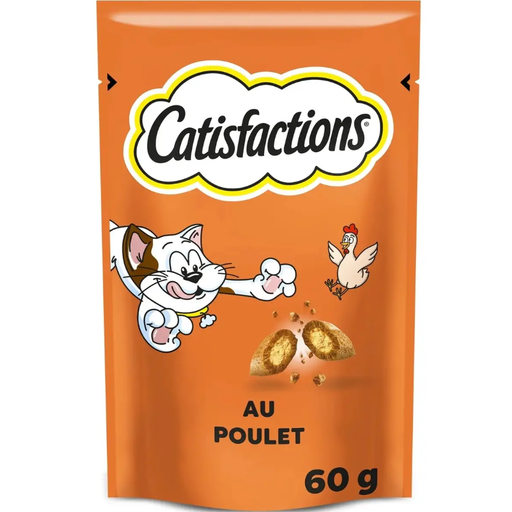
Why this choice suits this profile : The small pack is a good way to try crunchy chicken treats without immediately buying a large bag. The soft-centred texture is perfect for occasional rewards.
The product details clearly state that this is a complementary food and give a serving limit for adult cats. However, bear in mind that the recipe contains cereals and around 4% chicken.
A 60 g pack, a crunchy texture, 28% crude protein and no traces of artificial colourings or preservatives, according to the product details.
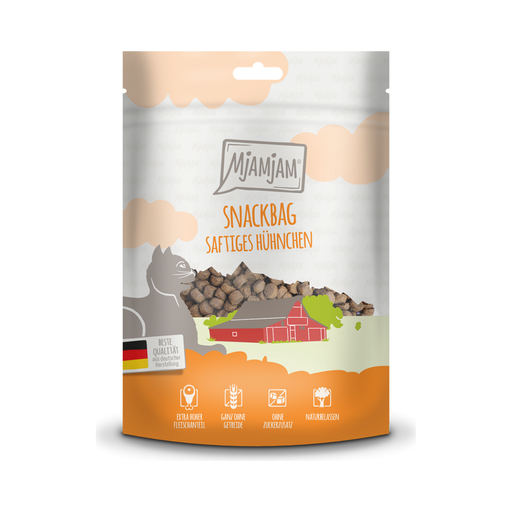
Why this choice suits this profile : This recipe is aimed at owners who prioritise an ingredient list centred largely on meat and are looking for a treat without cereals or added sugars.
The ingredients list states 55% chicken and specifies that the treat should account for no more than 10% of the daily food intake.
A single-protein chicken recipe, free from cereals, with 33% crude protein. The 125 g pouch is easy to store and takes up little space.
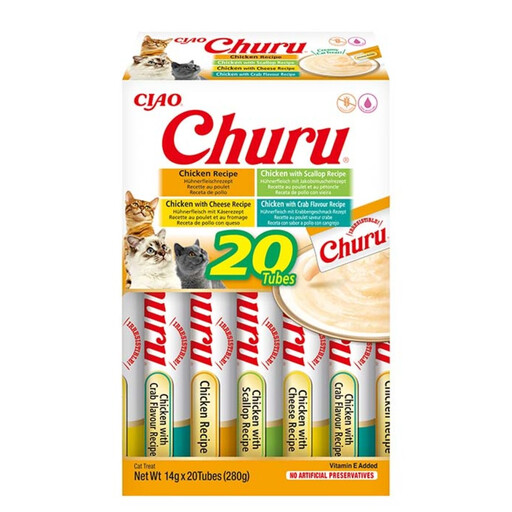
Why this choice suits this profile : Lickable cat treats in sticks are handy for reward sessions, mixed into wet food or offered to cats that prefer creamy textures.
Each portion is individually packed, and the product details generally recommend 1 to 2 sticks per day for an adult cat. Once opened, the product should be refrigerated and consumed within 24 hours.
Declared moisture of 91%, tuna recipes and an assortment of seafood flavours. The packaging makes it easy to portion out rewards.
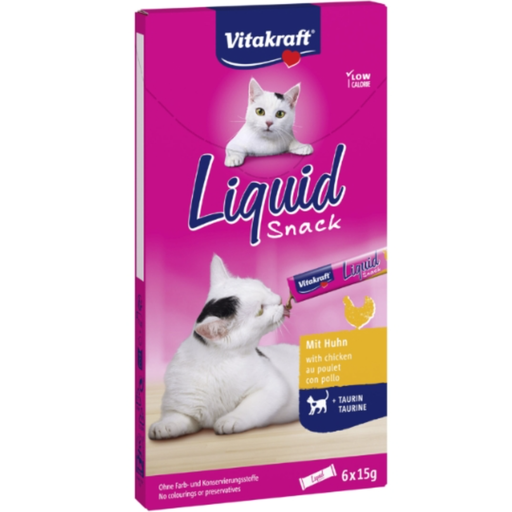
Why this choice suits this profile : This liquid format can be served on its own or mixed with dry food, making it particularly versatile for everyday use.
The product details clearly state that this is a complementary food, with 85% moisture. Once opened, the portion can be kept in the fridge for 24 to 48 hours.
Convenient portions, a chicken recipe with taurine and the option to serve the product as a reward or alongside a meal.
We have put together a complete, real-time updated selection of products that meet these exacting criteria and European safety requirements.
It depends on the product, your cat’s weight and its activity level. Follow the guidance on the packaging and make sure treats remain only a limited part of your cat’s daily diet. Recommended quantities can vary considerably between a dry treat, a liquid stick and a soft bite.
They may be suitable for many cats, but they remain complementary foods. Check their ingredients, whether they contain any thickeners and the storage instructions. An opened portion should generally be consumed quickly, often within 24 to 48 hours depending on the product.
This depends on the ingredients and the manufacturer’s instructions. A treat designed for kittens may also be suitable for an adult cat if the label says so. Conversely, a product intended for adult cats should not be given to a young cat without checking the recommended age.