
Livraison le jour même ou le lendemain

Qualité garantie

Débloquez vos offres de bienvenue: Livraison GRATUITE | Jusqu'à -80 % | 30 jours d'essai gratuits à JoyPlus
Téléchargez l'application
A notebook may seem simple to choose—until the pages warp, the cover fails to withstand life in a bag, or the ruling does not match its intended use. For school, the office, journaling or drawing, notebooks and note pads have different requirements.
Three common pitfalls arise when shopping:
The 17 × 22 cm format is common for school notebooks: it slips easily into a bag while providing enough room for everyday exercises. The A5 format, approximately 14.8 × 21 cm, is well suited to personal notes, meetings and journaling.
For detailed homework, reports and extensive note-taking, large-format notebooks or an A4 notebook provide more writing surface. A 24 × 32 cm model, such as certain school notebooks with a protective cover, also leaves room for annotations in the margins.
The ruling should match the activity:
For drawing, also check the paper weight and its compatibility with the tools you use. Paper weighing 70 g/m² is generally suitable for writing, but heavy pencil marks or certain felt-tip pens may show through.
Paper weight indicates the density of the paper, but it is not enough on its own to assess writing comfort. Product listings may specify 70, 80, 90 or 100 g/m² paper. For a smooth writing experience, a silky surface can make all the difference, while a hard cover offers better protection for notes carried regularly.
It is also worth checking:
Environmental certifications should be interpreted precisely. References indicating FSC origin or PEFC certification provide information about the declared characteristics of the paper concerned. They do not replace checking the format, page count or binding.
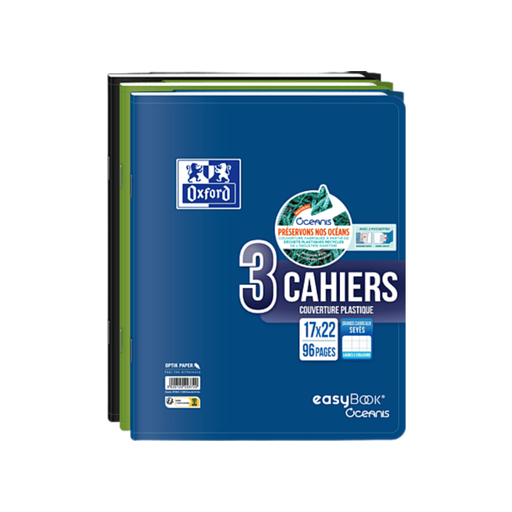
Why this choice suits this profile : This pack of three 17 × 22 cm notebooks makes it easy to organise different subjects without multiplying purchases. With 96 pages per notebook and Séyès ruling, it covers everyday schoolwork needs.
The format and quantity are clearly stated, reducing the risk of unpleasant surprises caused by an undersized notebook or a skimpy pack.
Three 96-page notebooks, Séyès ruling and staple binding: everything you need for homework and everyday writing.
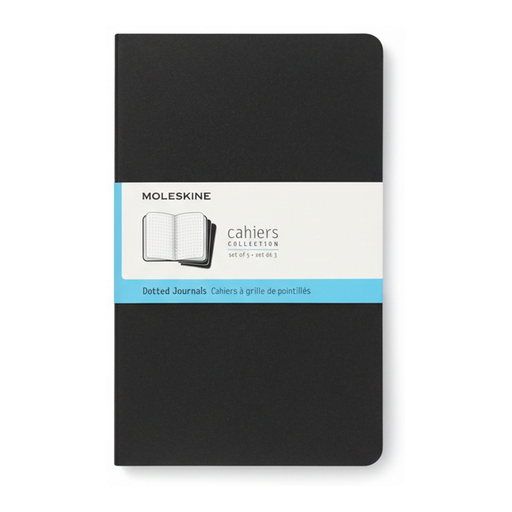
Why this choice suits this profile : With its hard cover and refined presentation, this Moleskine notebook is designed for those who want an elegant medium for projects, journaling or personal organisation.
The dotted ruling is clearly specified: it structures the page without imposing full lines, unlike some notebooks marketed as versatile without providing further detail.
Set of three notebooks, 70 g/m² acid-free ivory paper, hard cover, elastic closure and 16 detachable pages at the back.
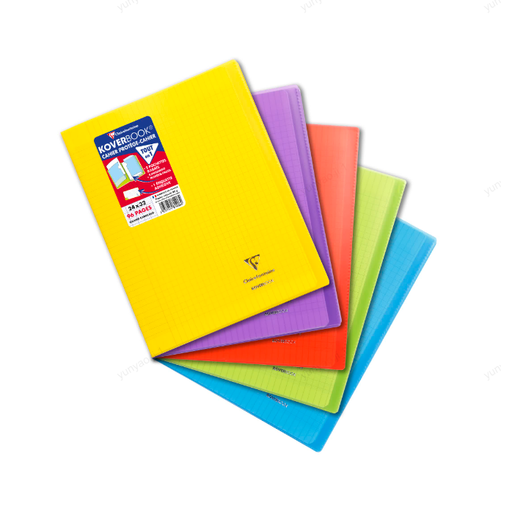
Why this choice suits this profile : Students, teachers and professionals who carry a large number of documents can use the flaps as reference points or additional storage space.
The 24 × 32 cm format, 96 pages and two flaps are clearly specified, making it impossible to mistake this for a simple notebook without storage features.
Polypropylene cover, 90 g/m² Velvety Vellum paper, five notebooks per pack and an adhesive label for personalisation.
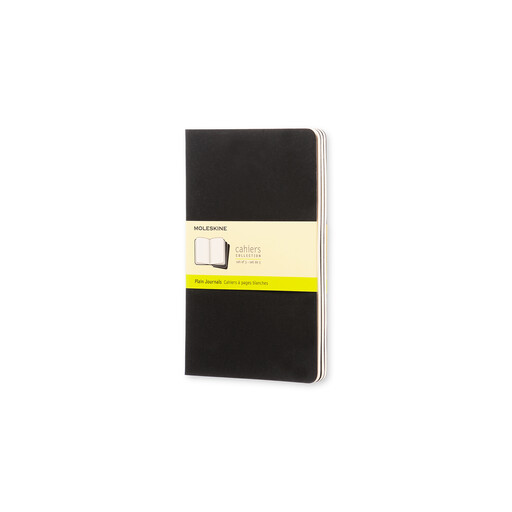
Why this choice suits this profile : Blank pages offer complete creative freedom: sketching, free writing, collage or visual planning. The three volumes make it easy to keep projects separate.
The “blank pages” description prevents you from accidentally buying a lined or gridded notebook when creative freedom is the priority.
Hard cover, 70 g/m² acid-free ivory paper, visible stitching and 16 detachable pages at the back of each notebook.
We have put together a comprehensive, real-time selection of products that meet these demanding criteria while complying with European safety regulations.
The A5 notebook is easy to carry and ideal for meetings, lists and personal notes. The 17 × 22 cm format is widely used for school stationery. An A4 or large-format notebook offers more room for lessons, reports and diagrams, but also takes up more space in your bag.
Lifespan depends on frequency of use, paper thickness, binding and transport conditions. A hard or polypropylene cover offers better resistance to scuffs and friction. To keep your notebooks in good condition for longer, protect them from moisture and avoid overloading the inner pockets.
Not necessarily. Compare the price per notebook, page count and format. A pack of three or five volumes is worthwhile if you have several subjects or projects to organise, while a single notebook can help avoid unnecessary purchases. For intensive use, notebooks with perforated sheets sold in larger packs can also reduce the cost per page and simplify filing.